

When most people hear the word rhinoplasty, they think about changing the appearance of the nose. However, rhinoplasty is not always performed for cosmetic reasons. In selected patients, surgery can also address structural problems that interfere with normal nasal breathing.
A nose that looks crooked, has been injured, or has structural narrowing may sometimes affect airflow. When cosmetic reshaping is combined with functional correction, the procedure may be referred to as functional rhinoplasty or septorhinoplasty, depending on the structures being treated.
If you are considering Rhinoplasty in Mumbai and also experience nasal blockage or difficulty breathing, it is important to understand how rhinoplasty may help, what conditions it can address, and when another procedure such as septoplasty may be more appropriate.
Rhinoplasty is a surgical procedure that changes the shape and structure of the nose.
It may be performed to:
- Improve nasal appearance
- Correct nasal asymmetry
- Straighten a crooked nose
- Refine the nasal tip
- Reduce or reshape a nasal hump
- Correct changes caused by trauma
- Improve certain structural breathing problems
The procedure can be cosmetic, functional, or a combination of both.
Yes, in selected patients.
If difficulty breathing is caused by structural problems within or around the nose, surgery may improve airflow by correcting those abnormalities.
For example, breathing may be affected by:
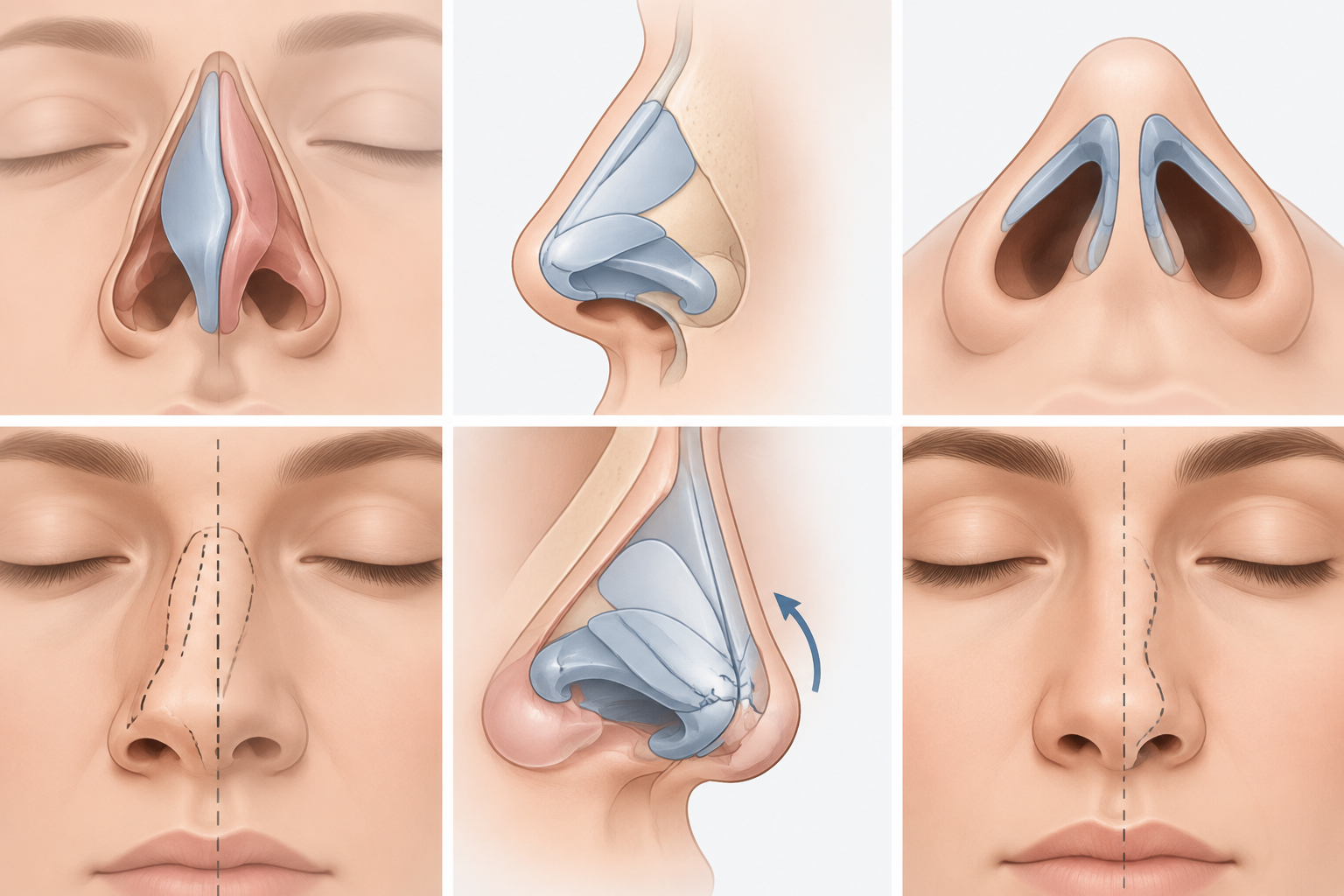
- A deviated nasal septum
- Narrow nasal passages
- Nasal valve narrowing or collapse
- A crooked nasal framework
- Previous nasal trauma
- Structural changes following earlier surgery
However, not every breathing problem can be corrected through rhinoplasty. Nasal congestion can also be caused by allergies, inflammation, enlarged turbinates, sinus conditions, or other medical problems.
This is why identifying the underlying cause is an important first step.
Although they may be performed during the same operation, cosmetic and functional rhinoplasty have different primary goals.
Cosmetic rhinoplasty focuses mainly on improving the appearance of the nose.
It may address:
- Nasal size
- Shape
- Bridge
- Tip
- Width
- Symmetry
- Proportion with the rest of the face
Functional rhinoplasty focuses on improving the structure of the nose to support better breathing.
The surgeon may modify structures that are restricting airflow while maintaining or improving the external appearance of the nose.
Some patients require both cosmetic and functional correction during the same procedure.
Several structural conditions can interfere with nasal airflow.
The septum is the internal wall separating the two nasal passages.
If it is significantly deviated, one side of the nose may become narrower, making breathing difficult.
A deviated septum may result from:
- Natural development
- Previous injury
- Sports-related trauma
- Previous nasal surgery
When septal correction is required alongside external nasal reshaping, a septorhinoplasty may be recommended.
The nasal valve is one of the narrowest areas of the nasal airway.
Weakness or narrowing in this region can restrict airflow.
Some patients may notice that breathing becomes particularly difficult during exercise or when inhaling deeply.
Functional rhinoplasty may be used to strengthen or widen the affected area when appropriate.
A nose that has been fractured or injured may become crooked.
In addition to affecting appearance, the altered nasal structure may narrow one or both nasal passages.
Corrective rhinoplasty can sometimes address both concerns by restoring a straighter external framework and improving the internal airway.
Some patients develop or continue to experience breathing difficulties following previous nasal surgery.
Possible structural causes may include:
- Excessive removal of cartilage
- Nasal valve narrowing
- Structural weakness
- Scar tissue
- Residual septal deviation
Revision rhinoplasty may be considered when previous surgery has altered the nasal structure and affected function.
Revision procedures are generally more complex and require careful evaluation.
Septorhinoplasty combines two types of correction:
Septoplasty addresses the internal nasal septum, while rhinoplasty reshapes or reconstructs the external nasal framework.
This combined procedure may be recommended when a patient has both:
- Aesthetic concerns about the nose
- Structural problems affecting breathing
For example, someone with a crooked nose, deviated septum, and difficulty breathing may benefit from septorhinoplasty rather than cosmetic rhinoplasty alone.
Rhinoplasty may improve nasal airflow in patients whose snoring is related to nasal obstruction.
However, snoring can have many causes, including:
- Nasal congestion
- Enlarged tonsils
- Obstructive sleep apnea
- Throat anatomy
- Sleep position
- Excess weight
Therefore, rhinoplasty should not be considered a universal treatment for snoring.
If you experience loud or persistent snoring, choking or gasping during sleep, or significant daytime sleepiness, a proper medical evaluation is important.
Before recommending functional rhinoplasty, your surgeon will assess your nasal structure and symptoms.
The evaluation may include:
- Medical history
- Examination of the nose
- Assessment of nasal airflow
- Examination of the septum
- Assessment of the nasal valves
- Review of previous nasal injuries or surgery
Additional tests may be recommended when necessary.
The purpose is to identify the actual cause of the breathing problem rather than assuming that cosmetic reshaping alone will solve it.
The exact surgical approach depends on the underlying problem.
Depending on the patient, the surgeon may:
- Straighten the nasal septum
- Strengthen the nasal framework
- Improve the nasal valve
- Reshape the nasal bones
- Refine or reposition cartilage
- Correct external nasal deviation
In some cases, cartilage grafts may be used to provide additional structural support.
The goal is to create a stable nasal framework that supports both appearance and function.
Recovery varies depending on the extent of surgery.
You may experience:
- Swelling
- Bruising
- Nasal congestion
- Mild discomfort
- Temporary difficulty breathing through the nose
A splint may be placed on the nose during the initial healing period.
Bruising generally improves and many patients gradually return to normal daily activities.
However, the nose remains sensitive and should be protected from accidental injury.
Internal swelling continues to decrease, and nasal breathing may gradually improve as the tissues heal.
The final cosmetic result may take several months to become fully apparent.
It can, depending on the structural corrections required.
If functional problems are caused by a crooked or collapsed nasal framework, correcting the underlying structure may also change the external appearance.
For patients who have both functional and aesthetic concerns, this can be an advantage because both issues can potentially be addressed during the same surgical plan.
No.
Rhinoplasty is most useful when a structural abnormality contributes to the breathing problem.
If your symptoms are primarily caused by:
- Allergies
- Nasal inflammation
- Infection
- Certain sinus conditions
- Temporary congestion
non-surgical or medical treatment may be more appropriate.
A proper examination is therefore essential before deciding on surgery.
Dr. Vinay Jacob is an experienced plastic, aesthetic, and reconstructive surgeon with expertise in facial and nasal surgery.
His approach focuses on:
- Detailed nasal assessment
- Understanding both cosmetic and functional concerns
- Personalized surgical planning
- Preservation of nasal structure and function
- Natural-looking results
- Comprehensive post-operative care
Every rhinoplasty treatment plan is customized according to the patient's anatomy, symptoms, facial proportions, and goals.
It can in selected cases, particularly when structural changes made during surgery also address an obstruction. However, cosmetic rhinoplasty is primarily intended to improve appearance, so functional concerns should be discussed before surgery.
No. Septoplasty primarily corrects a deviated nasal septum to improve nasal function, while rhinoplasty reshapes or reconstructs the external and internal nasal structures for cosmetic, functional, or both reasons.
Yes. When both cosmetic reshaping and septal correction are required, the procedures may be performed together as septorhinoplasty.
If the breathing problem is caused by a correctable structural issue, surgery can provide long-term improvement. However, individual results vary and other conditions may continue to affect nasal breathing.
Nasal congestion is common during the early recovery period. Breathing generally improves as internal swelling decreases, but the timeline varies depending on the procedure and individual healing.
It depends on the cause. If you have persistent nasal obstruction, an appropriate specialist evaluation can help identify whether the problem is related to the septum, nasal valves, turbinates, sinuses, or another condition. When both functional and cosmetic correction are needed, a surgeon experienced in rhinoplasty can discuss suitable options.
Rhinoplasty can do more than change the appearance of the nose. For appropriately selected patients, correcting structural problems such as a deviated septum, narrowed nasal passages, or nasal valve issues can also improve nasal airflow. However, not every breathing problem requires rhinoplasty, and identifying the underlying cause is essential before considering surgery.
If you are experiencing persistent nasal blockage or are unhappy with both the appearance and function of your nose, consider a personalized evaluation for Rhinoplasty in Mumbai. Dr. Vinay Jacob can assess your nasal structure and discuss whether cosmetic rhinoplasty, functional rhinoplasty, septoplasty, or septorhinoplasty may be appropriate for your individual needs.