


Tattoo Removal in Mumbai
A tattoo may hold special meaning when you first get it, but your preferences can change over time. You may want to remove a tattoo because it no longer reflects your personality, has faded unevenly, or is no longer suitable for your personal or professional life. Whatever your reason, modern laser tattoo removal techniques can help reduce the appearance of unwanted tattoos.
Dr. Vinay Jacob, Senior Plastic Surgeon in Mumbai, provides guidance on tattoo removal based on the tattoo's size, colour, ink depth, location, and your skin type. Treatment is planned according to your individual needs, with an emphasis on realistic expectations, appropriate aftercare, and skin health.
If you are considering laser tattoo removal in Mumbai, a consultation can help you understand the available options, the likely number of sessions, recovery, and the expected cost.
Book Consultation
Fill your details and our team will contact you shortly.
Tattoo Removal at a Glance
| Treatment Detail | Information |
|---|---|
| Treatment Name | Laser Tattoo Removal |
| Treatment Method | Laser technology to break down tattoo ink particles |
| Suitable For | People looking to reduce or remove the appearance of unwanted tattoos |
| Treatment Areas | Depends on the tattoo's location and size |
| Cost Per Session | ₹1,500–₹20,000+ |
| Small Tattoo Cost | ₹1,500–₹10,000 per session |
| Medium Tattoo Cost | ₹5,000–₹15,000 per session |
| Large Tattoo Cost | ₹6,000–₹20,000+ per session |
| Pico Laser Cost | ₹2,500–₹6,000 per session, depending on the treatment required |
| Number of Sessions | Multiple sessions are usually needed |
| Session Duration | Depends on the size and complexity of the tattoo |
| Recovery Time | Varies according to the treatment area and individual skin response |
| Results | Gradual fading; complete removal is not guaranteed |
| Consultation | Assessment required to determine the treatment plan and estimated total cost |
Note: The prices listed are indicative market estimates and may vary by clinic, laser technology, tattoo characteristics, and the number of sessions required. The final cost should be confirmed during consultation with Dr. Vinay Jacob.
Why Consider Tattoo Removal?
People choose tattoo removal for different reasons. Some may regret a design or message, while others may want to remove a tattoo associated with an earlier stage of their lives. In some cases, the ink may have faded, spread, or changed colour over time.
Laser treatment can be an option for people who want to reduce the visibility of an unwanted tattoo without having it surgically removed. The suitability of treatment depends on several factors, including the type of ink used, the tattoo's depth, and the response of the surrounding skin.
A consultation helps determine whether laser removal is appropriate for your tattoo and what kind of result may be achievable.
What Is Laser Tattoo Removal?
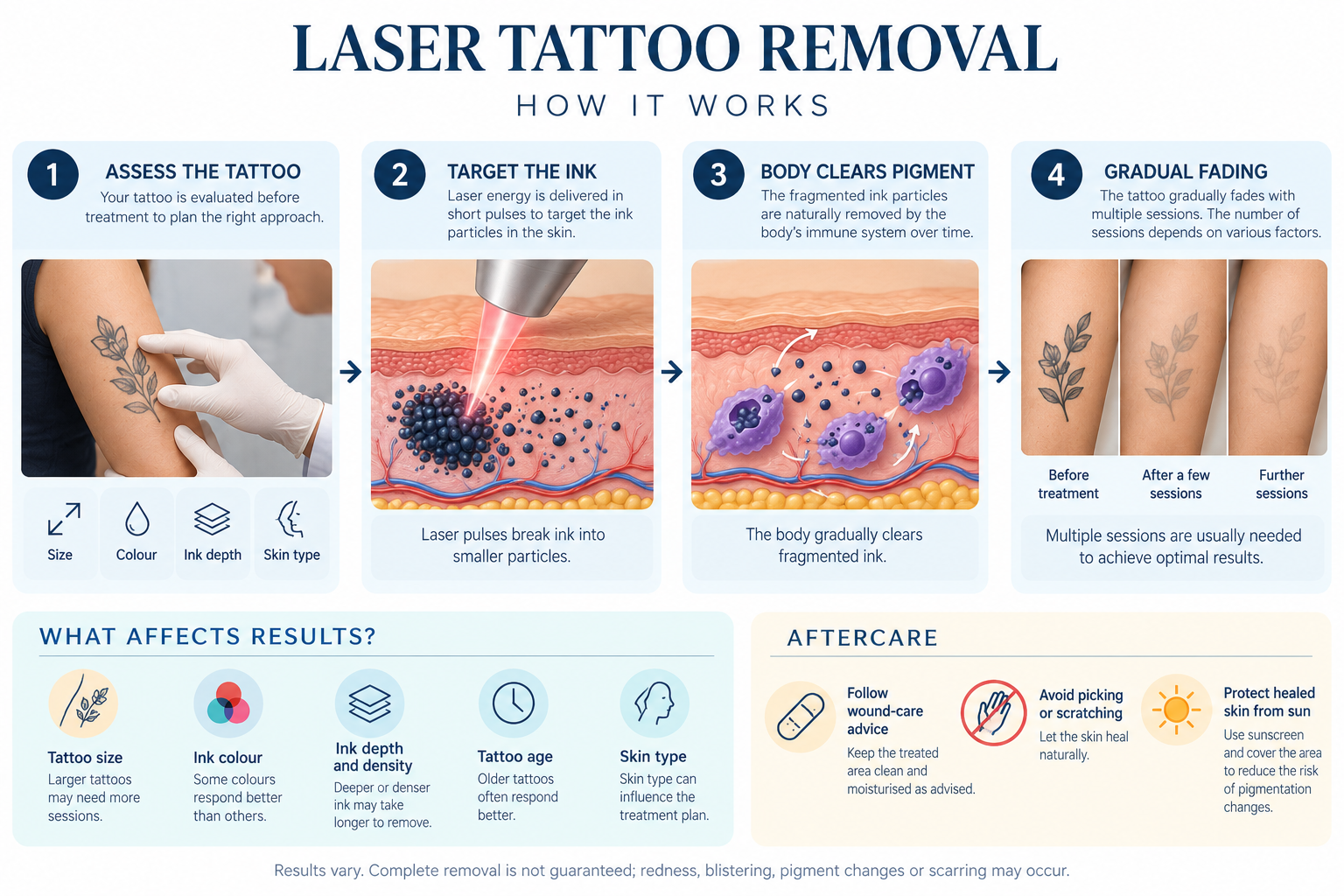
Laser tattoo removal is a non-surgical treatment that uses controlled pulses of laser energy to break tattoo ink into smaller particles. The body's natural processes gradually clear some of these particles over time.
Because tattoo inks differ in colour, composition, and depth, they do not all respond to treatment in the same way. Black and dark-coloured inks may respond more readily to certain lasers, while colours such as green, blue, yellow, and red can require different approaches.
Most tattoos need several treatment sessions, with sufficient time between sessions for the skin to recover. Complete removal cannot be guaranteed, and some tattoos may leave behind faint ink, changes in skin colour, or textural changes.
Who Is a Suitable Candidate for Tattoo Removal?
Laser tattoo removal may be considered if you have an unwanted tattoo and want to reduce its visibility. However, treatment should be planned after reviewing your skin and medical history.
You may be a suitable candidate if:
You want to remove a tattoo that you no longer want.
Your tattoo has faded or changed in appearance.
You understand that multiple sessions may be required.
You are willing to follow the recommended aftercare instructions.
You have realistic expectations about the possible outcome.
Certain skin conditions, active infections, a history of abnormal scarring, or other medical factors may affect treatment planning. If you are pregnant, breastfeeding, taking medication that affects healing, or have concerns about your skin, discuss these with your doctor before proceeding.
The final decision depends on an individual assessment rather than the tattoo alone.
Types of Tattoos That Can Be Treated
Laser treatment may be used for different types of tattoos, although the response varies from one tattoo to another.
Black and Dark-Coloured Tattoos
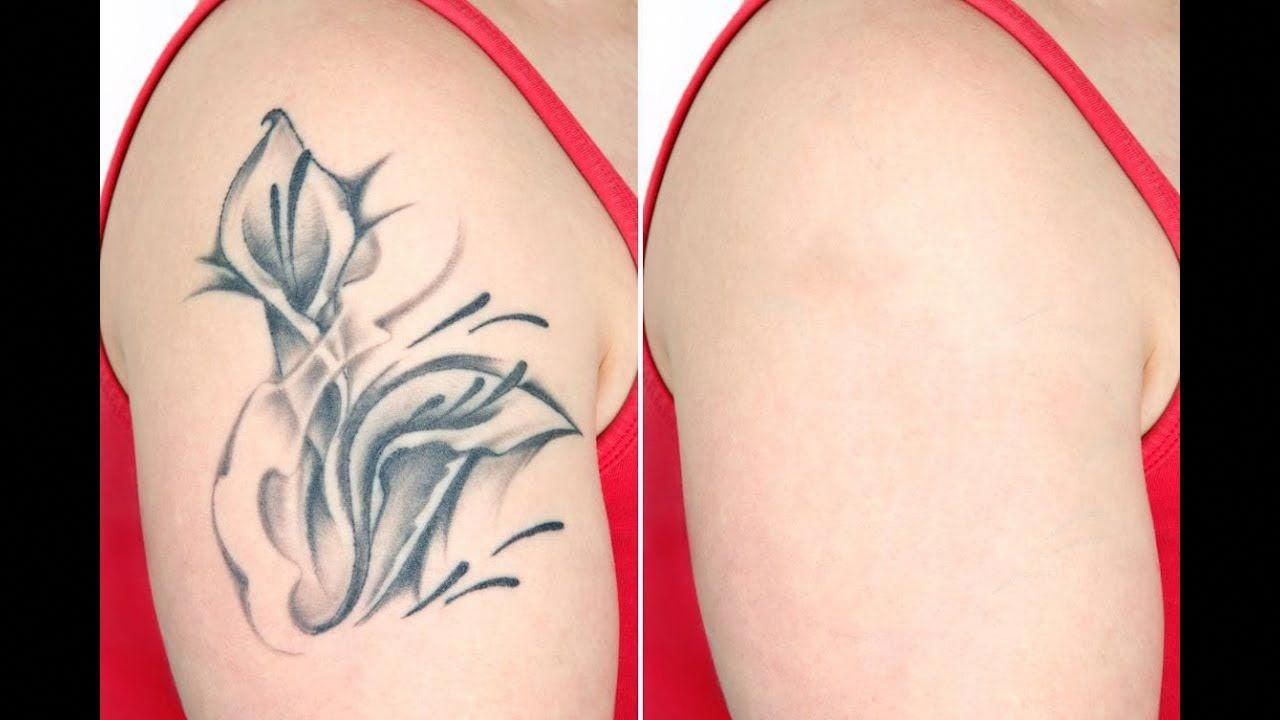
Black and dark-blue inks often respond well to suitable laser wavelengths. The number of sessions depends on the ink density, depth, and age of the tattoo.
Coloured Tattoos
Red, green, blue, and other coloured inks can be more challenging to remove. Different colours absorb laser energy differently, so the treatment approach may need to be adjusted according to the ink used.
Old or Faded Tattoos
Older tattoos may have already lost some of their intensity. However, their age alone does not determine how easily they can be removed.
Small and Large Tattoos
Small tattoos may require less treatment time per session, while larger designs generally take longer to treat. Larger tattoos may also need a more extensive treatment plan.
Professional and Amateur Tattoos
Professional tattoos may contain denser or more deeply deposited ink. Amateur tattoos may be less dense, but the result depends on the specific tattoo and how the ink was applied.
How Does Laser Tattoo Removal Work?
Laser treatment directs energy towards the pigment in the tattoo. This energy breaks the ink into smaller particles, which the body gradually processes over time.
The laser is selected according to the tattoo's characteristics and the patient's skin type. The treatment settings are adjusted to balance ink clearance with the need to protect the surrounding skin.
The tattoo usually does not disappear in a single session. Instead, it gradually becomes lighter over a series of treatments. The interval between sessions allows the skin to heal and gives the body time to clear the fragmented ink.
Step-by-Step Tattoo Removal Procedure
Consultation and Assessment
The process begins with an examination of the tattoo. The doctor considers its size, location, colour, depth, and age, along with your skin type and medical history.
You can discuss your reasons for removal, expected results, possible side effects, and the likely number of sessions. This is also the time to ask about the estimated treatment cost.
Preparing the Treatment Area
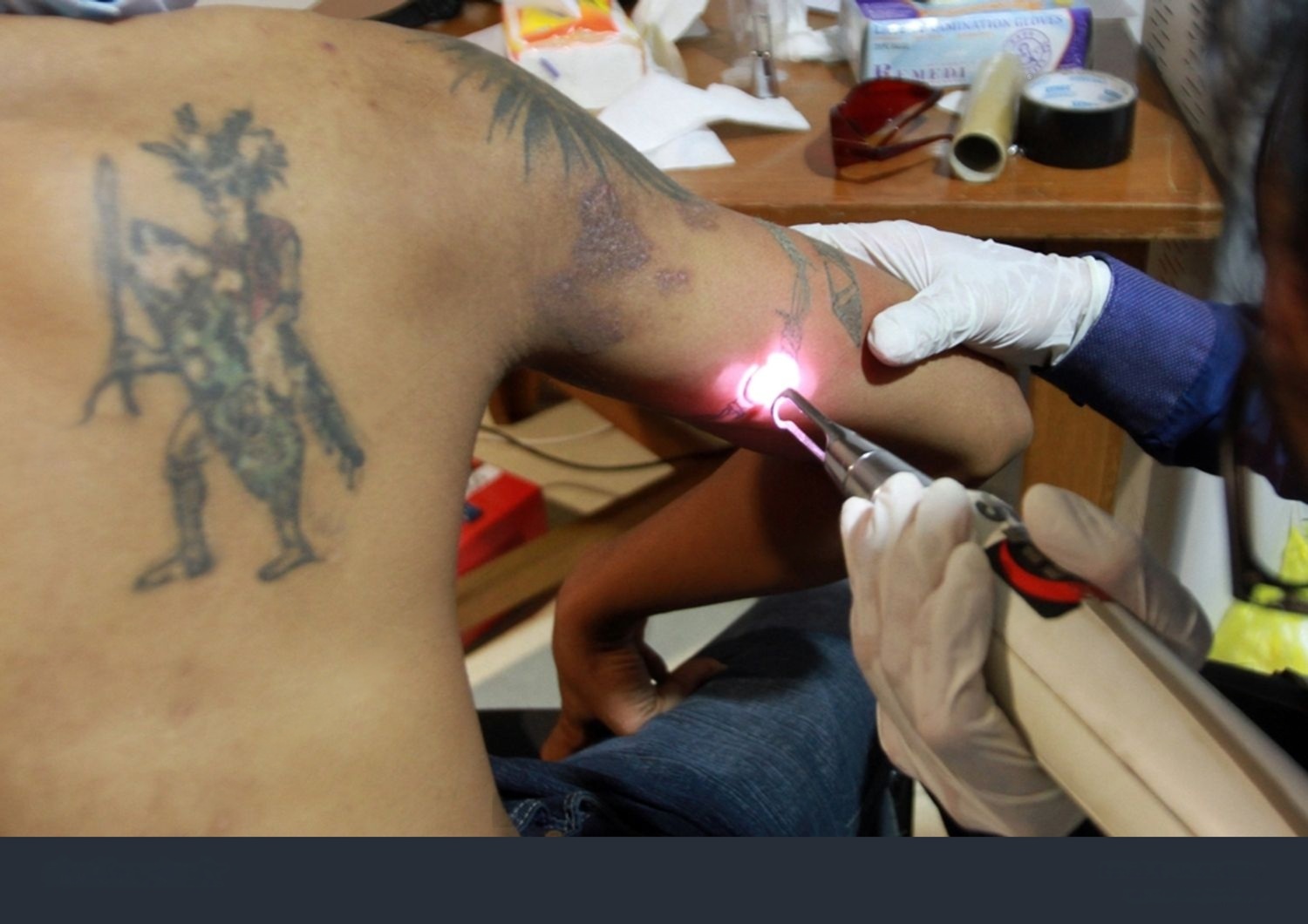
Before treatment, the area is cleaned and prepared. Protective eyewear is used to protect the eyes from laser exposure.
Depending on the size and location of the tattoo, a cooling method or local anaesthetic may be considered to improve comfort.
Laser Treatment
The laser is applied to the tattoo in controlled pulses. You may feel a snapping or stinging sensation during the procedure. The level of discomfort varies from person to person and depends on the treatment area and tattoo characteristics.
The duration of the session depends on the size and complexity of the design.
Immediate Aftercare
After treatment, the skin may appear red or swollen. Some patients may experience temporary tenderness, blistering, or scabbing. These reactions vary and should be discussed with your treating doctor.
You will receive instructions on how to care for the area, keep it clean, and protect it while it heals.
Follow-Up Sessions
Further sessions may be scheduled after the skin has recovered. With each session, the tattoo may gradually become less visible. The timing and number of sessions depend on how the skin responds to treatment.
How Many Sessions Are Needed for Tattoo Removal?
There is no single session count that applies to every tattoo. Some tattoos respond more quickly, while others require a longer course of treatment.
The number of sessions can depend on:
The size and location of the tattoo.
The colours and composition of the ink.
How deeply the ink was deposited.
Whether the tattoo was applied professionally or by an amateur.
The age and density of the tattoo.
Your skin type and individual healing response.
The type of laser used and the interval between treatments.
A tattoo assessment can provide a more realistic estimate. Even with multiple sessions, complete removal may not always be possible.
Recovery After Laser Tattoo Removal
Recovery varies depending on the tattoo, the treatment settings, and your skin's response. Mild redness, swelling, tenderness, or temporary changes in the treated skin can occur after a session.
Some people may develop small blisters or scabs. These should be allowed to heal naturally rather than being picked or scratched.
Follow your doctor's instructions regarding wound care, moisturising products, and sun protection. Contact the clinic if you notice worsening pain, spreading redness, increasing swelling, pus, or other symptoms that may suggest an infection.
The skin should be allowed to recover fully before the next session.
Aftercare Tips Following Tattoo Removal
Appropriate aftercare helps support healing and reduce the risk of complications.
Keep the treated area clean and follow the wound-care instructions provided.
Avoid picking blisters, scabs, or peeling skin.
Protect the area from direct sunlight and use sun protection as advised.
Avoid applying irritating products to the treated skin until it has recovered.
Follow instructions about exercise, swimming, and activities that may irritate the area.
Attend follow-up appointments as recommended.
Contact your doctor if the area does not heal as expected.
Do not begin another session until your doctor confirms that the skin has recovered sufficiently.
Benefits of Laser Tattoo Removal
Laser tattoo removal can be a useful option for people who want to reduce the visibility of an unwanted tattoo without surgical excision.
Potential benefits include:
Non-surgical approach
Treatment does not generally require cutting out the tattooed skin.
Targeted treatment
Laser energy is directed towards tattoo pigment.
Gradual fading
The tattoo may become lighter over successive sessions.
Treatment planning
The approach can be adapted to the tattoo's colour, size, and location.
Options for different tattoos
Selected professional, amateur, old, and coloured tattoos may be considered for treatment.
The results depend on the tattoo and individual response. Laser treatment can also cause side effects, including pigment changes, blistering, and scarring in some cases.
Factors That Affect Tattoo Removal Results
The outcome of tattoo removal depends on several factors, which is why two tattoos may respond differently to the same treatment.
Ink colour
Different pigments respond to different laser wavelengths. Some colours are more difficult to treat than others.
Ink depth and density
Tattoos with deeper or denser ink may require more sessions.
Tattoo size
Larger designs generally take longer to treat and may require a more extensive plan.
Age of the tattoo
Older tattoos may have faded naturally, although this does not guarantee easier removal.
Skin type
Your skin tone and tendency to develop pigmentation changes can influence laser selection and treatment settings.
Tattoo location
The body's ability to clear fragmented ink may vary depending on the area being treated.
Individual healing response
Your immune system and skin's recovery process affect how the ink fades between sessions.
An assessment helps identify these factors and set reasonable expectations before treatment begins.
Tattoo Removal Cost in Mumbai
The cost of laser tattoo removal in Mumbai generally ranges from ₹1,500 to ₹20,000 per session, depending on the size of the tattoo, the colours used, the depth of the ink, and the laser technology required. Smaller tattoos usually cost less to treat, while larger or more complex designs may require a higher investment.
Laser Tattoo Removal Price by Tattoo Size
| Tattoo Size | Estimated Cost Per Session |
|---|---|
| Small tattoo (up to 4 sq. inches) | ₹1,500–₹10,000 |
| Medium tattoo (4–12 sq. inches) | ₹5,000–₹15,000 |
| Large tattoo (over 12 sq. inches) | ₹6,000–₹20,000+ |
| Pico laser treatment | ₹2,500–₹6,000 |
These prices are indicative estimates for the Mumbai market and may vary between clinics, equipment, and treatment plans. Pico laser pricing may also vary depending on the tattoo's size and the technology used.
Factors That Affect Tattoo Removal Cost
The total cost of treatment depends on several factors:
Tattoo size
Larger tattoos generally take longer to treat.
Ink colour and depth
Certain colours and deeply deposited ink may require additional sessions.
Number of sessions
The overall treatment cost depends on how many sessions are needed to achieve the desired fading.
Laser technology
The type of laser selected can affect the price per session.
Tattoo complexity
Dense ink, multiple colours, and overlapping designs may require a more individualised treatment plan.
How Much Does Complete Tattoo Removal Cost?
The overall expense depends on the number of sessions required. For example, a tattoo that responds well to a few sessions may cost less to treat than a large, multicoloured tattoo that needs a longer course of treatment. Complete removal cannot be guaranteed, and some tattoos may leave residual pigment or changes in skin texture.
During a consultation with Dr. Vinay Jacob, the tattoo can be assessed to discuss suitable treatment options, the likely number of sessions, and the estimated cost for your individual requirements.
Planning Laser Tattoo Removal in Mumbai?
Book a consultation to understand your treatment options and receive a cost estimate based on your tattoo.
Risks and Possible Side Effects
Laser tattoo removal is commonly performed as an outpatient treatment, but it is not free from risks. The possible side effects depend on the laser settings, the tattoo, and your skin's response.
These may include:
Temporary redness, swelling, and tenderness.
Blistering or scab formation.
Temporary lightening or darkening of the skin.
Incomplete removal or residual ink.
Changes in skin texture.
Infection if the treated area is not cared for properly.
Scarring, although the risk varies with individual factors and treatment technique.
Following aftercare instructions and attending follow-up appointments can help manage recovery. Your doctor should explain the relevant risks before treatment.
What Results Can You Expect?
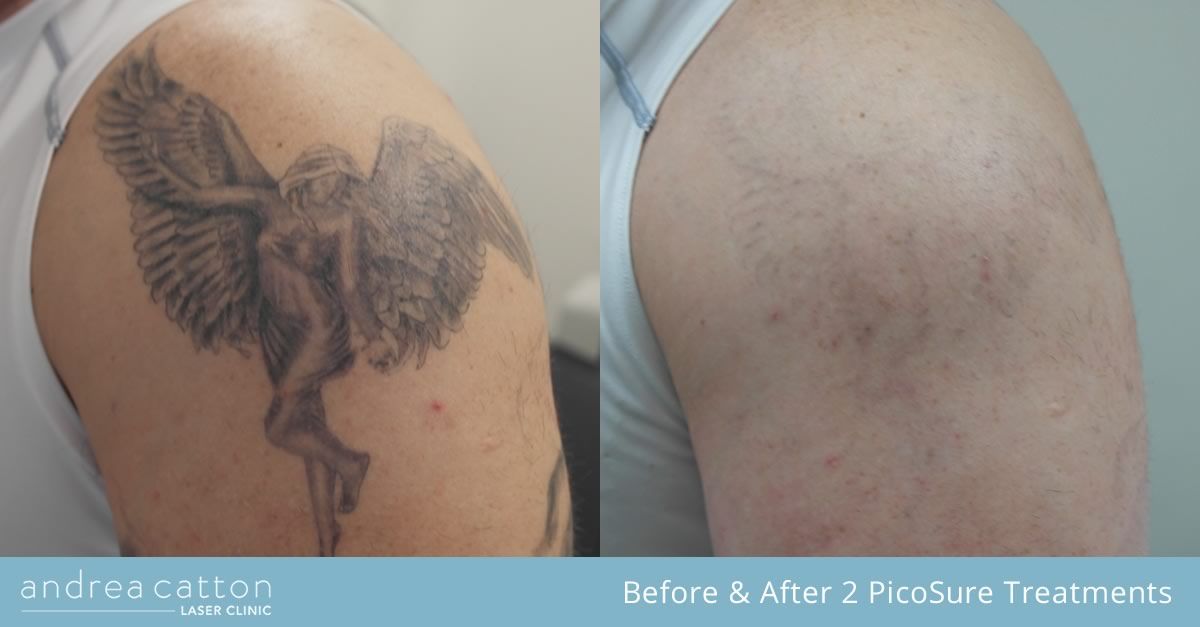
Tattoo removal is a gradual process
The treated tattoo may become lighter over several sessions, but the extent of fading varies according to the ink, tattoo depth, skin type, and individual response.
Some tattoos can be removed substantially, while others may leave visible traces. Changes in pigmentation or skin texture are also possible.
Frequently Asked Questions About Tattoo Removal
1. Is laser tattoo removal painful?
2. How many sessions are required to remove a tattoo?
3. Can all tattoo colours be removed?
4. Can a tattoo be completely removed?
5. How long does each tattoo removal session take?
6. Is there any downtime after laser tattoo removal?
7. Does tattoo removal leave scars?
8. What is the cost of tattoo removal in Mumbai?
9. Can coloured tattoos be treated with laser removal?
10. When can I have my next tattoo removal session?
Book a Tattoo Removal Consultation in Mumbai
If you have an unwanted tattoo and are considering laser treatment, the first step is to understand which approach may be suitable for your skin and tattoo.
Dr. Vinay Jacob can assess the tattoo, explain the available options, and discuss the likely number of sessions, recovery requirements, possible risks, and estimated cost.
Schedule a consultation to discuss your tattoo removal goals and receive a treatment plan tailored to your needs.
Email: [email protected]
Other Treatments
You may also explore other treatment options offered by Dr. Vinay Jacob, including rhinoplasty, gynecomastia surgery, dimple creation, and reconstructive procedures.