

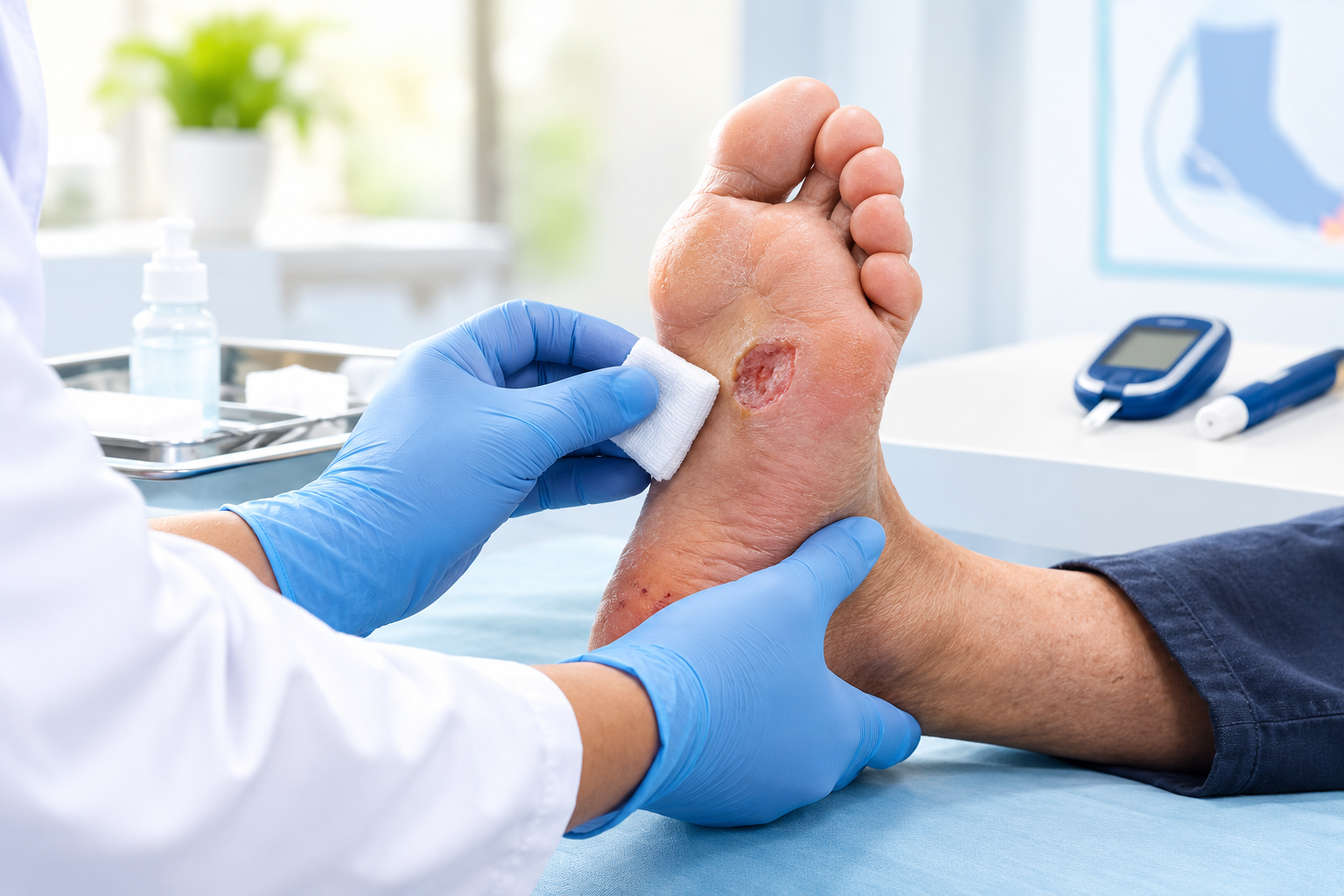
Diabetic Foot Treatment Surgeon in Mumbai
Get comprehensive care for diabetic foot ulcers, chronic wounds, infections and tissue loss with personalized diabetic foot treatment in Mumbai by Dr. Vinay Jacob. Treatment is planned according to the condition of the wound, infection status, blood circulation and extent of tissue damage, with options ranging from advanced wound care and surgical debridement to skin grafting, flap reconstruction and limb-salvage procedures.
With extensive experience in plastic, reconstructive and microsurgical procedures, Dr. Vinay Jacob focuses on individualized treatment planning for complex wounds, with the aim of promoting healing, preserving foot function and avoiding major amputation whenever medically and technically feasible.
Book Consultation
Fill your details and our team will contact you shortly.
Diabetic Foot Treatment at a Glance
| Treatment | Diabetic Foot Treatment & Reconstruction |
|---|---|
| Treatment Approach | Wound Care, Debridement, Infection Control and Reconstruction as Required |
| Anaesthesia | Local, Regional or General Anaesthesia Depending on the Procedure |
| Treatment Duration | Varies According to Wound Severity and Procedure |
| Hospital Stay | Day Care to Several Days, Depending on Treatment Complexity |
| Indicative Average Cost in Mumbai | Around ₹75,000 |
| Indicative Cost Range | Approximately ₹43,000 – ₹2,16,000+ Depending on Treatment Complexity |
| Initial Recovery | Usually Several Weeks; Complex Wounds May Require Longer |
| Follow-Up | Regular Wound, Surgical and Healing Assessments |
| Treatment Goal | Control Infection, Promote Healing and Preserve Limb Function Whenever Medically Feasible |
Cost Note: The cost of diabetic foot treatment varies considerably because every wound is different. The indicative average of ₹75,000 is provided as a general Mumbai market reference and is not a fixed fee or quotation from Dr. Vinay Jacob. Published estimates for diabetic foot surgery in Mumbai can range from approximately ₹43,000 to ₹2,16,000, while the cost may be higher when complex reconstruction, prolonged hospitalisation or multiple procedures are required.
Why Choose Dr. Vinay Jacob for Diabetic Foot Treatment in Mumbai?
Dr. Vinay Jacob focuses on reconstructive solutions for complex wounds and soft-tissue defects. His approach is centred on individualised assessment and a limb-salvage-focused treatment strategy selected according to the patient's wound characteristics, medical condition and reconstructive requirements.
Detailed Clinical Assessment
Every case begins with a thorough evaluation of the wound, infection, circulation and overall health.
Individualised Treatment Planning
Treatment is planned specifically for the patient's wound characteristics and medical condition.
Expertise in Plastic & Reconstructive Surgery
Includes skin grafting, flap reconstruction and microsurgical techniques for complex wounds.
Limb-Salvage-Focused Treatment
Treatment planning aims to preserve the limb whenever medically and technically feasible.
Attention to Functional Reconstruction
Reconstructive planning considers both wound healing and preservation of foot function.
Postoperative Wound Monitoring
Regular follow-up allows healing progress and reconstructive outcomes to be tracked closely.
What Is Diabetic Foot Disease?
Diabetic foot disease describes a range of foot problems that can occur in people with diabetes. Long-term diabetes may affect the nerves and blood vessels of the lower limbs, reducing sensation and interfering with normal wound healing.
A minor cut, blister, pressure injury or area of friction may therefore go unnoticed or take longer to heal. If the wound becomes infected or continues to deteriorate, it can develop into a deeper ulcer, soft-tissue infection or extensive tissue loss.
Some patients may also develop structural and neurological complications such as Charcot foot, a condition in which nerve damage can affect the bones and joints of the foot. Changes in foot shape can increase pressure on certain areas and create additional risk for ulceration.
In more advanced cases, severe infection or loss of blood supply may lead to gangrene, in which affected tissue dies. Gangrene requires prompt medical assessment because the extent of tissue damage and infection must be evaluated before an appropriate treatment plan can be determined.
Depending on the wound and the patient's overall condition, treatment may involve wound care, infection management, debridement, pressure relief, vascular assessment and reconstructive surgery.
Common Symptoms of Diabetic Foot Problems
Diabetic foot problems can develop gradually, and reduced sensation may make some wounds difficult to notice. Common warning signs include:
- A foot ulcer or open wound
- A wound that does not heal
- Persistent redness or swelling
- Increased warmth around a wound
- Pus or foul-smelling discharge
- Skin colour changes
- Blackened or dead-looking tissue
- Numbness or reduced sensation
- Tingling or burning sensations
- Persistent pain or tenderness
- Foot deformity or change in shape
- Difficulty walking
- Recurrent foot infections
- New pressure points or areas of thickened skin
A painless wound should not necessarily be considered harmless. Diabetic neuropathy can reduce the sensation of pain and allow an injury to worsen without obvious symptoms.

Causes and Risk Factors
Diabetic foot complications usually develop because several factors affect the foot at the same time. Important risk factors include:
- Long-standing diabetes
- Poor blood sugar control
- Diabetic neuropathy
- Poor circulation
- Previous foot ulcers
- Foot deformities
- Charcot foot
- Ill-fitting footwear
- Repeated pressure on the same area
- Smoking
- Kidney disease
- Obesity
- Reduced immunity
- Previous foot infection
- Delayed treatment of minor wounds
People who have reduced sensation, a previous ulcer or a structural foot problem should be particularly careful about regular foot examinations.

Charcot Foot and Its Role in Diabetic Foot Problems
Charcot foot is a serious complication associated with peripheral neuropathy. Because sensation is reduced, repeated stress or minor injuries to the foot may go unnoticed.
Over time, damage to the bones and joints can cause changes in the shape and structure of the foot. The resulting deformity can create abnormal pressure points, increasing the risk of skin breakdown and ulcer formation.
Management depends on the stage and severity of the condition. Treatment may include off-loading, protective footwear, immobilisation and management of associated ulcers or wounds. In selected cases with significant deformity or complications, surgical intervention may be considered.
Because Charcot foot can progress without severe pain, any new swelling, warmth, redness or change in foot shape in a person with diabetic neuropathy should be medically assessed.
When Should You Consult a Diabetic Foot Surgeon?
Many diabetic foot wounds can initially be managed through appropriate wound care, pressure relief, infection management and diabetes control. However, surgical assessment becomes important when a wound does not heal or when significant tissue damage develops. A reconstructive surgical evaluation may be appropriate when there is:
A deep or persistent ulcer.
Significant tissue loss.
Exposed bone, tendon or joint.
Persistent or spreading infection.
Gangrene or dead tissue.
Extensive soft-tissue damage.
Recurrent ulcers.
A complex wound associated with Charcot foot.
A wound following trauma.
A post-amputation defect.
Failure of appropriate conservative treatment.
Early evaluation allows the wound and underlying factors to be assessed before deciding whether reconstruction is required.
Conditions Managed
Dr. Vinay Jacob provides reconstructive surgical management for complex wounds and soft-tissue defects associated with diabetic foot disease. Conditions that may require reconstructive assessment include:
Diabetic Foot Ulcers
Chronic Non-Healing Wounds
Complex Diabetic Wounds
Diabetic Foot Infections
Soft-Tissue Defects
Heel Ulcers
Toe Ulcers
Tissue Loss
Pressure-Related Wounds
Gangrene-Related Tissue Loss
Wounds Associated with Charcot Foot
Exposed Tendon or Bone
Post-Amputation Wound Defects
Scar Contractures Affecting Foot Function
Treatment is selected according to the wound's characteristics, the patient's medical condition and the structures that need to be protected or reconstructed.
Diabetic Foot Treatment Options
The appropriate treatment depends on the depth and size of the wound, infection, blood circulation, tissue viability and overall health.
Advanced Wound Care
Not every diabetic foot wound requires surgery. Some wounds may be managed with:
- Regular wound cleaning and dressings
- Pressure relief and off-loading
- Infection management
- Blood sugar management
- Appropriate footwear
- Monitoring of wound progression
The objective is to support healing while preventing further pressure, infection or tissue damage.
Surgical Debridement
Debridement involves removing dead, infected or unhealthy tissue from a wound. It may be required when non-viable tissue interferes with healing or contributes to infection. Debridement can help:
- Remove unhealthy tissue
- Reduce the burden of infected material
- Expose healthier wound tissue
- Prepare the wound for reconstruction
Patients with extensive infection or tissue loss may require more than one procedure.
Infection Management
Infection is an important consideration in complex diabetic foot wounds. Depending on the clinical situation, treatment may involve antibiotics, wound cultures, drainage of infected collections and surgical removal of infected tissue. When infection extends into deeper tissues, appropriate infection control is generally addressed before definitive reconstruction.
Skin Grafting
A skin graft may be considered when a wound has an appropriate healthy wound bed but does not have sufficient skin to close naturally. Healthy skin is taken from a suitable donor site and placed over the wound. Skin grafting may help:
- Cover suitable soft-tissue defects
- Protect the wound
- Support wound closure
- Reduce prolonged open wound care
The wound must first be adequately prepared, and not every diabetic foot ulcer is suitable for grafting.
Flap Reconstruction
Some wounds are too deep for a skin graft, particularly when structures such as bone, tendon, joints or hardware are exposed. In these situations, flap reconstruction may be considered. A flap uses healthy tissue with its blood supply to provide coverage over the defect. Depending on the location and size of the wound, local or distant tissue may be used. The choice of flap depends on:
- Wound location
- Size and depth of the defect
- Tissue requirements
- Blood supply
- Overall health
- Functional requirements
Microsurgical Reconstruction
Microsurgery uses specialised instruments and magnification to connect small blood vessels and, where required, nerves. For selected complex diabetic foot defects, microsurgical tissue transfer may provide well-vascularised tissue for wound coverage. This approach can be considered when simpler reconstructive options are not suitable and adequate vascular status is present.
Limb Salvage Surgery
A major objective of reconstructive treatment is to preserve the limb whenever this is medically and technically feasible. Limb-salvage treatment may involve a combination of:
- Removal of infected or non-viable tissue
- Infection control
- Wound-bed preparation
- Vascular assessment or treatment when required
- Skin grafting
- Flap reconstruction
- Microsurgical tissue transfer
- Functional reconstruction
- Off-loading and rehabilitation
The decision to pursue limb salvage depends on factors such as the extent of infection, blood circulation, tissue viability, overall health and the amount of functional tissue that can be preserved.
How Is Diabetic Foot Reconstruction Planned?
Reconstructive treatment is planned after evaluating the wound and the factors that may affect healing.
Wound Condition
The size, depth, location and quality of the wound are assessed.
Infection
The presence and extent of infection must be determined before definitive reconstruction.
Blood Supply
Adequate circulation is important for healing. Patients with suspected vascular problems may require further vascular assessment.
Tissue Loss
The amount and type of tissue missing help determine whether continued wound care, a skin graft, flap reconstruction or another approach may be appropriate.
Foot Structure
Conditions such as Charcot foot or other deformities may alter pressure distribution and influence the reconstructive plan.
Overall Health
Blood sugar control, nutrition, smoking, kidney function and other medical conditions can affect wound healing.
What Happens During Treatment?
The exact treatment pathway varies according to the wound and the patient's medical condition.
Clinical Assessment
The wound, foot structure, circulation and overall health are evaluated.
Investigations
Blood tests, imaging, wound assessment or vascular investigations may be recommended depending on the findings.
Infection and Wound Control
Infection and non-viable tissue are addressed before definitive wound coverage.
Wound Preparation
The wound is prepared to create a suitable environment for healing or reconstruction.
Reconstruction
Depending on the defect, treatment may involve continued wound care, skin grafting, flap reconstruction or microsurgical tissue transfer.
Postoperative Care
Dressings, off-loading, medications and follow-up are planned according to the procedure performed.
Rehabilitation
Return to walking and normal activities is gradual and depends on wound healing, reconstruction and weight-bearing requirements.
Recovery After Diabetic Foot Surgery
Recovery varies significantly between patients.
Factors That May Influence Healing
- Severity of the wound
- Presence of infection
- Blood circulation
- Blood sugar control
- Type of reconstruction
- Size of the tissue defect
- Nutritional status
- Other medical conditions
- Adherence to postoperative instructions
Patients May Require
- Regular wound dressings
- Antibiotics or other medications
- Off-loading devices
- Protective footwear
- Restricted weight-bearing
- Physiotherapy
- Blood sugar management
- Regular surgical follow-up
Some patients may recover over several weeks, while complex wounds and reconstructive procedures can require a longer period of monitoring and rehabilitation.
Preventing Diabetic Foot Complications
Prevention remains important even after a wound has healed. Helpful measures include:
- Monitor blood sugar as advised by your treating doctor
- Examine your feet every day
- Look for cuts, blisters, redness or swelling
- Wear properly fitting footwear
- Avoid walking barefoot
- Keep feet clean and dry
- Moisturise dry skin while avoiding application between the toes
- Trim nails carefully
- Seek medical advice for wounds that do not heal
- Attend regular diabetic foot examinations
- Avoid smoking
- Follow recommended diabetes and vascular care
- Use prescribed off-loading or protective footwear when advised
People with neuropathy, previous ulcers or Charcot foot may require particularly careful long-term foot monitoring.
Benefits of Timely Treatment
Prompt assessment and appropriate treatment may help:
Control Infection
Remove Unhealthy Tissue
Support Wound Healing
Limit Further Tissue Loss
Protect Exposed Structures
Preserve Foot Function
Reduce the Risk of Major Amputation
Support Mobility
Improve Quality of Life
Early treatment does not guarantee that surgery or amputation will be avoided. However, appropriate management can improve the opportunity for limb-preserving treatment when clinically feasible.
Diabetic Foot Treatment Cost in Mumbai
The cost of diabetic foot treatment in Mumbai varies considerably because treatment may range from wound care and debridement to skin grafting, flap reconstruction or complex microsurgical procedures.
Published Mumbai estimates for diabetic foot surgery are approximately ₹43,000 to ₹2,16,000, while some procedures for diabetic foot ulcers may start at around ₹35,000. For general treatment planning, an indicative average cost of around ₹75,000 can be used as a broad reference. This is not a fixed price and should not be interpreted as the expected cost for every patient.
Indicative Diabetic Foot Treatment Cost
| Treatment / Expense | Indicative Cost |
|---|---|
| Initial Consultation | ₹500 – ₹2,000 |
| Diagnostic Tests and Imaging | ₹2,000 – ₹15,000+ |
| Surgical Debridement | ₹15,000 – ₹45,000+ |
| Skin Grafting | ₹15,000 – ₹1,00,000+ |
| Wound Care and Dressings | ₹500 – ₹5,000+ |
| Hospital and Facility Charges | ₹5,000 – ₹30,000+ |
| Complex Reconstruction | May Exceed ₹1,00,000 |
| Indicative Average Overall Cost | Around ₹75,000 |
These figures are general market references. Actual costs can vary depending on the hospital, surgeon, procedure and individual treatment requirements.
Factors That Affect the Final Cost
The overall cost may depend on:
- Severity and depth of the wound
- Size and location of the ulcer
- Presence of infection
- Extent of gangrene or tissue loss
- Number of debridement procedures required
- Vascular investigations or treatment
- Type of anaesthesia
- Skin grafting requirements
- Flap reconstruction
- Microsurgical reconstruction
- Management of Charcot foot-related complications
- Hospitalisation
- Antibiotics and medications
- Wound dressings
- Postoperative monitoring
- Rehabilitation and follow-up
A smaller wound may require relatively limited treatment, while an extensive infected wound with tissue loss may require multiple procedures and prolonged care.
What May Be Included in the Treatment Cost?
Depending on the treatment plan, the overall expense may include:
- Surgeon and procedure charges
- Anaesthesia charges
- Operation theatre or facility charges
- Diagnostic investigations
- Hospital room charges
- Medications
- Dressings and wound-care materials
- Surgical supplies
- Postoperative consultations
- Follow-up care
The exact inclusions depend on the hospital and treatment plan. An accurate estimate can only be provided after assessing the wound and determining the treatment required. Dr. Vinay Jacob can evaluate the wound, infection, tissue loss, foot condition and reconstructive requirements before recommending an appropriate treatment approach.
Important: The ₹75,000 average and published Mumbai cost range mentioned above are general planning references. They are not a fixed fee or quotation from Dr. Vinay Jacob. The actual cost may be lower or higher depending on the condition and procedures required.
Want an Exact Cost Estimate?
Dr. Vinay Jacob can evaluate your wound, infection, tissue loss and foot condition before recommending an appropriate treatment approach and providing a personalised cost estimate.
Risks and Possible Complications
Diabetic foot surgery and reconstruction can involve risks, particularly when the wound is infected or the patient has poor circulation or other medical conditions.
Infection
Delayed Wound Healing
Bleeding
Swelling
Scarring
Wound Breakdown
Graft Failure
Flap-Related Complications
Reduced Sensation
Persistent Pain
Recurrence of Ulceration
Need for Additional Procedures
The potential risks and expected benefits should be discussed during an individual surgical consultation.
About Dr. Vinay Jacob
Dr. Vinay Jacob is a Senior Plastic Surgeon practicing at Bombay Hospital Institute of Medical Sciences, Mumbai. His practice includes Plastic, Reconstructive and Cosmetic Surgery, with experience in complex soft-tissue reconstruction and microsurgical procedures.
For patients with diabetic foot wounds, reconstructive surgery may form one part of a broader treatment plan involving wound care, infection management, diabetes control and, when required, vascular or other specialist care.
Practice
Bombay Hospital Institute of Medical Sciences, Mumbai
Experience
25+ years of surgical experience
Specialisation
Plastic, Reconstructive and Cosmetic Surgery, including microsurgical reconstruction
Consult an Experienced Diabetic Foot Surgeon
A diabetic foot wound should not be ignored, particularly when it is not healing or shows signs of infection, tissue loss or structural changes. If you have a chronic diabetic foot ulcer, complex wound, gangrene-related tissue loss, Charcot foot with ulceration or another foot problem that has not improved with initial treatment, an early reconstructive assessment can help determine the next appropriate step.
Frequently Asked Questions
What is diabetic foot disease?
What is Charcot foot?
Can Charcot foot lead to an ulcer?
What is gangrene?
Can a diabetic foot ulcer heal without surgery?
When is diabetic foot surgery required?
What is limb salvage surgery?
Will I need a skin graft?
When is flap reconstruction required?
How much does diabetic foot treatment cost in Mumbai?
How long does recovery take?
Can diabetic foot ulcers come back?
Is diabetic foot surgery painful?
When should I seek urgent medical attention?
Important Medical Disclaimer
The information provided on this page is intended for general educational purposes and should not be considered a substitute for individual medical advice, diagnosis or treatment.
Diabetic foot problems can vary significantly in severity. Treatment options, recovery time, risks and costs depend on the individual patient's condition and clinical assessment.
The cost figures mentioned on this page are indicative market references and are subject to change. They do not represent a fixed quotation from Dr. Vinay Jacob.
If you have a diabetic foot wound with signs of infection, tissue death, rapidly increasing swelling, colour changes or other concerning symptoms, seek prompt medical evaluation.
Schedule Your Diabetic Foot Treatment Consultation Today
If you have a chronic diabetic foot ulcer, complex wound or a foot problem that has not improved with initial treatment, Dr. Vinay Jacob can assess your wound and recommend the most appropriate treatment approach. Schedule a consultation to understand the treatment, recovery, expected outcome and personalized diabetic foot treatment cost in Mumbai.