

Hair Transplant in Mumbai
Restore hair density, improve hairline definition, and address visible hair loss with personalized hair transplant in Mumbai by Dr. Vinay Jacob. With 25+ years of experience in plastic and reconstructive surgery, he focuses on individualized hair restoration planning, natural hairline design, and results that complement your facial features.
Book Consultation
Fill your details and our team will contact you shortly.
Hair Transplant at a Glance
| Treatment | Hair Transplant / Hair Restoration |
|---|---|
| Procedure Duration | Approximately 4–8 hours, depending on the number of grafts |
| Anaesthesia | Usually Local Anaesthesia |
| Hospital Stay | Usually Day Care |
| Approx. Cost in Mumbai | ₹50,000 – ₹2,00,000+ |
| Initial Recovery | Approximately 7–10 days |
| Return to Routine Activities | Usually within a few days |
| Initial Hair Growth | Usually begins around 3–4 months |
| Visible Improvement | Around 6 months onward |
| Final Results | Usually assessed around 9–12 months |
| Treatment Type | Surgical Hair Restoration |
Cost Note: The above cost is indicative. The final price depends on the number of grafts required, extent of hair loss, donor hair availability, technique used, complexity of the procedure, and other individual treatment requirements. A personalized estimate is provided after consultation.
Why Choose Dr. Vinay Jacob for Hair Transplant in Mumbai?
Hair transplantation requires more than simply moving hair follicles from one part of the scalp to another. Hairline design, graft selection, donor-area preservation, hair direction, density, and facial proportions all influence the final appearance. Dr. Vinay Jacob follows an individualized approach to hair restoration, with treatment planning based on the patient's pattern of hair loss, available donor hair, facial features, and aesthetic goals.
25+ Years of Surgical Experience
Dr. Vinay Jacob has more than 25 years of experience in plastic and reconstructive surgery.
Comprehensive Hair Loss Assessment
The pattern and extent of hair loss, scalp condition, donor-area availability, and future hair-loss expectations are considered before treatment planning.
Natural Hairline Design
The hairline is planned according to facial proportions, age, existing hair pattern, and the patient's desired appearance.
Individualized Treatment Planning
The number of grafts and appropriate transplantation technique are determined according to each patient's specific needs.
Focus on Natural-Looking Results
Attention is given to graft placement, hair direction, density, and distribution to create a natural transition between transplanted and existing hair.
Comprehensive Follow-Up
Post-procedure guidance and follow-up help monitor healing and the gradual development of new hair growth.
What Is a Hair Transplant?
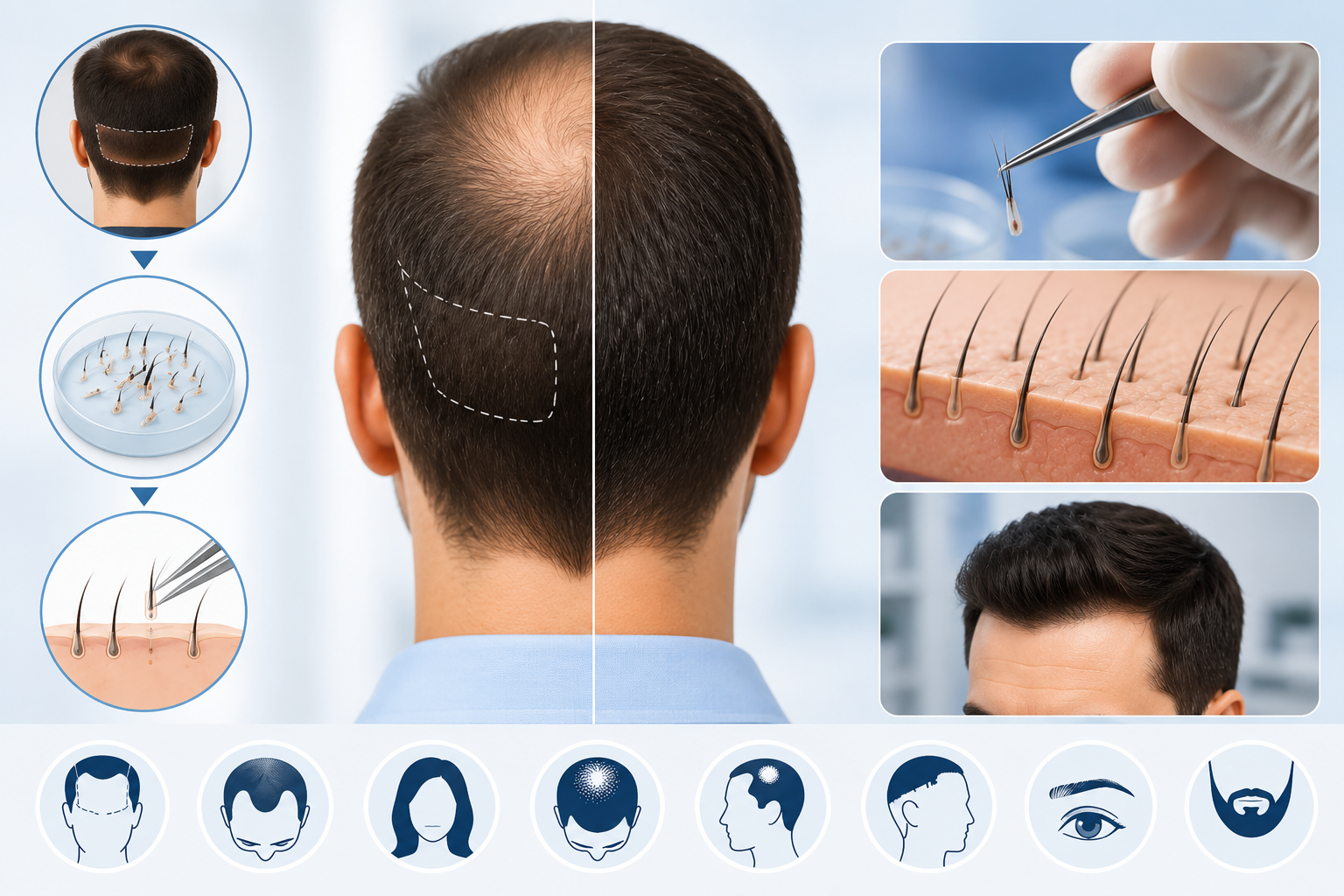
A hair transplant is a surgical hair restoration procedure in which healthy hair follicles are harvested from a donor area and transplanted into areas affected by thinning or baldness.
The donor area is commonly located at the back or sides of the scalp, where hair follicles may be more resistant to the effects of androgenetic hair loss.
The transplanted follicles can continue producing hair in their new location. However, the long-term outcome depends on factors such as the cause and pattern of hair loss, donor-hair availability, scalp condition, age, genetics, and the progression of native-hair loss.
Hair transplantation may be considered for:
- Receding hairlines
- Male pattern hair loss
- Selected cases of female pattern hair loss
- Crown thinning
- Localized scalp hair loss
- Hair loss caused by trauma or selected scars
- Eyebrow restoration in selected cases
- Beard restoration in selected cases
A detailed assessment is important to determine whether hair transplantation is appropriate.
What Causes Hair Loss?
Hair loss can occur for many different reasons. Identifying the underlying cause is an important part of treatment planning.
Genetic Hair Loss
Androgenetic alopecia, commonly known as male or female pattern hair loss, is one of the most common causes of progressive hair thinning.
Age-Related Hair Thinning
Hair density and thickness can gradually decrease with age.
Hormonal Changes
Changes in hormone levels can contribute to hair thinning or increased shedding.
Stress and Illness
Significant physical or emotional stress, illness, surgery, or other systemic factors can trigger temporary hair shedding.
Nutritional Deficiencies
Deficiencies involving certain nutrients may contribute to hair loss in some individuals.
Medical Conditions
Certain medical conditions and medications can cause temporary or persistent hair loss.
Scalp Conditions
Inflammatory or other scalp disorders can affect hair growth and may require medical treatment before considering transplantation.
Trauma or Scarring
Injury, burns, or previous surgery can result in localized hair loss or scar-related alopecia.
Not every type of hair loss is best treated with a hair transplant. Identifying the cause is therefore essential.
Who Is a Candidate for Hair Transplant?
A hair transplant may be considered if you:
Have a stable or identifiable pattern of hair loss.
Have sufficient healthy donor hair.
Have areas of thinning or baldness that can benefit from transplantation.
Are in generally good health.
Have realistic expectations about the outcome.
Understand that existing non-transplanted hair may continue to thin.
Want a surgical option for restoring hair density in selected areas.
A consultation helps determine the cause of hair loss, evaluate the donor area, estimate the number of grafts required, and decide whether transplantation is the most appropriate treatment.
Hair Transplant for Men & Women
Hair-loss patterns differ between men and women, so treatment planning is approached differently for each.
Hair Transplant for Men
Male pattern hair loss commonly affects the frontal hairline, temples, mid-scalp, and crown. Hair transplantation can be used to restore or improve:
- Receding Hairline — carefully positioned grafts help restore a defined, natural-looking frontal hairline.
- Temple Area — improving temple recession creates better facial balance in selected patients.
- Crown Thinning — grafts can improve density in the crown when adequate donor hair is available.
- Diffuse Thinning — candidacy depends on donor density and the pattern of hair loss.
Hair Transplant for Women
Women can also experience hair thinning and may be suitable candidates in selected cases. Female hair loss can have several causes, including hormonal changes, genetics, nutritional deficiencies, and medical conditions — a proper evaluation is important before surgery. Hair transplantation may be considered for selected women with:
- Localized hairline thinning
- Widening of the parting
- Localized areas of reduced density
- Hair loss caused by selected scars or trauma
For both men and women, the right treatment approach depends on the individual cause and pattern of hair loss, confirmed through a detailed consultation.
Types of Hair Transplant Techniques
Hair transplantation techniques differ mainly in how donor follicles are harvested and prepared. Dr. Vinay Jacob helps determine which approach is appropriate for your donor area, hair characteristics, and treatment goals.
Follicular Unit Extraction
FUE involves harvesting individual follicular units from the donor area using small extraction instruments. The follicles are then prepared and transplanted into the recipient area.
Potential Benefits
The number of grafts and suitability of FUE depend on donor density, hair characteristics, degree of hair loss, and treatment goals.
Follicular Unit Transplantation
FUT involves removing a strip of scalp from the donor area and separating it into individual follicular units for transplantation.
Key Characteristics
Scar appearance varies with healing and surgical technique. FUT may be considered when the technique is appropriate for the patient's donor area and treatment goals.
FUE vs FUT at a Glance
| Feature | FUE | FUT |
|---|---|---|
| Harvesting Method | Individual follicular units extracted directly | Strip of scalp removed, then divided into units |
| Donor Scarring | Small, scattered extraction marks | Single linear scar |
| Donor-Area Recovery | Generally shorter | Slightly longer |
| Best Suited For | Many hair restoration procedures | Cases requiring a larger number of grafts |
Which Technique Is Better?
There is no single technique that is best for every patient. The appropriate method depends on:
The technique should be selected after individual assessment rather than based solely on the name of the procedure.
Grafts & Hairline Design
Two of the most important planning decisions in hair transplantation are how many grafts to use and how the hairline is shaped.
How Many Grafts Do You Need?
The number of grafts required varies from patient to patient. It depends on:
A larger number of grafts does not automatically mean a better result. The goal is to use the available donor hair strategically to create appropriate coverage while preserving donor reserves for future needs.
Natural Hairline Design
Hairline design is one of the most important aspects of hair transplantation. A natural-looking hairline should complement:
The frontal hairline is not created as a perfectly straight line. Small variations in hair direction, angle, and density help create a more natural transition.
Ready to Restore Your Hair?
If you are considering a hair transplant to restore density and improve your hairline, schedule a consultation with Dr. Vinay Jacob. A personalized evaluation can help determine the most suitable technique to achieve natural-looking, long-lasting results.
The Hair Transplant Procedure
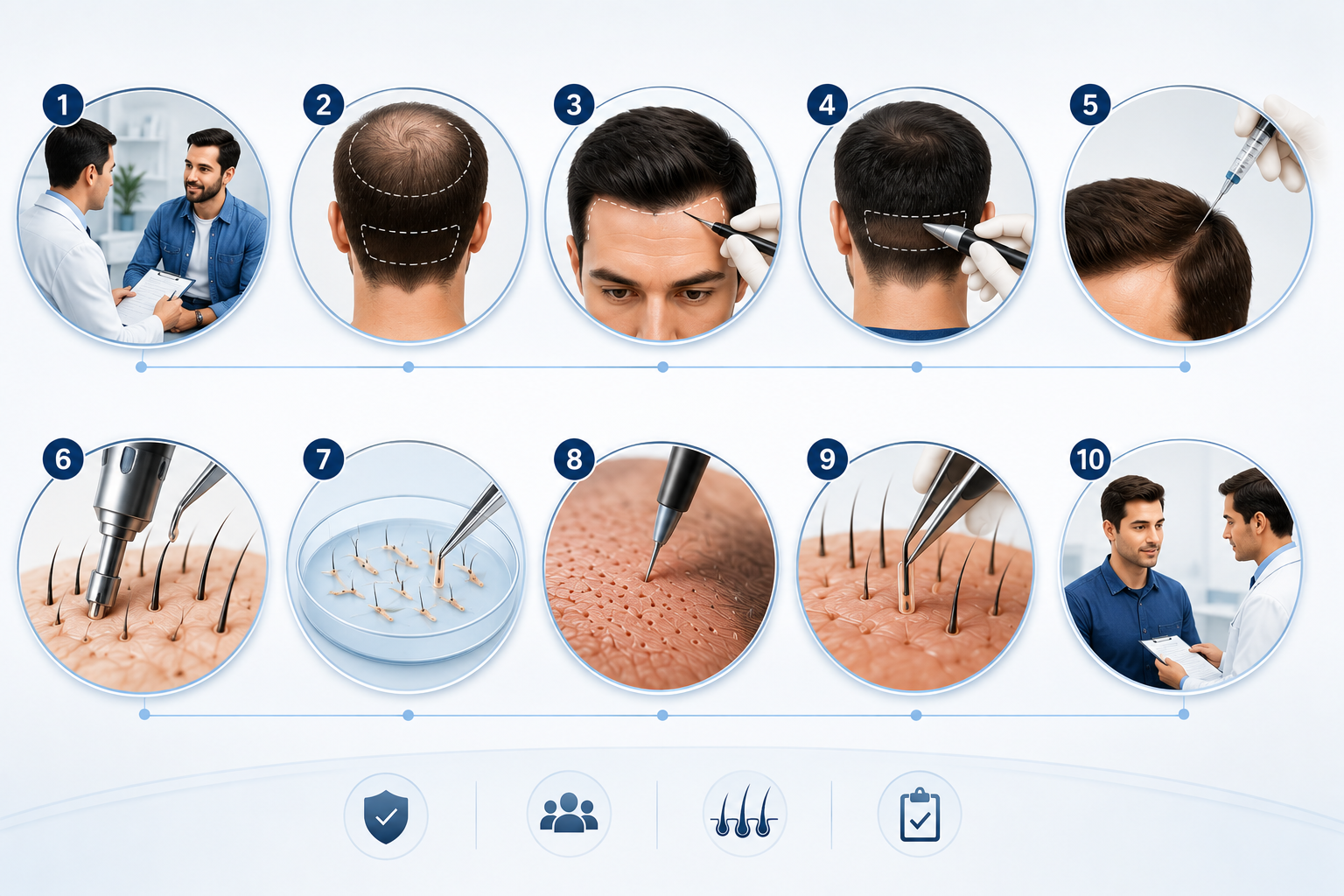
Consultation
The process begins with an assessment of your hair loss pattern, scalp, donor area, medical history, and treatment goals.
Hair & Scalp Assessment
The donor and recipient areas are evaluated to determine whether transplantation is appropriate and how many grafts may be required.
Hairline Design
The proposed hairline and treatment areas are planned according to facial proportions and the patient's existing hair pattern.
Donor Area Preparation
The donor area is prepared according to the selected transplantation technique.
Anaesthesia
Local anaesthesia is used to numb the donor and recipient areas and help keep the procedure comfortable.
Graft Harvesting
Follicular units are harvested from the donor area using the selected technique.
Graft Preparation
The harvested follicles are carefully sorted and prepared for implantation.
Recipient Site Creation
Small openings are created in the recipient area according to the planned hairline, direction, angle, and density.
Graft Placement
The prepared follicular units are carefully placed into the recipient sites.
Post-Procedure Care
Detailed instructions are provided regarding scalp care, washing, medication, activity, and follow-up.
Benefits of Hair Transplant
A carefully planned hair transplant may provide several benefits.
Aesthetic Benefits
- Restores hair in thinning areas
- Natural-looking hairline
- Improves hair density
- Improves appearance and confidence
Practical Benefits
- Uses your own hair
- Long-lasting hair growth
- Low maintenance once fully grown
Individual results vary depending on donor hair, hair characteristics, the extent of hair loss, and other factors.
Hair Transplant Recovery
Recovery is generally gradual, and most patients can return to routine activities within several days, depending on the procedure and individual healing.
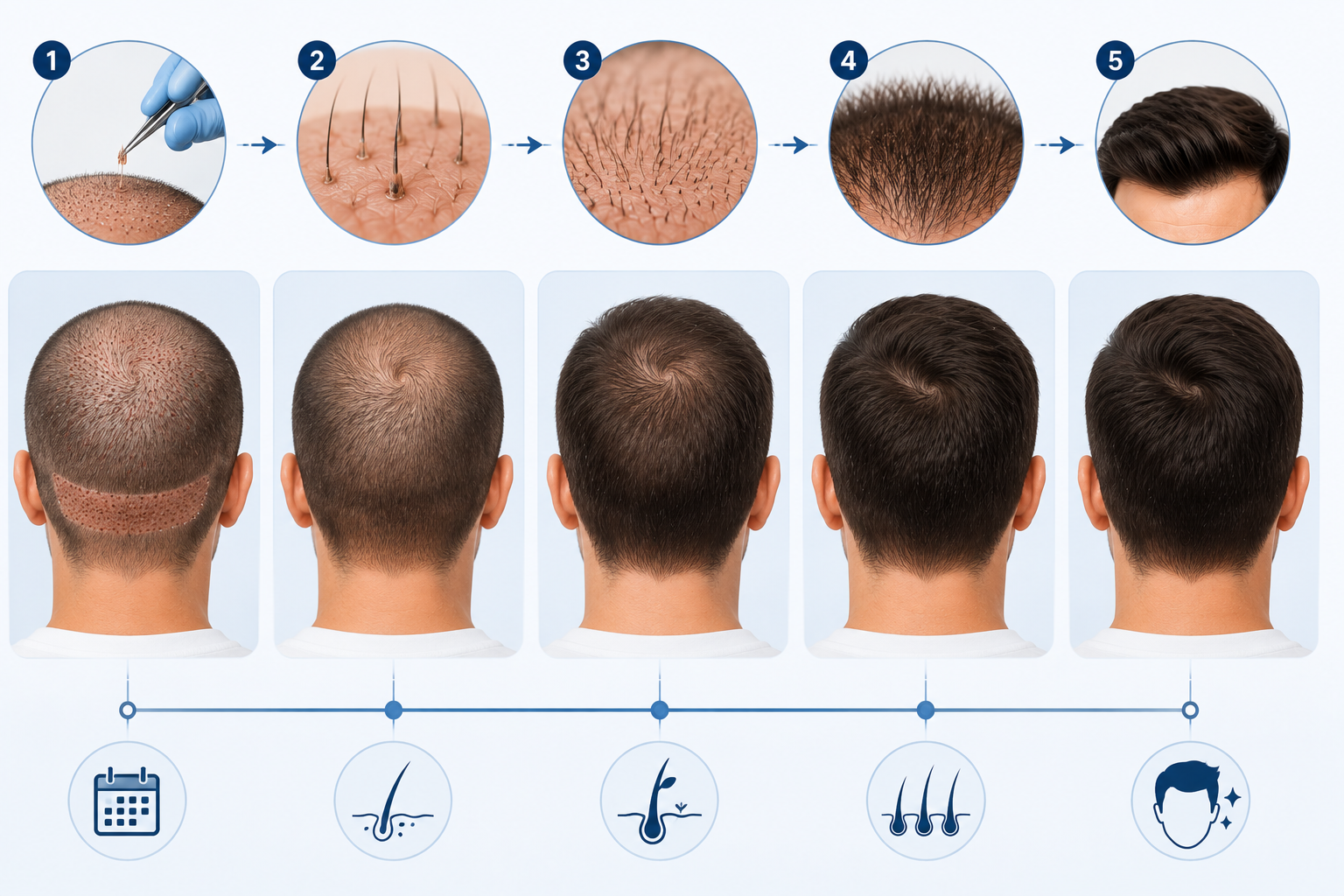
First Week
- Mild swelling
- Redness
- Small scabs around the grafts
- Mild discomfort
- Temporary tightness or sensitivity
The donor area also begins to heal during this period.
Two to Four Weeks
- Transplanted hairs may shed
This temporary shedding is commonly referred to as shock loss or shedding of transplanted hairs and does not necessarily mean the follicles have been lost.
Three to Four Months
- New hair growth may begin to become visible
- Early hairs may initially appear fine and gradually thicken
Six Months
- Noticeable improvement in hair density and coverage may become apparent
Nine to Twelve Months
- Hair becomes thicker and more mature
- The overall result can be assessed more clearly
Some patients may continue to see improvement beyond 12 months.
Hair Transplant Results Timeline
Month 1
The transplanted hairs may shed and enter a resting phase.
Month 3
Early signs of new hair growth may begin to appear.
Month 6
Visible improvement in coverage and density may develop.
Month 9
Hair becomes thicker and continues to mature.
Month 12
The overall result is usually much more apparent, with continued refinement possible beyond this stage.
Important: Hair growth is gradual. The final outcome depends on the patient's healing, graft survival, donor quality, hair characteristics, and ongoing hair loss.
Hair Transplant Before & After Gallery
Explore before and after results of patients who have undergone hair transplant surgery in Mumbai with Dr. Vinay Jacob. Each treatment plan is customized to the patient's hair-loss pattern, donor area, hairline, and desired level of coverage. Individual results may vary and photographs should not be considered a guarantee of a particular outcome.
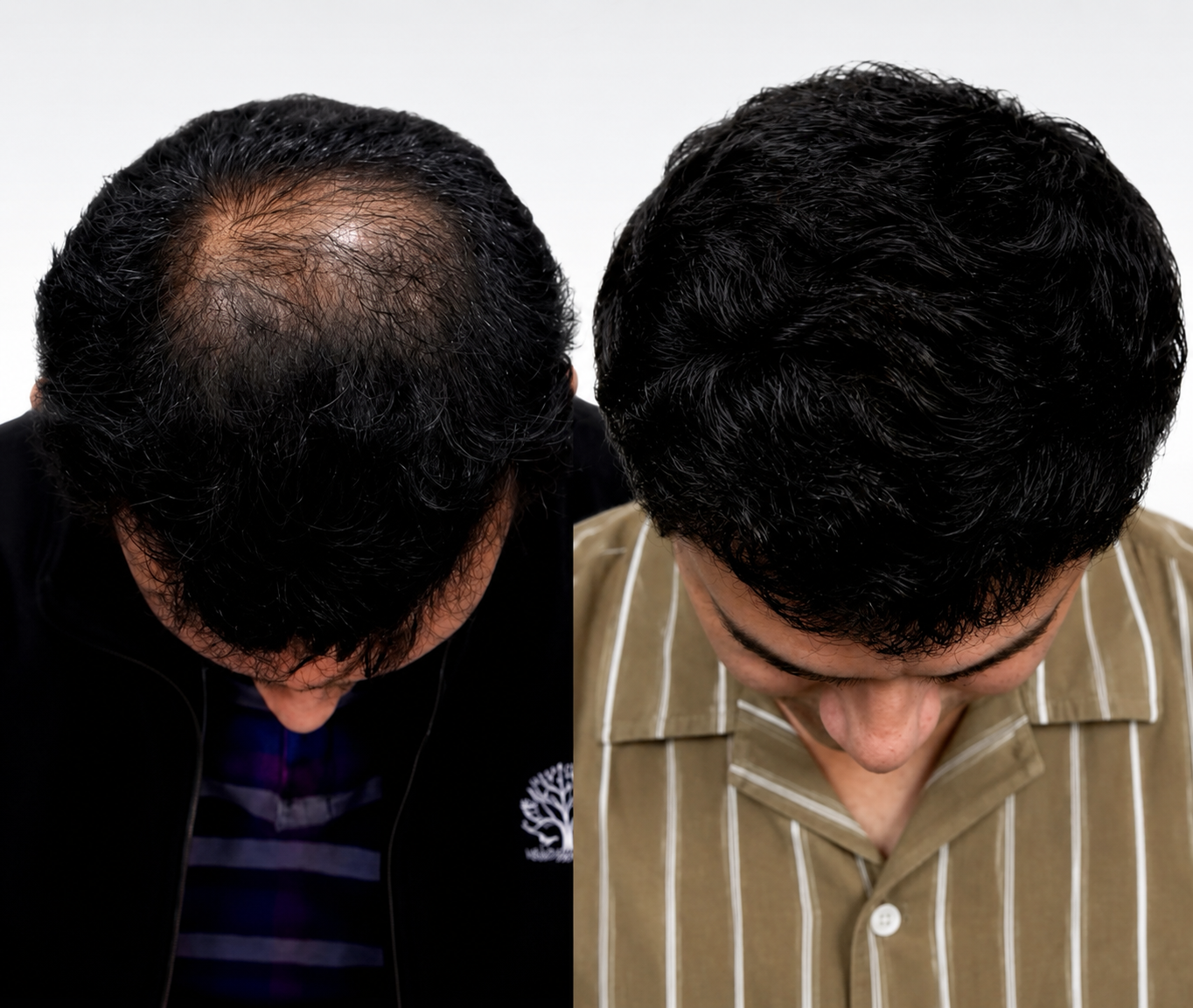 Before & After
Hair Transplant Result
Individual results may vary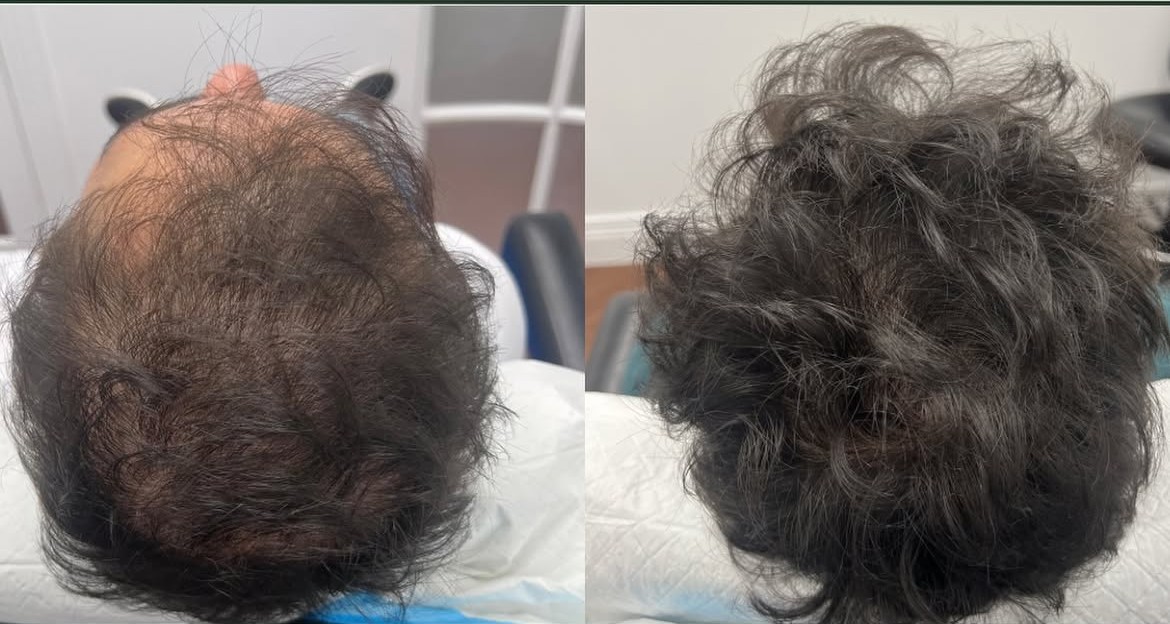 Before & After
Hair Transplant Result
Individual results may vary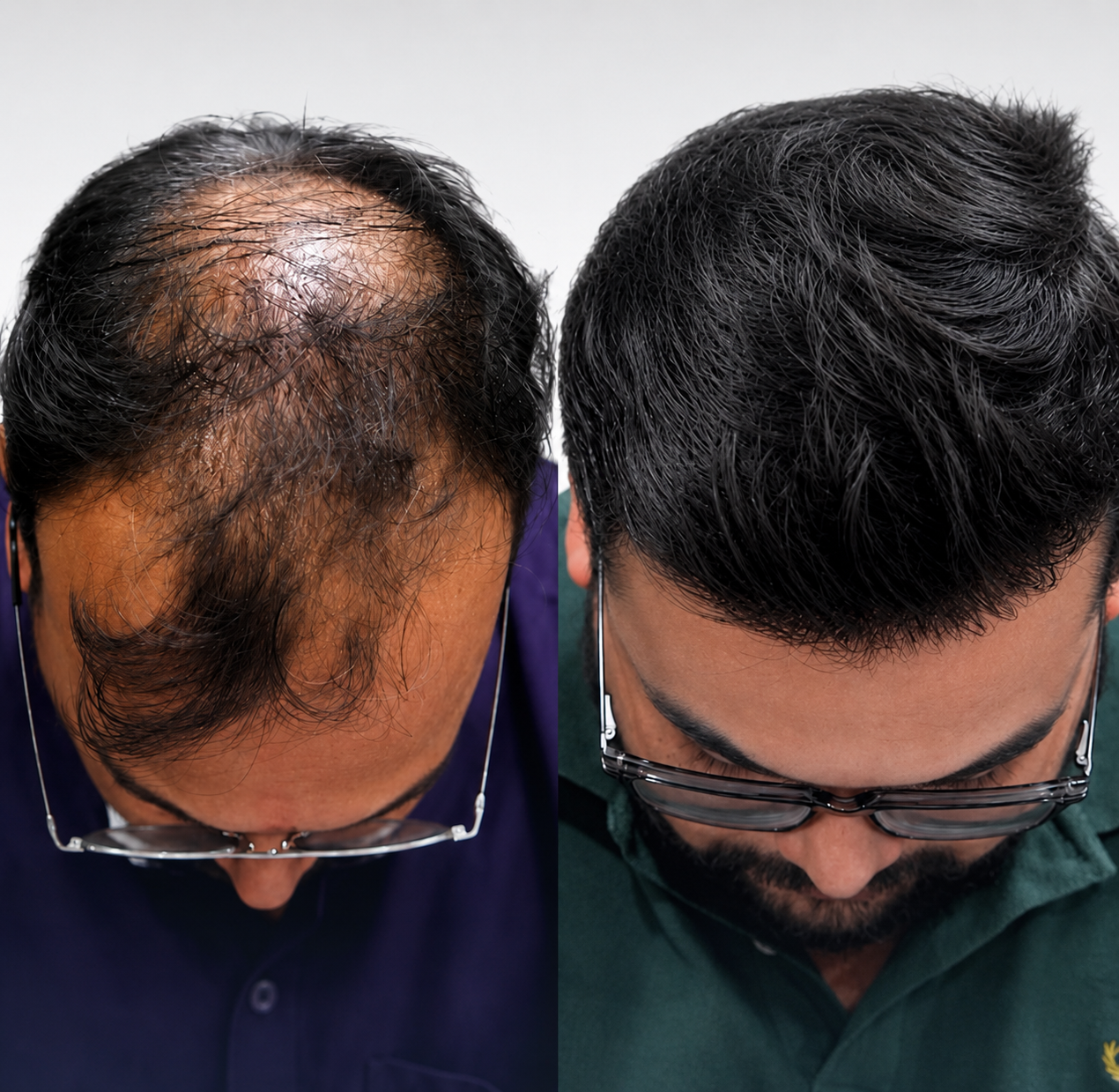 Before & After
Hair Transplant Result
Individual results may varyPotential Hair Restoration Benefits
Treatment outcomes depend on individual factors and the availability of suitable donor hair.
Improved Hairline Definition
Carefully planned graft placement can improve the appearance of a receding hairline.
Increased Hair Coverage
Transplantation can improve coverage in selected thinning or bald areas.
Improved Hair Density
Strategic placement of available grafts can create the appearance of greater density.
Natural-Looking Hair Growth
Proper hairline design, graft placement, angle, and direction are important for a natural appearance.
Hair Transplant Cost in Mumbai
The cost of a hair transplant in Mumbai varies considerably between patients. As an indicative estimate, hair transplant cost in Mumbai may range from approximately ₹50,000 to ₹2 lakh or more, depending on the number of grafts required, technique, surgeon's fees, facility, and complexity of the procedure. A smaller procedure requiring fewer grafts may cost less, while extensive restoration involving a larger number of grafts may cost more. The exact cost can only be determined after assessing your hair loss and donor area.
Factors Affecting Hair Transplant Cost
Number of Grafts
The number of grafts required is one of the most important factors affecting the overall cost.
Extent of Hair Loss
More extensive baldness or thinning generally requires a larger treatment area and potentially more grafts.
Hair Transplant Technique
The selected technique, such as FUE or FUT, may influence the overall procedure cost.
Donor Hair Availability
Donor density and the quality of available hair can influence treatment planning and complexity.
Surgical Complexity
Previous hair transplants, scar tissue, unusual hair-loss patterns, or extensive restoration may require additional planning.
Hospital or Facility
Facility, operating-room, nursing, and related charges may contribute to the overall treatment cost.
Surgeon's Expertise
The surgeon's qualifications, experience, and role in planning and performing the procedure can influence professional fees.
What May Be Included in the Cost?
Depending on the treatment plan and facility, the overall estimate may include:
Get a Personalized Hair Transplant Cost
During your consultation, Dr. Vinay Jacob can evaluate your hair-loss pattern, donor area, desired coverage, and treatment goals. A personalized treatment plan and cost estimate can then be provided based on the number of grafts and technique recommended for your case.
Risks & Complications of Hair Transplant
Hair transplantation is generally considered a safe surgical procedure when appropriately planned and performed by a qualified surgeon. However, complications can occur.
Swelling
Temporary swelling of the scalp or forehead can occur after the procedure.
Redness
The recipient area may remain red for some time following transplantation.
Infection
Although uncommon, infection can occur following surgery.
Folliculitis
Inflammation around hair follicles may occur during the healing or growth phase.
Temporary Numbness
Temporary changes in scalp sensation may occur in the donor or recipient area.
Scarring
FUE can leave small extraction marks, while FUT leaves a linear donor-area scar. Scar visibility varies between individuals.
Uneven Growth
Hair growth may not be completely uniform, and some patients may require additional treatment to improve density or symmetry.
Graft Loss
Not every transplanted graft is guaranteed to survive. Graft survival depends on multiple surgical and patient-related factors.
Shock Loss
Temporary shedding of transplanted or existing hairs can occur after surgery.
Continued Hair Loss
A transplant does not necessarily stop the progression of genetic hair loss in non-transplanted hair.
Careful planning, appropriate patient selection, and proper post-operative care can help reduce risks.
Hair Transplant and Existing Hair Loss
One important consideration before transplantation is that a hair transplant does not stop future hair loss in untreated areas.
Transplanted follicles may be more resistant to androgenetic hair loss, but the patient's existing non-transplanted hair can continue to thin.
Depending on the cause and pattern of hair loss, your doctor may discuss medical treatments or other approaches to help preserve existing hair.
Long-term planning is particularly important for younger patients with progressive hair loss.
Hair Transplant for Beard & Eyebrow Restoration
Hair transplantation is not limited to the scalp. In selected patients, transplantation may also be considered for:
Beard Restoration
Hair follicles can be transplanted to areas of sparse or absent beard growth.
Eyebrow Restoration
Selected patients with reduced eyebrow density or localized eyebrow hair loss may be considered for eyebrow transplantation.
Scar-Related Hair Loss
Transplantation may be considered for selected areas of hair loss caused by trauma or scars, depending on scar quality and blood supply.
The suitability of these procedures depends on individual anatomy and donor-hair availability.
Long-Term Care After Hair Transplant
A successful hair transplant is only one part of long-term hair restoration. Patients should:
- Follow post-operative instructions carefully.
- Attend scheduled follow-up appointments.
- Protect the scalp during the early healing period.
- Follow recommended hair-care instructions.
- Monitor changes in existing hair.
- Seek medical advice if significant new hair loss occurs.
If you have ongoing genetic hair loss, your doctor may discuss appropriate treatments to help preserve your existing hair.
About Dr. Vinay Jacob
Dr. Vinay Jacob is a Senior Plastic & Reconstructive Surgeon in Mumbai with more than 25 years of experience in cosmetic, plastic, and reconstructive surgery.
Qualifications
MBBS, MS (General Surgery), MCh (Plastic Surgery), DNB (Plastic Surgery)
Experience
25+ years of surgical experience
International Training
International fellowship training across Europe and the UK.
Hospital Associations
Associated with Bombay Hospital and Breach Candy Hospital in Mumbai.
Areas of Expertise
Hair Transplantation
Hair Restoration
Cosmetic Plastic Surgery
Reconstructive Surgery
Breast Surgery
Facial Plastic Surgery
Hand & Microsurgery
Advanced reconstructive techniques
Consult an Experienced Hair Transplant Surgeon
Take the next step towards restoring your hair and confidence. Book a one-on-one consultation with Dr. Vinay Jacob to discuss your hair-loss pattern, donor hair, treatment options, and expected results.
Frequently Asked Questions
Is a hair transplant permanent?
How much does a hair transplant cost in Mumbai?
Is hair transplant surgery painful?
How long does a hair transplant take?
How many grafts will I need?
When will I see hair transplant results?
Does transplanted hair fall out?
Will the hair transplant look natural?
Can women undergo hair transplantation?
Can a hair transplant treat a receding hairline?
Can a hair transplant treat crown baldness?
What is FUE hair transplant?
What is FUT hair transplant?
Which is better: FUE or FUT?
Can transplanted hair fall out again?
How soon can I return to work after a hair transplant?
Are hair transplant results immediate?
Can hair transplantation be performed after a previous hair transplant?
Can hair transplantation treat scar-related hair loss?
Can I undergo a hair transplant if I have very little donor hair?
Disclaimer
The information provided on this page is for educational purposes only and should not be considered medical advice. Every patient is unique, and treatment recommendations may vary based on individual anatomy, health, and aesthetic goals.
Please consult Dr. Vinay Jacob for a personalized evaluation and treatment plan.
Restore Your Hair & Confidence
If you are experiencing hair thinning, a receding hairline, crown baldness, or localized hair loss, a personalized hair restoration assessment can help determine whether a hair transplant in Mumbai is right for you. Schedule a consultation with Dr. Vinay Jacob to discuss your hair-loss pattern, donor hair, treatment options, expected results, recovery, and estimated cost.
Related Treatments
Explore other cosmetic and reconstructive procedures that may complement your treatment goals.
Rhinoplasty
Reshape and refine the nose for cosmetic, functional, or reconstructive reasons.
Face Lift
Address facial ageing and improve facial contours with personalized facelift surgery.
Gynecomastia Surgery
Reduce excess male breast tissue and improve chest contour.
Breast Implant Surgery
Enhance breast size, restore volume, and improve breast proportions.
Liposuction
Reduce localized areas of excess fat and improve body contour.
References
International Society of Hair Restoration Surgery (ISHRS)
Trusted information and guidelines related to hair restoration surgery.
American Academy of Dermatology (AAD)
Patient resources covering hair loss causes and treatment options.
U.S. National Library of Medicine / MedlinePlus
Evidence-based patient information regarding hair loss.
Cleveland Clinic
Clinical information on hair transplantation and hair loss.