


Charcot Foot: What Every Person With Diabetes Should Know
Diabetes can affect more than blood sugar levels. Over time, it can damage the nerves in the feet, reducing the ability to feel pain, pressure, and changes in temperature. When this nerve damage affects the bones and joints of the foot, a serious condition called Charcot foot may develop.
Charcot foot, also known as Charcot neuroarthropathy, can cause swelling, warmth, redness, bone damage, and changes in the shape of the foot. One of the biggest concerns is that the condition may develop without significant pain, allowing a person to continue walking on an injured foot and worsen the damage.
Recognizing the early warning signs is essential for preventing long-term complications. Without timely treatment, Charcot foot can lead to permanent deformity, skin breakdown, diabetic foot ulcers, and an increased risk of severe infection.
For people seeking Diabetic Feet Treatment in Mumbai, understanding Charcot foot can help them recognize when changes in their feet require specialist evaluation. Early diagnosis, appropriate immobilization, and regular monitoring can help protect the foot and reduce the risk of serious complications.
What Is Charcot Foot?
Charcot foot is a condition in which the bones, joints, and soft tissues of the foot become weakened and damaged, usually because of nerve damage associated with diabetes.
When sensation is reduced, a person may not recognize a minor fracture, joint injury, or repeated pressure on the foot. They may continue walking normally, placing additional stress on already weakened bones and joints.
Over time, this can lead to:
- Bone fractures and joint dislocations
- Swelling and inflammation
- Changes in foot shape
- Collapse of the foot arch
- Abnormal pressure points
- Skin breakdown and ulcer formation
Charcot foot most commonly affects people who have diabetic peripheral neuropathy, although it can occur in other conditions that cause significant nerve damage.
The condition often develops in the midfoot, but the ankle, hindfoot, and other parts of the foot can also be affected.
Why Does Charcot Foot Develop in People With Diabetes?
The main underlying risk factor is peripheral neuropathy, a form of nerve damage that can develop after years of diabetes.
Several mechanisms contribute to the condition.
1. Loss of Protective Sensation
Healthy nerves help a person recognize pain, pressure, and injuries. When diabetic neuropathy damages these nerves, the protective warning signals may become weaker or disappear.
A person may continue walking on a foot with a small fracture or joint injury because it does not hurt as expected.
Repeated weight-bearing can worsen the damage.
2. Repeated Stress on the Bones and Joints
Everyday activities place pressure on the feet. When the bones and joints are weakened or injured, continued walking can cause additional fractures and joint instability.
Because the person may not feel significant pain, the injury can progress without being recognized.
3. Inflammation and Bone Weakening
The body's response to injury can contribute to inflammation and changes in bone metabolism. In a foot affected by neuropathy, this process may contribute to progressive damage and deformity.
Charcot foot is not simply a result of high blood sugar on one particular day. It is a complex condition associated with nerve damage, injury, inflammation, and mechanical stress.
4. Previous Foot Injuries or Surgery
A history of foot trauma, fractures, deformity, or surgery may increase concern in someone with diabetic neuropathy.
However, Charcot foot can also develop after relatively minor injuries that a person may not remember.
Early Warning Signs of Charcot Foot
Recognizing early symptoms is important because the condition may be more manageable before substantial bone and joint damage occurs.
1. Swelling in One Foot
Sudden or unexplained swelling is one of the common early signs.
The affected foot may look noticeably larger than the other foot. Swelling can develop even when there is no obvious injury or significant pain.
A swollen foot in a person with diabetes should not automatically be attributed to standing for too long or ordinary fatigue.
2. Increased Warmth
The affected foot may feel warmer than the other foot because of inflammation.
A noticeable temperature difference between the two feet can be an important warning sign, particularly when accompanied by swelling or redness.
Although warmth is common in active Charcot foot, it can also occur with infection and other medical conditions. A clinician needs to determine the cause.
3. Redness or Discolouration
The skin over the affected area may appear red or discoloured.
Redness may decrease when the foot is elevated, but this observation cannot reliably distinguish Charcot foot from infection or other conditions.
If redness is accompanied by an open wound, discharge, fever, or rapidly worsening symptoms, urgent assessment is necessary.
4. Little or No Pain
One of the most concerning features of Charcot foot is that the amount of pain may be much less than expected for the degree of bone and joint damage.
A person may have swelling, warmth, and fractures without experiencing severe discomfort.
The absence of pain does not mean the foot is healthy. Anyone with diabetes and neuropathy who develops a warm, swollen foot should seek prompt medical assessment.
5. Changes in Foot Shape
As the condition progresses, damage to the bones and joints can alter the structure of the foot.
Possible changes include:
- Flattening of the arch
- A rounded or convex sole
- Changes in toe position
- Widening of the foot
- Joint instability
- Changes in the way the foot bears weight
These changes can create abnormal pressure points and increase the risk of ulcers.
6. Difficulty Walking or Wearing Shoes
Swelling and changes in foot structure may make ordinary footwear uncomfortable or difficult to wear.
The person may notice that one shoe feels tighter or that the foot no longer fits comfortably inside previously suitable footwear.
These changes should be assessed rather than managed simply by buying larger shoes.
Charcot Foot vs Diabetic Foot Infection: What Is the Difference?
Charcot foot and diabetic foot infection can cause similar symptoms, including redness, warmth, and swelling. Distinguishing between them is important because the treatment approaches differ.
| Feature | Charcot foot | Diabetic foot infection |
|---|---|---|
| Main problem | Bone and joint damage associated with neuropathy | Infection of skin or deeper tissues |
| Swelling | Common, particularly during the active phase | Common around an infected area |
| Warmth and redness | Common | Common |
| Open wound | May be absent initially | Often present, but not always |
| Pain | May be surprisingly mild | May be present or reduced due to neuropathy |
| Bone damage | Fractures, joint instability, and deformity | Bone infection may develop in severe or long-standing cases |
| Main treatment focus | Immobilization and pressure relief | Infection control, wound care, and other treatment as required |
These features are not enough to diagnose the condition at home. Charcot foot and infection can also occur together.
If a person has diabetes and develops a warm, swollen, red foot, prompt medical evaluation is necessary.
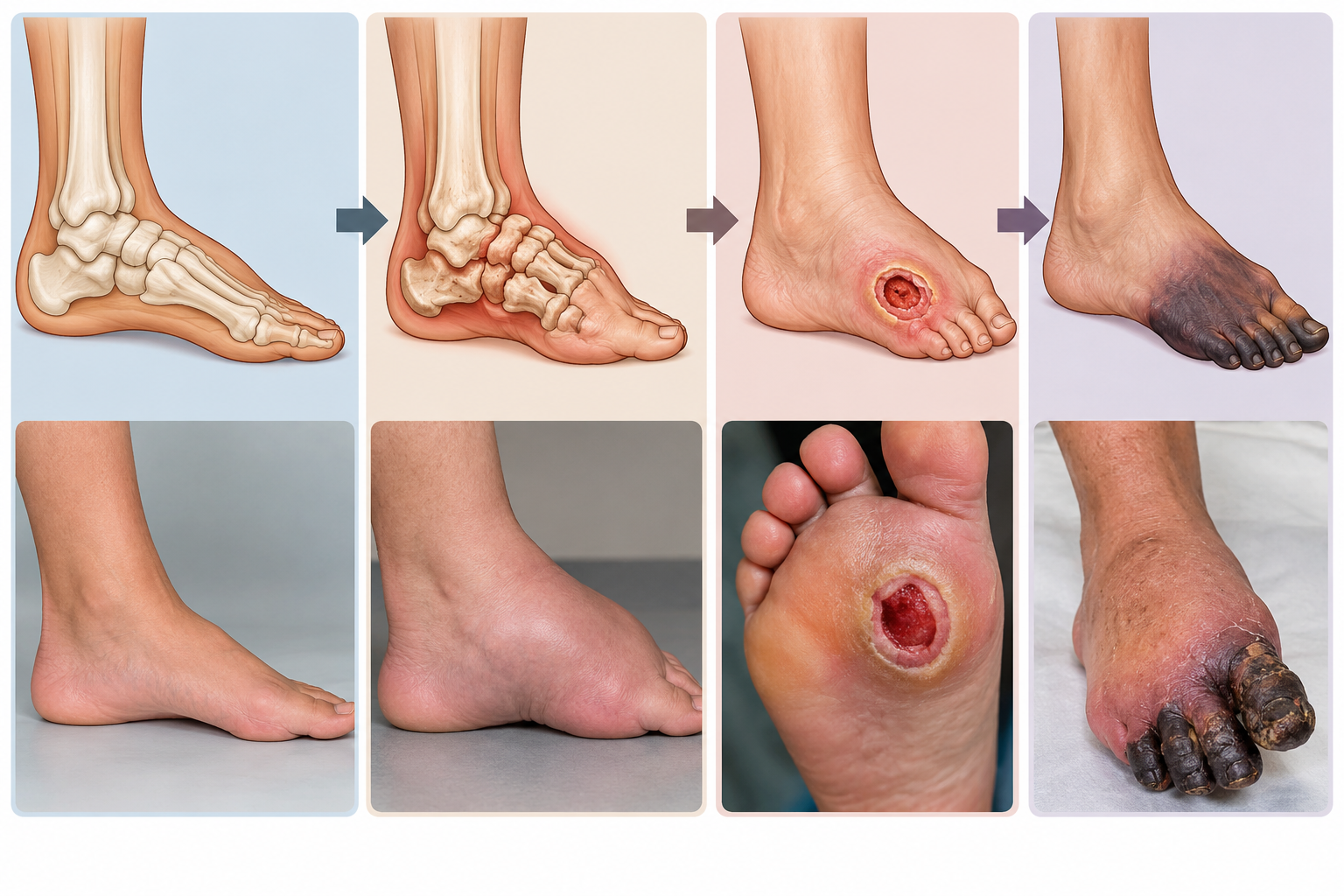
Can Charcot Foot Lead to Diabetic Foot Ulcers or Gangrene?
Yes, Charcot foot can increase the risk of diabetic foot ulcers.
As the bones and joints change shape, the distribution of pressure across the sole changes as well. Areas that previously carried little pressure may begin bearing excessive weight.
This can cause calluses, skin breakdown, and ulcers, particularly over prominent bones.
Once the skin breaks, bacteria may enter the wound and cause an infection. In severe cases, infection can spread into deeper tissues or bone.
Gangrene is not an inevitable consequence of Charcot foot. However, severe infection and poor blood circulation can increase the risk of tissue death.
When an ulcer becomes infected or circulation is severely compromised, urgent assessment is important. People who require Gangrene Feet Treatment in Mumbai should receive appropriate evaluation of the infection, blood supply, and extent of tissue damage.
Preventing ulcers through early Charcot foot treatment can help reduce the risk of these complications.
How Is Charcot Foot Diagnosed?
Diagnosis requires a clinical examination and, when appropriate, imaging tests.
1. Medical History and Foot Examination
The doctor may ask about diabetes duration, neuropathy, recent injuries, previous ulcers, and changes in walking or footwear.
The examination may assess:
- Swelling and skin temperature
- Redness and skin condition
- Foot shape and alignment
- Sensation and protective reflexes
- Circulation and foot pulses
- Presence of wounds or pressure points
- Joint stability and tenderness
The doctor may also compare the affected foot with the other foot.
2. X-Rays
X-rays can identify fractures, dislocations, bone fragmentation, and changes in joint alignment.
However, early Charcot foot may not produce obvious changes on an X-ray.
A normal initial X-ray therefore does not always exclude the condition.
3. MRI
Magnetic resonance imaging may be recommended when Charcot foot is suspected but X-rays do not show clear abnormalities.
MRI can help identify bone marrow changes, early fractures, and soft-tissue abnormalities. It may also help assess possible infection, although the distinction between Charcot changes and infection can sometimes be difficult.
4. Additional Investigations
Depending on the findings, the doctor may recommend blood tests, vascular investigations, or other imaging studies.
These tests help assess complications and identify other causes of a swollen, warm foot, including infection, fracture, and circulation problems.
Treatment Options for Charcot Foot
The primary goals of treatment are to protect the foot, prevent further bone and joint damage, maintain alignment, and reduce the risk of ulcers.
Treatment depends on the stage of the condition, the degree of deformity, skin health, circulation, and whether infection is present.
1. Immediate Offloading and Immobilization
When active Charcot foot is suspected, the foot should be protected from further stress while urgent specialist assessment is arranged.
The treating team may recommend immobilization and offloading to reduce pressure on the affected bones and joints.
Depending on the individual case, options may include:
- A non-removable total contact cast
- A suitable removable cast walker
- Other protective immobilization devices
The appropriate device depends on the condition of the skin, swelling, circulation, infection risk, and the patient's ability to attend follow-up appointments.
A cast or protective device should be fitted and monitored by trained professionals. Do not attempt to create your own tight bandage or cast.
2. Reducing Weight-Bearing
Continued walking on an actively affected foot can worsen bone and joint damage.
A clinician may recommend limiting weight-bearing and using crutches, a walker, or another mobility aid.
The degree of weight-bearing restriction should be individualized. Follow the treating team's instructions rather than continuing normal activities because the foot does not hurt.
3. Regular Monitoring
Charcot foot often requires repeated clinical assessments.
During follow-up, the medical team may monitor:
- Swelling and warmth
- Skin condition
- Changes in foot shape
- Cast or device fit
- Signs of pressure injury
- Imaging findings when necessary
Treatment may continue until the condition becomes inactive and the foot is sufficiently stable.
The timeline varies considerably. Some people require several months of protection, and complex cases may take longer.
4. Custom Footwear and Orthotics
Once the active phase has settled, customized footwear, insoles, or orthotic devices may help distribute pressure more evenly.
These devices can protect vulnerable areas and reduce the likelihood of recurrent ulcers.
Regular foot assessments remain important because the foot's shape and pressure distribution may change over time.
5. Surgery for Selected Cases
Surgery may be considered when severe deformity, instability, recurrent ulcers, or other complications cannot be managed adequately with non-surgical treatment.
Depending on the individual condition, surgery may involve correcting deformity, stabilizing joints, or addressing prominent bones that create persistent pressure points.
Surgery is not necessary for every person with Charcot foot. The decision requires careful assessment of bone health, circulation, infection, skin condition, and the likelihood of successful healing.
6. Managing Diabetes and Other Risk Factors
Good diabetes management supports overall health and is an important part of long-term foot care.
The treating team may also address smoking, blood pressure, cholesterol, nutrition, and other factors that affect circulation and healing.
Blood sugar management alone will not reverse established bone deformity, so it must be combined with appropriate protection and specialist treatment.
How Long Does Charcot Foot Take to Heal?
Recovery varies depending on how early the condition is diagnosed and how much bone and joint damage has occurred.
The active phase may last several months, and some people require prolonged immobilization and follow-up.
Factors that can influence recovery include:
- Severity of bone and joint changes
- How early treatment begins
- Consistency with offloading instructions
- Presence of ulcers or infection
- Blood circulation
- Overall diabetes management
- Whether surgery is required
The decision to resume normal weight-bearing should be based on clinical assessment rather than pain alone. A foot can feel better before the underlying bone and joint condition has fully stabilized.
How Can You Prevent Charcot Foot Complications?
Although Charcot foot cannot always be prevented, appropriate diabetes care and early recognition of symptoms can help reduce complications.
Inspect Your Feet Daily
Check the soles, heels, toes, and spaces between the toes for swelling, redness, warmth, blisters, cuts, and changes in shape.
Use a mirror or ask someone to help if you cannot see the bottom of your feet clearly.
Never Ignore a Warm, Swollen Foot
A new change in one foot deserves attention, even if it is painless.
Seek prompt medical advice and avoid putting unnecessary weight on the affected foot until you receive clinical guidance.
Wear Suitable Footwear
Use properly fitted shoes that do not create pressure or rubbing. After Charcot foot becomes inactive, your doctor may recommend specialized footwear or custom orthotics.
Avoid Walking Barefoot
Walking barefoot can expose an insensate foot to injuries that may go unnoticed.
Protective footwear is especially important if you have diabetic neuropathy or a history of foot ulcers.
Attend Regular Foot Assessments
People with diabetes-related nerve damage, previous ulcers, foot deformity, or circulation problems may need more frequent professional foot checks.
Regular assessments can help identify problems before they progress.
Follow Your Treatment Plan
If you have been prescribed a cast, walking boot, or other offloading device, follow the instructions carefully.
Do not stop using the device or increase activity without discussing it with your treating team.
When Should You Seek Medical Attention?
If you have diabetes and notice a foot that has suddenly become warm, swollen, red, or unusually shaped, seek urgent medical assessment, even if you do not have pain.
Until you receive medical advice, avoid unnecessary weight-bearing on the affected foot.
Seek emergency care if you notice:
- Blackened or dead-looking tissue
- Rapidly spreading redness or swelling
- Pus or foul-smelling discharge
- An open wound with signs of infection
- Fever, chills, confusion, or severe weakness
- A suddenly cold, pale, or discoloured foot
These symptoms may indicate infection, severe circulation problems, or another urgent condition.
Frequently Asked Questions About Charcot Foot
- 1. Is Charcot foot common in people with diabetes?
Charcot foot is a recognized but relatively uncommon complication of diabetes. The risk is higher in people with significant peripheral neuropathy, particularly when foot injuries go unnoticed. - 2. Can Charcot foot occur without pain?
Yes. Nerve damage can reduce pain sensation, allowing fractures and joint damage to develop with surprisingly little discomfort. A warm, swollen foot should therefore be evaluated even when it is painless. - 3. Can Charcot foot be reversed?
Early treatment can help prevent further damage and may allow the foot to stabilize. However, established bone deformities may not fully return to their original shape. Some people need long-term protective footwear or surgery. - 4. Can I continue walking if I have Charcot foot?
Continuing to walk normally on an actively affected foot can worsen bone and joint damage. Seek prompt medical assessment and follow the clinician's instructions regarding immobilization and weight-bearing. - 5. Is Charcot foot the same as a diabetic foot ulcer?
No. Charcot foot primarily affects bones and joints, while a diabetic foot ulcer is an open wound in the skin. However, deformity caused by Charcot foot can create pressure points that lead to ulcers. - 6. Can Charcot foot lead to gangrene?
Charcot foot does not directly cause gangrene in every case. However, deformity can contribute to ulcers, which may become infected. Severe infection combined with poor circulation can lead to tissue death and, in advanced cases, gangrene. - 7. Does Charcot foot always require surgery?
No. Many cases are initially managed with immobilization, offloading, and careful monitoring. Surgery may be considered for severe deformity, instability, recurrent ulcers, or other complications. - 8. How is Charcot foot treatment different from gangrene treatment?
Charcot foot treatment focuses primarily on protecting the foot and preventing further bone and joint damage. Gangrene treatment focuses on assessing and managing dead tissue, controlling infection when present, and addressing inadequate blood supply. Some patients may require treatment for both conditions.
Looking for Diabetic Feet Treatment in Mumbai?
Charcot foot requires early recognition and appropriate management to protect the bones, joints, and skin of the foot. A painless, swollen, or unusually warm foot should never be dismissed in someone with diabetes, particularly if nerve damage is already present.
If you are looking for Diabetic Feet Treatment in Mumbai, consult an appropriate medical specialist for an examination and an individualized treatment plan. Depending on your condition, management may involve immobilization, pressure relief, imaging, wound care, circulation assessment, or surgical treatment.
If you are concerned about Charcot Foot Treatment in Mumbai or need assessment for a diabetic foot wound or possible gangrene, seek timely medical care rather than waiting for symptoms to worsen.
Early evaluation can help prevent further foot damage, reduce the risk of ulcers and infection, and support better long-term mobility.