


Gynecomastia Grade 1 to Grade 4 Explained
Gynecomastia is a common condition that causes enlargement of male breast tissue. It can affect boys during puberty, adult men, and even older individuals. While some cases are mild and barely noticeable, others involve significant enlargement, excess skin, and changes in chest contour that may impact confidence and daily life.
Not all gynecomastia is the same. Plastic surgeons classify the condition into four grades, ranging from mild enlargement to severe breast enlargement with excess skin. Understanding these grades helps determine the most appropriate treatment and whether surgery may be required.
If you are considering gynecomastia treatment in Mumbai, knowing your grade of gynecomastia can help you understand the treatment options available and what results you can expect.
What Is Gynecomastia?
Gynecomastia is the benign enlargement of male breast tissue caused by an increase in glandular tissue, fat, or both.
Unlike simple chest fat caused by obesity (sometimes called pseudogynecomastia), true gynecomastia involves enlargement of the breast gland itself.
The condition may affect:
- One breast
- Both breasts
- Symmetrical or uneven enlargement
Although gynecomastia is not usually harmful, it can affect physical appearance and self-esteem.
What Causes Gynecomastia?
Several factors may contribute to gynecomastia, including:
- Hormonal imbalance
- Puberty-related hormonal changes
- Aging
- Obesity
- Certain medications
- Steroid use
- Liver disease
- Kidney disorders
- Thyroid problems
- Genetic factors
In some individuals, no specific cause can be identified.
How Is Gynecomastia Graded?
Plastic surgeons commonly classify gynecomastia into Grades 1 to 4 based on the amount of breast enlargement, skin laxity, and chest contour changes.
The grade helps determine the most effective treatment approach.
Grade 1 Gynecomastia
Characteristics
Grade 1 is the mildest form of gynecomastia.
Patients usually have:
- Small enlargement beneath the nipple
- Puffy nipples
- Minimal glandular tissue
- No excess skin
- Normal chest contour
The enlargement is often only noticeable when wearing fitted clothing.
Treatment
Grade 1 gynecomastia may be treated with:
- Liposuction (in selected cases)
- Gland removal surgery
- Combination treatment if required
Most patients experience minimal scarring and relatively quick recovery.
Grade 2 Gynecomastia
Grade 2 involves more noticeable breast enlargement but still without significant skin excess.
Characteristics
- Moderate enlargement
- Wider chest fullness
- More visible chest contour changes
- Little or no loose skin
Many men become self-conscious when wearing T-shirts or swimming.
Treatment
Treatment often includes:
- Liposuction
- Gland excision
- Combination body contouring techniques
The goal is to restore a flatter, masculine chest appearance.
Grade 3 Gynecomastia
Grade 3 represents more advanced enlargement.
Characteristics
- Significant breast enlargement
- Mild to moderate loose skin
- Visible breast projection
- Less defined chest contour
The chest begins to resemble the appearance of a female breast due to increased tissue and skin stretching.
Treatment
Patients often require:
- Liposuction
- Gland removal
- Limited skin tightening or skin removal
Surgical planning becomes more individualized at this stage.
Grade 4 Gynecomastia
Grade 4 is the most severe form of gynecomastia.
Characteristics
- Large breast enlargement
- Significant excess skin
- Drooping breast tissue
- Downward-facing nipples
- Marked chest deformity
Patients often experience considerable emotional distress and difficulty finding well-fitting clothing.
Treatment
Grade 4 usually requires:
- Liposuction
- Complete gland excision
- Skin removal
- Chest reshaping
- Nipple repositioning in selected cases
Because of the extent of correction required, this is generally the most complex form of gynecomastia surgery.
Gynecomastia Grades at a Glance
| Grade | Breast Enlargement | Loose Skin | Typical Treatment |
|---|---|---|---|
| Grade 1 | Mild | None | Liposuction or gland removal |
| Grade 2 | Moderate | Minimal | Liposuction with gland excision |
| Grade 3 | Significant | Mild to moderate | Liposuction, gland removal, possible skin tightening |
| Grade 4 | Severe | Significant | Comprehensive surgery with skin removal and chest reshaping |
How Is the Grade Diagnosed?
During your consultation, the plastic surgeon will evaluate:
- Amount of glandular tissue
- Fat distribution
- Skin elasticity
- Chest symmetry
- Nipple position
- Overall body proportions
In some cases, additional investigations may be recommended to identify any underlying medical causes.
Is Surgery Necessary for Every Grade?
Not always.
The need for surgery depends on:
- Severity of enlargement
- Presence of glandular tissue
- Skin laxity
- Patient symptoms
- Cosmetic concerns
- Response to medical treatment, if appropriate
While mild cases may sometimes improve with hormonal changes or weight management, persistent glandular enlargement often requires surgery for lasting correction.
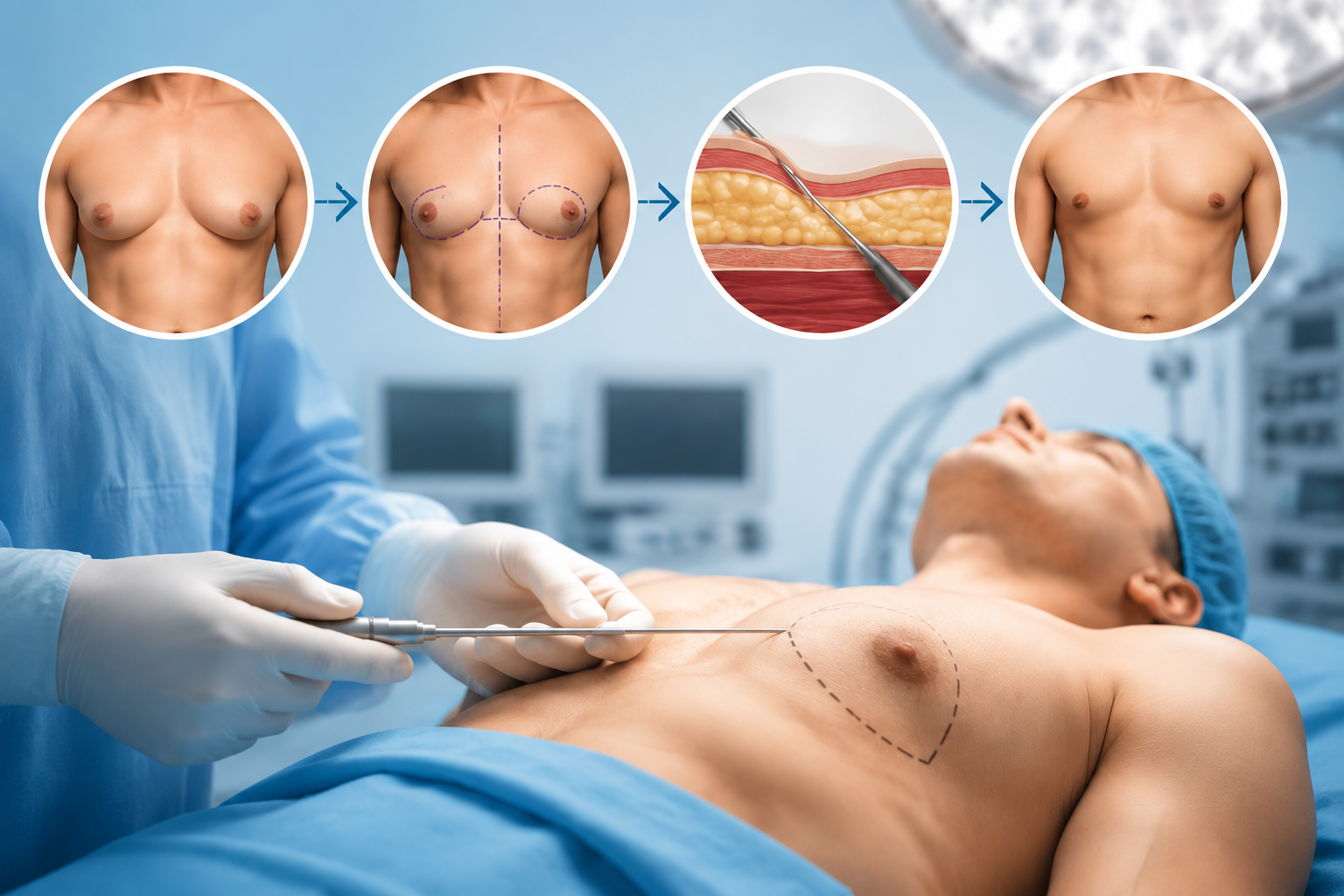
What Happens During Gynecomastia Surgery?
The exact procedure depends on the grade of gynecomastia.
Treatment may include:
- Removal of excess fat using liposuction
- Excision of enlarged glandular tissue
- Removal of loose skin (for advanced grades)
- Chest contour sculpting
- Nipple repositioning if required
The goal is to create a flatter, firmer, and more masculine chest contour.
Recovery After Gynecomastia Surgery
Recovery varies according to the grade of correction.
First Week
- Mild swelling
- Bruising
- Compression garment
- Temporary discomfort
Weeks 2-4
- Gradual improvement
- Return to office work
- Reduced swelling
Weeks 4-6
- Resume exercise with medical approval
- Continued contour improvement
Several Months
- Final chest shape becomes more defined
- Scars continue to mature
- Swelling gradually resolves
Following your surgeon's post-operative instructions helps achieve the best possible results.
Factors Affecting Gynecomastia Surgery Cost in Mumbai
Patients often ask about gynecomastia surgery cost in Mumbai, and one of the biggest factors is the grade of gynecomastia.
The overall cost depends on:
- Grade of gynecomastia
- Surgical complexity
- Need for skin removal
- Liposuction requirements
- Hospital facilities
- Type of anesthesia
- Surgeon's expertise
More advanced grades generally require more extensive surgery, which may influence the overall treatment cost.
Why Choose Dr. Vinay Jacob for Gynecomastia Treatment in Mumbai?
Dr. Vinay Jacob is an experienced plastic, aesthetic, and reconstructive surgeon with expertise in male chest contouring procedures.
His treatment approach includes:
- Thorough evaluation of gynecomastia grade
- Personalized surgical planning
- Advanced liposuction techniques
- Precise gland excision
- Natural-looking masculine chest contours
- Comprehensive post-operative care
Each treatment plan is customized according to the patient's anatomy, degree of enlargement, and aesthetic goals.
Frequently Asked Questions
- Can Grade 1 gynecomastia go away on its own?
In adolescents, mild gynecomastia may resolve naturally. Persistent enlargement in adults usually requires medical evaluation. - Is Grade 4 gynecomastia more difficult to treat?
Yes. Grade 4 often requires skin removal and more advanced surgical techniques in addition to gland excision. - Can exercise reduce gynecomastia?
Exercise can reduce body fat but cannot remove enlarged glandular breast tissue. - Is liposuction enough for every patient?
No. Many patients also require gland removal, especially in Grades 2, 3, and 4. - How do I know which grade I have?
Only a detailed examination by an experienced plastic surgeon can accurately determine the grade and recommend the most appropriate treatment.
Final Thoughts
Gynecomastia can range from a small amount of glandular enlargement beneath the nipple to significant breast enlargement with excess skin. Understanding the differences between Grade 1, Grade 2, Grade 3, and Grade 4 gynecomastia is essential because each stage requires a different treatment approach. While mild cases may involve relatively simple correction, advanced grades often require comprehensive chest contouring to restore a flatter, more masculine appearance.
If you are considering gynecomastia treatment in Mumbai, consulting an experienced plastic surgeon is the best way to determine your gynecomastia grade and receive a personalized treatment plan. A thorough evaluation can also help you understand the expected results, recovery process, and the factors that influence gynecomastia surgery cost in Mumbai, allowing you to make an informed decision with confidence.