

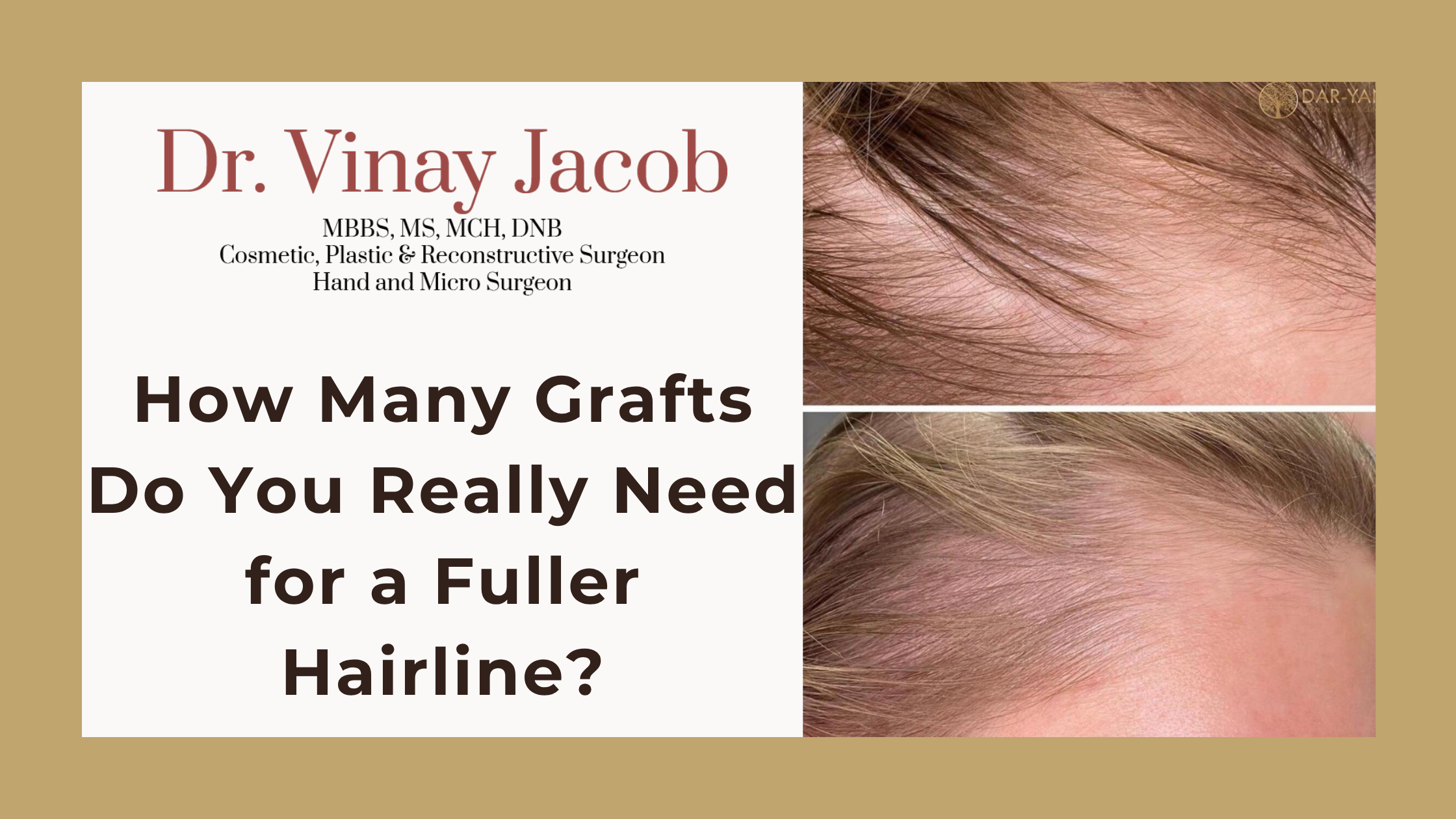
How Many Grafts Do You Really Need for a Fuller Hairline?
A receding hairline or thinning at the front of the scalp can significantly change the way your face looks. For many people experiencing hair loss, restoring the hairline is one of the main reasons they consider a hair transplant.
But one question often comes up during the planning stage: How many grafts are actually needed for a fuller hairline?
There is no single number that works for everyone. The number of grafts required depends on factors such as the extent of hair loss, the size and shape of the area being treated, hair density, donor hair availability, hair characteristics, and the type of result you want to achieve.
Understanding these factors can help you have more realistic expectations before considering a Hair Transplant in Mumbai.
What Is a Hair Graft?
Before discussing numbers, it is important to understand what a graft means.
A hair graft is a small unit of tissue containing one or more hair follicles. Depending on the extraction technique and the natural grouping of the follicles, a graft may contain one, two, three, or sometimes more hairs.
This means graft count and hair count are not the same thing.
For example, 1,500 grafts could potentially contain considerably more than 1,500 individual hairs. Your surgeon considers both the number of grafts and the number of hairs they contain when planning the transplant.
The objective is not simply to use as many grafts as possible. It is to place the available grafts strategically to create a natural-looking hairline and appropriate density.
How Many Grafts Are Usually Needed for a Fuller Hairline?
The number can vary considerably from person to person.
As a broad planning range:
- Early hairline recession: around 1,000–1,500 grafts
- Moderate recession: around 1,500–2,500 grafts
- More extensive frontal thinning: around 2,000–3,000+ grafts
These numbers are only general estimates and should not be treated as a fixed prescription.
Someone with a relatively small area of recession may need fewer grafts, while someone with significant frontal and temple loss may require considerably more.
A surgeon will usually assess your scalp and donor area before determining the appropriate graft requirement.
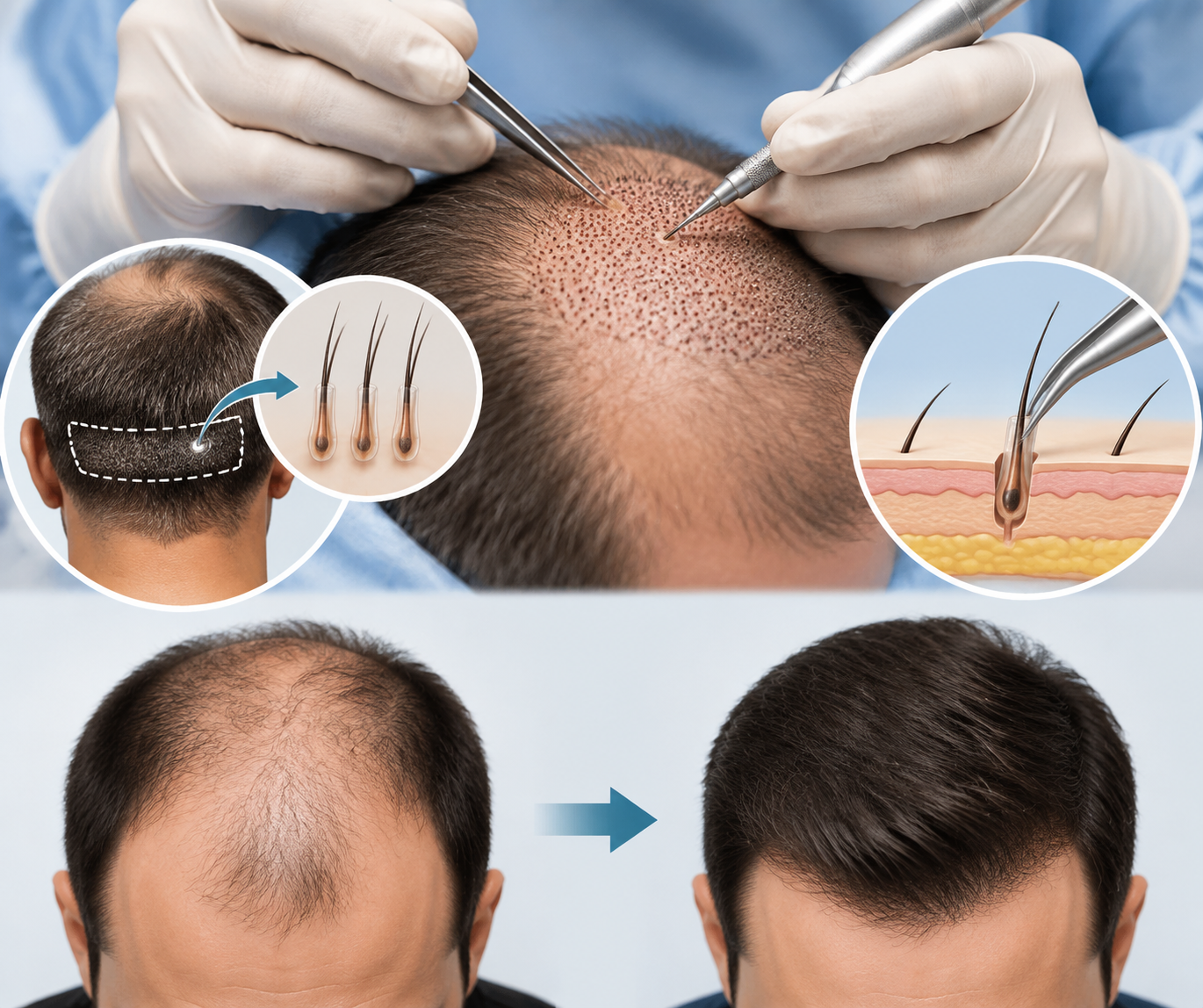
Why You Shouldn't Focus Only on the Graft Number
It is easy to assume that a larger graft number automatically means better results. That is not necessarily true.
Hair transplantation is about strategic placement, not simply maximum extraction.
Using too many grafts in a small area may unnecessarily reduce the available donor supply. On the other hand, using too few grafts may not provide the density you expect.
The goal is to achieve a balance between:
- Natural-looking density
- Appropriate hairline design
- Efficient use of donor hair
- Long-term planning
- Your existing hair pattern
- Future hair loss
A well-planned transplant should consider not only how the hairline looks immediately after surgery but also how it may look years later.
What Determines the Number of Grafts You Need?
Several factors influence graft requirements.
1. The Extent of Hair Loss
The most obvious factor is how much hair you have lost.
Someone with mild temple recession may require a relatively small number of grafts. A person with extensive frontal and crown thinning may require substantially more.
Doctors often assess hair loss patterns using classifications such as the Norwood scale for male pattern hair loss.
2. The Size of the Treatment Area
The larger the area being covered, the more grafts may be required.
For example, rebuilding only the frontal hairline requires fewer grafts than reconstructing the hairline, frontal scalp, mid-scalp, and crown.
Your surgeon may also recommend treating the most visually important areas first rather than attempting to cover every thinning area in a single session.
3. Desired Density
Not everyone wants the same level of density.
Some patients want a subtle improvement that makes the hairline look fuller. Others want maximum possible density.
However, natural hair density cannot always be recreated surgically because the donor area contains a finite supply of follicles.
A good treatment plan aims for natural-looking density rather than an unrealistic target.
4. Donor Hair Availability
Your donor area is one of the most important factors in hair transplantation.
The follicles are generally taken from areas of the scalp that are more resistant to androgenetic hair loss. The surgeon assesses:
- Donor density
- Hair thickness
- Follicular unit distribution
- Scalp condition
- Available donor area
- Future donor requirements
If donor density is limited, the number of grafts that can safely be harvested may also be limited.
5. Hair Thickness
Hair calibre can have a significant impact on the visual appearance of density.
Thicker hair shafts can provide more coverage than very fine hair, even when the graft count is similar.
This is why two people receiving the same number of grafts may not necessarily achieve identical-looking density.
6. Hair and Skin Characteristics
Hair colour, texture, curl, and contrast with the scalp can influence the visual perception of fullness.
For example, curly or wavy hair may provide greater visual coverage than very straight, fine hair.
Your surgeon considers these characteristics when designing the treatment.
7. Hairline Design
The hairline itself needs careful planning.
A natural-looking hairline is not usually a perfectly straight line. It often includes subtle irregularities and variations in density.
The surgeon may use finer, single-hair grafts toward the front and place denser follicular units behind them to create a gradual transition.
This approach helps prevent an artificial or "plugged" appearance.
Why the Front Hairline Usually Needs Special Attention
The front of the scalp is one of the most visible parts of the head. Even a relatively small improvement can make a noticeable difference to facial proportions.
However, the hairline cannot simply be lowered as much as possible.
A very low hairline may look unnatural as you age, particularly if surrounding hair continues to thin.
A surgeon must consider your:
- Age
- Current hair loss pattern
- Facial proportions
- Existing hairline
- Donor availability
- Family history of hair loss
- Potential future hair loss
The goal is to create a hairline that looks appropriate both now and in the future.
Can 1,000 Grafts Be Enough?
For some patients, yes.
If the primary concern is mild recession at the temples or a small area of frontal thinning, approximately 1,000 grafts may provide a meaningful improvement.
But 1,000 grafts will not be enough for every patient.
Someone with advanced recession may need considerably more grafts to achieve adequate coverage.
This is why choosing a graft number based on someone else's transplant is not advisable.
Can 2,000 or 3,000 Grafts Restore the Hairline?
They may, depending on the individual's condition.
Around 2,000 grafts may be sufficient for moderate frontal recession in some patients. More extensive areas may require 2,500–3,000 grafts or more.
However, the final number should be determined after examining the donor area and assessing the recipient area.
The objective should always be to use the minimum appropriate number of grafts to achieve the desired natural-looking result, while preserving donor hair for the future.
What Happens During a Hair Transplant Consultation?
A consultation is essential before determining the graft requirement.
During the assessment, the surgeon may examine:
The Recipient Area
The doctor evaluates:
- Areas of thinning
- Hairline recession
- Existing hair density
- Miniaturized hairs
- Scalp condition
- Desired coverage
The Donor Area
The donor region is assessed for:
- Follicle density
- Hair calibre
- Available grafts
- Quality of individual follicular units
- Long-term donor potential
Your Hair Loss Pattern
The doctor may also consider whether your hair loss is stable or continuing.
This is particularly important for younger patients because transplanting the current bald area without considering future hair loss can create an unnatural pattern later.
Does More Grafts Mean Better Results?
Not necessarily.
A successful transplant is measured by more than graft count.
Important factors include:
- Natural hairline design
- Appropriate graft distribution
- Survival of transplanted follicles
- Correct direction and angle
- Donor management
- Long-term planning
- Overall aesthetic balance
For this reason, comparing surgeons purely by the number of grafts they offer is not the best way to evaluate a hair transplant.
How Are Grafts Distributed for a Natural Hairline?
The distribution of grafts matters as much as the total number.
A typical approach may involve placing finer grafts toward the front of the hairline and gradually increasing density behind them.
This creates a transition rather than an abrupt change between the forehead and transplanted hair.
The surgeon may also concentrate grafts in areas where additional density will have the greatest visual impact.
This is particularly important when donor hair is limited.
What If You Have Limited Donor Hair?
Limited donor availability does not necessarily mean that a transplant is impossible.
Instead, the treatment plan may need to be more conservative.
Your surgeon may prioritize:
- Rebuilding the frontal hairline
- Improving the most visible thinning
- Preserving donor hair for future needs
- Setting realistic density expectations
In some cases, medical treatment may also be recommended alongside or before transplantation to help manage ongoing hair loss.
Can You Get More Grafts Later?
In selected patients, a second procedure may be considered.
This can be useful when:
- Hair loss progresses
- Additional density is desired
- More coverage is required
- The patient has sufficient donor hair
However, every additional procedure uses part of the finite donor supply.
Long-term planning is therefore important from the beginning.
How Long Does It Take to See the Result?
Hair transplant results do not appear immediately.
After the procedure, transplanted hairs commonly go through a temporary shedding phase. This can be concerning, but shedding of the visible hair shaft does not necessarily mean the follicle has been lost.
New growth generally develops gradually over the following months.
Many patients begin noticing visible improvement after several months, while fuller results typically take longer.
The final appearance can continue to improve as the transplanted hair matures.
How to Get the Most Out of Your Hair Transplant
The number of grafts is only one part of the process. Your preparation and aftercare also matter.
Follow your surgeon's instructions regarding:
- Washing the scalp
- Physical activity
- Sleeping position
- Sun exposure
- Medications
- Hair products
- Follow-up appointments
Avoid comparing your recovery timeline with another person's. Hair growth rates and healing can vary.
Is Hair Transplant Right for You?
A hair transplant may be considered when you have permanent hair loss and an adequate donor supply.
However, not everyone with hair thinning is automatically a candidate.
A proper evaluation can help determine whether transplantation is appropriate or whether other treatment options should be considered first.
If your hair loss is still actively progressing, your surgeon may also discuss ways to stabilize the condition before or alongside surgery.
Frequently Asked Questions
- How many grafts are needed for a normal hairline?
There is no universal number. Mild recession may require around 1,000–1,500 grafts, while moderate or extensive recession may require 2,000–3,000 or more. The actual requirement depends on your hair loss and donor characteristics. - Is 1,500 grafts enough for a hairline?
It can be enough for some patients with mild to moderate recession. However, the same number may not provide adequate coverage for someone with more extensive hair loss. - Does 2,000 grafts give good density?
It can provide good-looking density when appropriately planned and distributed. The visual result depends on graft quality, hair thickness, treatment area, and placement—not just the number of grafts. - How many hairs are there in one graft?
A graft may contain one or several hairs. The average varies between individuals, which is why graft count should not be directly equated with the number of individual hairs. - Can a hair transplant make my hairline completely dense?
The goal is usually to create natural-looking coverage rather than reproduce the exact density of a naturally dense teenage hairline. The achievable density depends heavily on your donor supply and existing hair characteristics. - Will transplanted hair fall out again?
Hair transplanted from a genetically resistant donor area is generally intended to provide long-term growth. However, existing non-transplanted hair can continue to thin, which is why long-term hair-loss management may be important. - How do I know how many grafts I need?
The most reliable way is to undergo an individual assessment with a qualified hair restoration surgeon. The doctor can evaluate your hair loss pattern, donor density, hair characteristics, and desired outcome before recommending a graft count.
Final Thoughts
There is no magic graft number that guarantees a fuller hairline. The right number depends on your individual pattern of hair loss, donor supply, hair characteristics, facial proportions, and long-term goals.
A successful Hair Transplant in Mumbai should focus on creating a natural hairline, achieving appropriate density, and using donor hair responsibly rather than simply maximizing the number of grafts.
If you are considering hair restoration, a detailed consultation can help you understand how many grafts you may need and what kind of result can realistically be achieved.
Considering a Hair Transplant in Mumbai?
If you're dealing with a receding hairline, thinning hair, or visible hair loss, the right graft count depends on your individual hair loss pattern and donor hair availability.
For patients considering a Hair Transplant in Mumbai, a personal consultation with Dr. Vinay Jacob can help determine how many grafts you may need, which areas should be prioritized, and what kind of result can realistically be achieved.
Book a consultation in Mumbai today to discuss your hair restoration goals and create a personalized treatment plan designed around your natural hairline and long-term results.