

How to Choose a Nose Shape That Suits Your Face
Your nose plays an important role in the overall balance of your face. Even a small change in its shape, size, or position can influence how your other facial features appear. This is why choosing a nose shape for rhinoplasty is not simply about selecting a nose you like from a photograph.
A nose that looks attractive on one person may not necessarily suit another person's facial structure.
The ideal approach is to create a nose that complements your existing features while maintaining natural proportions and, when necessary, preserving or improving nasal function.
If you are considering Rhinoplasty Surgery in Mumbai, understanding how surgeons evaluate facial proportions and nasal structure can help you develop realistic expectations before making a decision.
Why Facial Balance Matters More Than a "Perfect" Nose
There is no universally perfect nose shape.
Facial attractiveness depends on how individual features work together. The nose sits at the centre of the face, so its proportions can influence the appearance of the eyes, cheeks, lips, chin, and jawline.
For example, a nose that appears small and refined on one face may look too small or disproportionate on another.
Similarly, making a prominent nose significantly smaller does not always create the most balanced result.
The goal of rhinoplasty is generally to improve facial harmony, rather than create an identical nose based on a particular trend or celebrity appearance.
What Does a Well-Proportioned Nose Look Like?
A well-proportioned nose does not necessarily have a specific shape.
Instead, surgeons consider characteristics such as:
- Nasal width
- Nasal length
- Tip shape
- Bridge height
- Tip projection
- Nostrils
- Nasolabial angle
- Relationship between the nose and chin
- Overall facial proportions
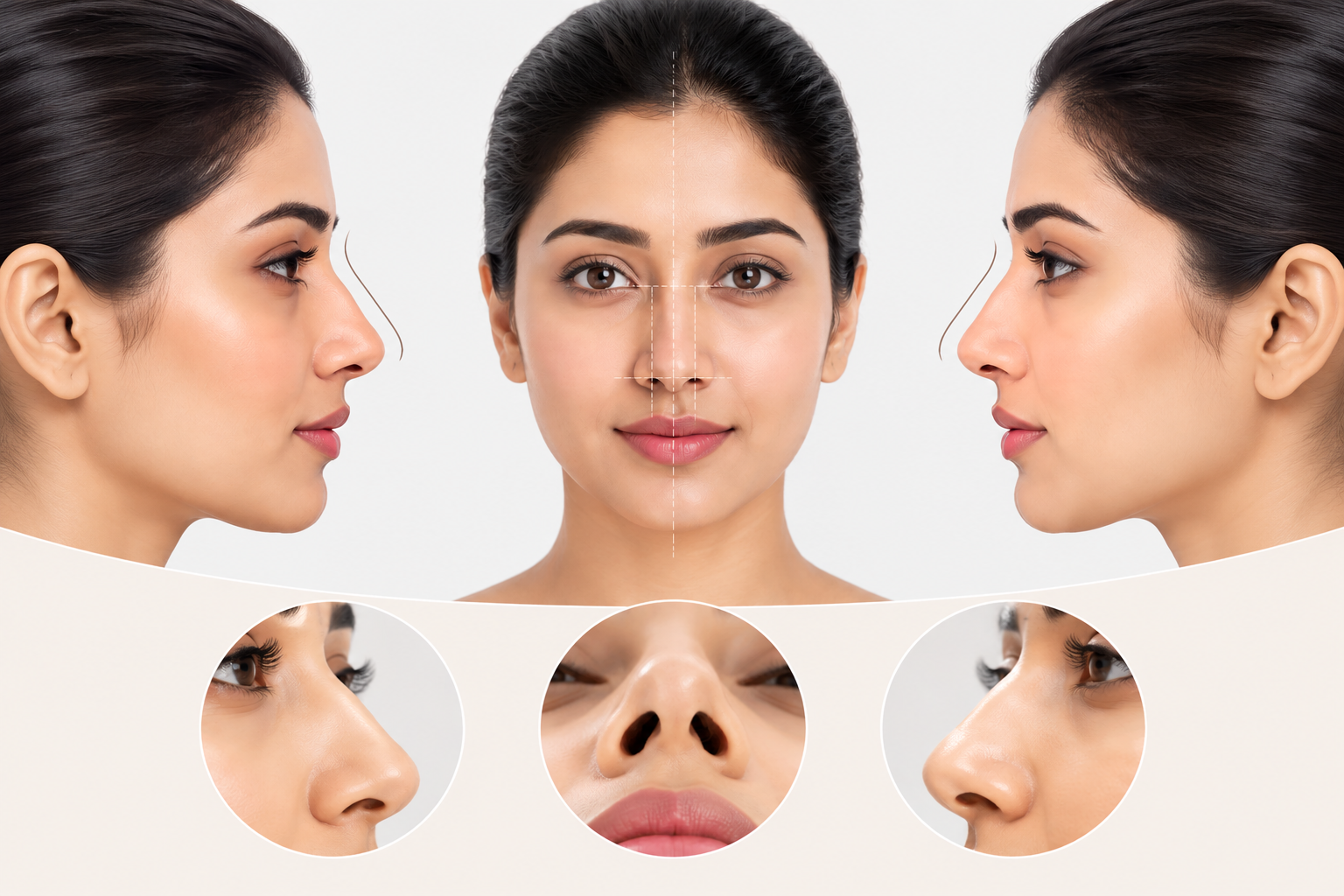
These factors are evaluated together.
The aim is to make changes that look natural within the context of your face.
1. Consider Your Overall Facial Proportions
One of the first things a surgeon considers is the relationship between the nose and the rest of the face.
Your:
- Forehead
- Cheekbones
- Lips
- Chin
- Jawline
- Eyes
all contribute to facial balance.
A nose that is too large relative to the chin, for example, can make the chin appear smaller. In some cases, changing the nose alone may alter the visual balance of the entire face.
This is why your surgeon should assess your face as a whole rather than focusing only on the nose.
2. Think About Nose Width
Nasal width can have a significant effect on facial appearance.
Some people have a narrow nasal bridge with a relatively narrow base, while others naturally have a wider nose.
During rhinoplasty planning, the surgeon may assess:
- Bridge width
- Tip width
- Nostril width
- Width of the nasal base
- Relationship between nasal width and facial width
The goal is not necessarily to make the nose as narrow as possible.
Overly aggressive narrowing can produce an unnatural appearance and may potentially affect nasal function.
A proportionate width is generally more important than achieving the smallest possible nose.
3. The Nasal Bridge Matters
The bridge is the upper portion of the nose between the eyes and the nasal tip.
Some people may have:
- A prominent bridge
- A dorsal hump
- A low bridge
- A relatively straight bridge
- A wider bridge
Rhinoplasty can address certain structural concerns involving the bridge.
However, the appropriate amount of modification depends on the rest of the face.
For example, removing a dorsal hump without considering the nasal tip and facial proportions may not produce the balanced result a patient expects.
4. Think About the Nasal Tip
The tip is one of the most noticeable parts of the nose.
Its characteristics include:
- Shape
- Width
- Projection
- Rotation
- Definition
- Symmetry
Some patients may want a more refined tip, while others may want to reduce excessive projection or address asymmetry.
A surgeon must consider the underlying cartilage and soft tissues when planning tip refinement.
The objective should be a natural-looking tip that remains proportionate to the bridge and the rest of the face.
5. Nasal Tip Projection Can Change Facial Balance
Tip projection refers to how far the nasal tip extends from the face.
Too much projection can make the nose appear prominent, while insufficient projection can make the nose appear flatter or less defined.
The appropriate level depends on factors such as:
- Facial profile
- Chin projection
- Lip position
- Nasal length
- Existing nasal anatomy
This is why a surgeon may not simply reduce or increase tip projection based on a patient's request without assessing the rest of the face.
6. The Chin-Nose Relationship Is Important
The nose and chin influence how your side profile looks.
A relatively prominent nose can appear even more prominent when the chin is recessed. Conversely, a stronger chin can change how the nose is perceived.
During a rhinoplasty consultation, your surgeon may evaluate the relationship between:
Nose → Lips → Chin
This can help determine whether a proposed change to the nose is likely to create the facial balance you are looking for.
It does not mean that you necessarily need another procedure. It simply highlights why the entire facial profile should be considered when planning rhinoplasty.
7. Your Natural Features Should Still Look Like You
One of the biggest mistakes patients can make is trying to completely change their natural appearance.
Rhinoplasty should not necessarily make it obvious that you have had surgery.
Many patients prefer a result where friends and family notice that they look refreshed or more balanced without immediately identifying the specific change.
A natural result generally respects your:
- Facial structure
- Ethnic characteristics
- Skin thickness
- Existing nasal framework
- Individual proportions
Your surgeon can refine the nose while maintaining features that make your face uniquely yours.
8. Don't Choose a Nose Based Only on a Celebrity Photo
Celebrity images can be useful as references, but they should not be treated as templates.
A celebrity may have a completely different:
- Facial width
- Chin shape
- Cheek structure
- Skin thickness
- Nasal cartilage
- Bone structure
- Overall facial proportions
A nose that looks harmonious on them may not produce the same effect on you.
Instead of saying, "I want this exact nose," it may be more useful to explain what you like about the reference.
For example:
- "I like the softer tip."
- "I prefer a straighter bridge."
- "I want less projection."
- "I like a more defined profile."
This gives your surgeon a better understanding of your aesthetic preferences while allowing the final design to be adapted to your anatomy.
9. Your Skin Thickness Can Affect the Result
Skin thickness is another important consideration.
Thicker nasal skin may limit how sharply certain structural changes become visible, particularly around the tip.
Patients with thinner skin may show underlying structural changes more clearly.
This does not mean one skin type is better than another.
It means your surgeon needs to account for skin characteristics when planning the procedure and setting expectations.
10. Your Ethnic Features Should Be Considered
Every individual has unique facial and nasal characteristics influenced by genetics and ancestry.
Rhinoplasty should not be about applying one standardized nasal shape to everyone.
An approach that preserves appropriate individual characteristics can produce a result that looks more natural and harmonious.
This is particularly important when patients want refinement without losing the characteristics that make their appearance distinctive.
How Surgeons Plan the Right Nose Shape
Choosing the appropriate nasal shape involves more than looking at the nose from one angle.
Your surgeon may assess your face from:
- Front view
- Side profile
- Three-quarter view
- Base view
They may also evaluate your nose while you smile or move your facial muscles.
This allows the surgeon to understand how the nose interacts with the rest of the face and whether functional issues may also need to be addressed.
The Importance of Nasal Function
Rhinoplasty is not only about appearance.
The nose plays an important role in breathing, airflow, smell, and other functions.
If you already experience nasal obstruction or breathing difficulties, these concerns should be discussed during your consultation.
In some cases, structural problems may need to be addressed alongside cosmetic changes.
The best surgical plan should consider both appearance and function where appropriate.
Can Rhinoplasty Make Your Nose Look Smaller?
Yes, rhinoplasty can reduce certain aspects of nasal size or prominence depending on your anatomy.
However, "smaller" does not always mean "better."
Reducing the nose too aggressively can create an imbalance with other facial features.
Instead, your surgeon may focus on:
- Reducing a dorsal hump
- Refining the tip
- Adjusting nasal width
- Changing projection
- Improving symmetry
- Modifying the nasal profile
The combination of these changes can make the nose appear more proportionate without making it unnaturally small.
What If You Want a More Defined Nose?
A more defined appearance may involve changes to the bridge or tip, depending on your anatomy.
However, definition is influenced by skin thickness, cartilage structure, and soft tissue.
A surgeon should assess what can realistically be achieved rather than promising a specific appearance based solely on an image.
Can Rhinoplasty Change the Side Profile?
Yes.
Rhinoplasty can alter several aspects of the side profile, including:
- Dorsal hump
- Bridge contour
- Tip projection
- Tip rotation
- Nasal length
However, the changes need to be planned in relation to the forehead, lips, and chin.
A balanced side profile is usually more important than creating an exaggeratedly straight or turned-up nose.
What About the Front View?
The front view is equally important.
Your surgeon may evaluate:
- Nasal width
- Tip definition
- Nostril symmetry
- Nasal base
- Bridge alignment
- Facial symmetry
A nose can look excellent from the side but still appear unbalanced from the front if these elements are not carefully considered.
This is why rhinoplasty planning should evaluate multiple views.
Digital Imaging and Surgical Planning
Depending on the practice, digital imaging or photographs may be used during consultation to help discuss potential changes.
These tools can help patients communicate what they like and understand possible directions for treatment.
However, digital simulations should be viewed as planning tools rather than guarantees.
Your actual result will depend on your anatomy, surgical technique, healing, swelling, and how your tissues respond.
What If Your Nose Is Crooked?
A crooked nose can involve both cosmetic and functional concerns.
It may result from:
- Previous injury
- Nasal bone asymmetry
- Cartilage deviation
- Septal deviation
- Natural facial asymmetry
Correcting a crooked nose may require more than simply changing the external shape.
If breathing is also affected, your surgeon may need to address internal nasal structures as part of the treatment plan.
What Happens During a Rhinoplasty Consultation?
A consultation is where your surgeon can understand what you want and determine what is realistically achievable.
You may discuss:
- What you like or dislike about your nose
- Your preferred level of change
- Any breathing problems
- Previous injuries or surgeries
- Your medical history
- Desired profile
- Concerns about symmetry
- Recovery expectations
Your surgeon can then assess your nasal structure and facial proportions before recommending a surgical approach.
How to Prepare for Your Consultation
Before your appointment, think about what specifically bothers you about your nose.
Instead of simply saying, "I don't like my nose," consider whether your concern is:
- A dorsal hump
- A wide nose
- A broad tip
- Excessive projection
- A drooping tip
- Asymmetrical nostrils
- A crooked appearance
- Breathing difficulty
You can also bring photographs showing styles or features you like, as long as you understand that your result will need to be customized to your anatomy.
What Makes a Rhinoplasty Result Look Natural?
A natural-looking result generally comes from making changes that fit the patient's existing facial structure.
Important considerations include:
- Appropriate proportions
- Conservative and precise structural changes
- Smooth transitions
- Balanced tip and bridge
- Appropriate nasal width
- Symmetry
- Preservation of function
The goal should be a nose that looks like it belongs to your face.
How Long Does It Take to See the Final Shape?
Rhinoplasty involves a gradual healing process.
Swelling is common after surgery and can make the nose look different during the early stages of recovery.
The majority of visible swelling generally decreases over time, but subtle swelling—particularly around the nasal tip—can persist for months.
The final appearance should therefore be judged only after adequate healing rather than during the early recovery period.
Frequently Asked Questions
- How do I know which nose shape will suit my face?
Your ideal nose shape depends on your facial proportions, nasal structure, skin characteristics, and personal preferences. A plastic surgeon can assess these factors and recommend changes that complement your face. - Can I choose a specific nose from a photograph?
You can use photographs to explain what you like, but an identical result may not be possible because everyone's facial structure is different. Reference images are best used to communicate preferences rather than request an exact copy. - Should my nose be smaller to look better?
Not necessarily. Making the nose smaller does not automatically improve facial harmony. The appropriate size depends on your overall facial proportions. - Can rhinoplasty change both the front and side profile?
Yes. Rhinoplasty can address aspects of the nose visible from both the front and side, depending on your anatomy and surgical goals. - Does skin thickness affect rhinoplasty results?
Yes. Skin thickness can influence how clearly underlying structural changes become visible, particularly around the nasal tip. Your surgeon should consider this when planning the procedure. - Can rhinoplasty improve breathing as well as appearance?
In some patients, rhinoplasty can be combined with functional corrections to address structural problems affecting nasal airflow. If you have breathing difficulties, discuss them during your consultation. - Will my rhinoplasty result look natural?
A natural result depends on your anatomy, the surgical plan, technique, healing, and realistic expectations. The goal should generally be a nose that complements your facial features rather than appearing obviously altered. - How long does rhinoplasty swelling last?
Most swelling improves gradually during the first several weeks and months, but subtle swelling can remain for longer, particularly around the nasal tip. Your surgeon can provide a more personalized recovery timeline.
Considering Rhinoplasty Surgery in Mumbai?
Choosing the right nose shape is not about following a trend or copying someone else's appearance. It is about understanding your facial proportions and creating changes that complement your individual features.
If you are considering Rhinoplasty Surgery in Mumbai, Dr. Vinay Jacob can assess your nasal structure, facial proportions, aesthetic goals, and functional concerns to help develop a personalized surgical plan.
Book a consultation in Mumbai to discuss the nose shape you have in mind, understand what is realistically achievable for your facial structure, and take the first step toward a balanced, natural-looking result.