

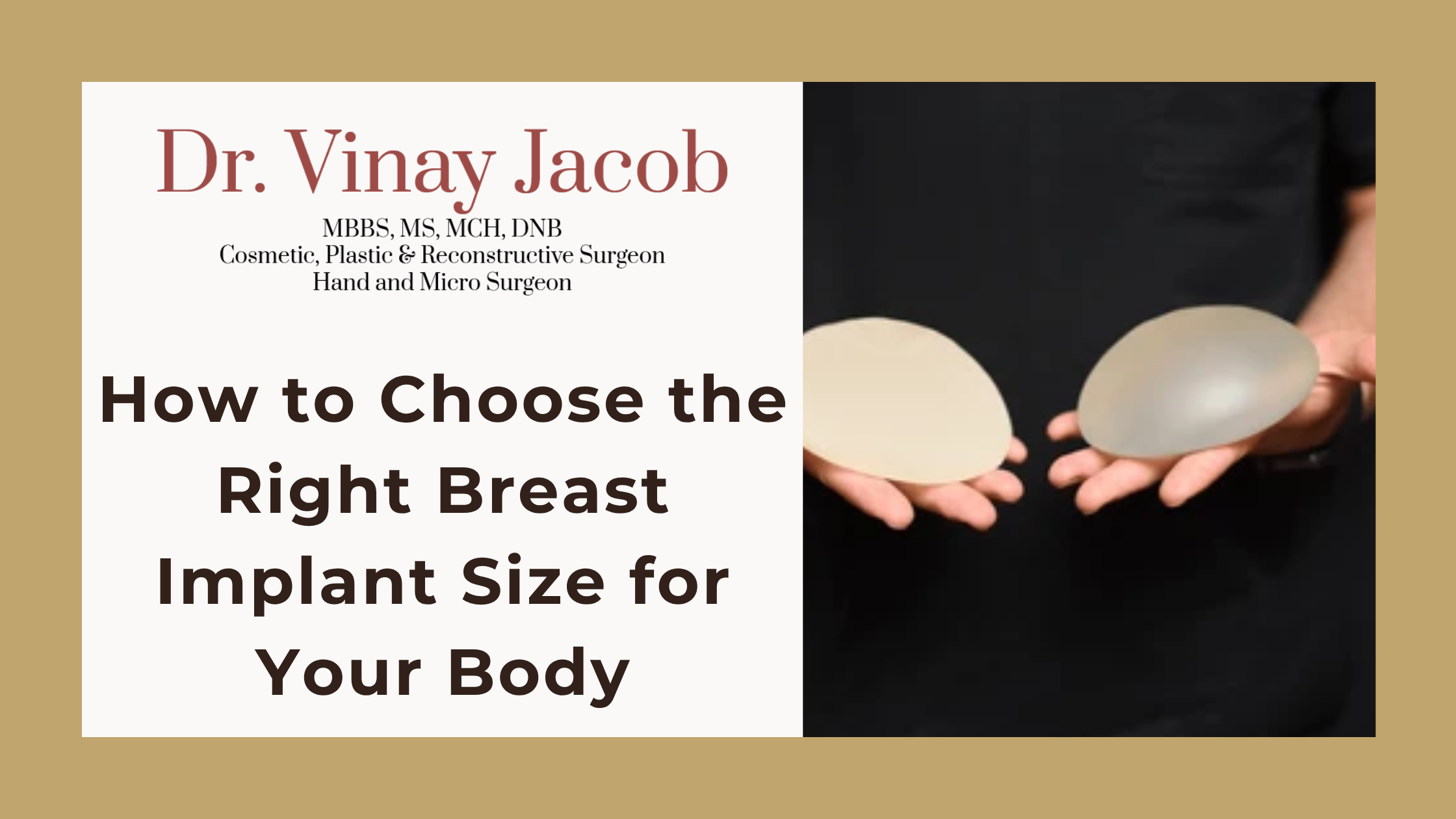
How to Choose the Right Breast Implant Size for Your Body
Choosing the right breast implant size is one of the most important decisions when considering breast augmentation. While many people begin with a specific cup size or an implant volume in mind, the ideal implant is not determined by numbers alone.
The right choice depends on your body proportions, existing breast tissue, chest width, skin elasticity, lifestyle, and the kind of appearance you want to achieve.
Some women prefer a subtle enhancement that looks natural and proportional, while others want a more noticeable change. A good implant choice should complement your overall body rather than simply increase breast volume.
If you are considering Breast Implant Surgery in Mumbai, understanding how implant size is selected can help you have a more productive discussion with your plastic surgeon and make a decision that feels right for you.
Why Choosing the Right Implant Size Matters
Breast implants come in different volumes, shapes, profiles, and dimensions. However, choosing a larger implant does not automatically mean achieving a better result.
An implant that is too large for your chest may look disproportionate, place additional tension on the tissues, or create an appearance that does not match your goals.
Similarly, choosing an implant that is too small may leave you feeling that the improvement is less noticeable than expected.
The aim is to find an implant that provides the desired enhancement while maintaining good proportions and a natural relationship between the breasts, chest, and rest of the body.
Is Implant Size the Same as Cup Size?
No.
This is one of the most common misconceptions about breast implants.
Implant size is usually discussed in terms of volume, measured in cubic centimetres (cc), rather than bra cup size.
For example, an implant may be described as 250 cc, 300 cc, 350 cc, or 400 cc. But the same implant volume can produce different results in different women.
Why?
Because breast size after augmentation depends on factors such as:
- Existing breast tissue
- Chest width
- Implant diameter
- Implant profile
- Skin elasticity
- Body proportions
- Implant placement
Therefore, asking for a specific cup size is not always the most accurate way to communicate your desired outcome.
Instead, showing your surgeon examples of results you like and discussing your preferred level of enhancement can be more helpful.
What Factors Determine the Right Implant Size?
Your plastic surgeon will consider several factors before recommending an implant.
1. Your Chest Width
Chest width is one of the most important measurements.
An implant needs to fit appropriately within the available breast and chest dimensions. An implant that is excessively wide may extend beyond the natural breast boundaries.
During consultation, your surgeon may measure the width and dimensions of your existing breast tissue to determine what implant dimensions are appropriate.
2. Your Existing Breast Tissue
The amount of natural breast tissue you already have can influence how an implant looks and feels.
Someone with more natural breast tissue may have greater soft-tissue coverage over the implant.
If you have very little breast tissue, implant size and placement require particularly careful consideration because larger implants may become more noticeable.
3. Your Desired Appearance
Your personal aesthetic goals matter.
You may want:
- A subtle increase in volume
- A fuller upper breast
- A more noticeable enhancement
- Better breast symmetry
- Restoration of volume after pregnancy or weight loss
- A proportionate appearance
There is no universally "best" implant size.
The best size is the one that balances your preferences with what is anatomically appropriate.
4. Implant Profile
Implant profile refers to how much an implant projects outward from the chest.
Broadly, implants can have lower, moderate, or higher profiles.
Two implants with the same volume can have different widths and projections depending on their profile.
This is why simply choosing an implant based on cc is not enough.
For example, a higher-profile implant may provide more forward projection without requiring the same base width as a lower-profile implant of similar volume.
5. Skin Elasticity
Your skin needs to accommodate the implant.
Skin elasticity can vary depending on factors such as age, pregnancy, breastfeeding, weight fluctuations, and genetics.
If the skin has significant laxity, simply increasing implant size may not provide the desired shape.
In some patients, a breast lift may be discussed alongside augmentation to address sagging.
6. Your Overall Body Proportions
A breast implant should complement your overall physique.
Your height, shoulder width, chest structure, waist and hip proportions can all influence how a particular implant size appears.
A volume that looks balanced on one person may appear too large or too subtle on another.
This is why comparing your planned implant size with someone else's is rarely useful.
Should You Choose a Smaller or Larger Implant?
There is no universal answer.
Smaller Implants
Smaller implants may be suitable for women who want a subtle enhancement or a result that is less noticeable.
Potential advantages include:
- More conservative enhancement
- Less additional weight
- A potentially subtle appearance
- Easier integration with existing breast tissue
However, a smaller implant may not provide enough volume for someone looking for a significant increase.
Larger Implants
Larger implants can provide more volume and projection.
They may appeal to women who want a more noticeable enhancement.
However, larger implants may place greater demands on the surrounding tissues and may not be appropriate for every body type.
The largest implant you can technically accommodate is not necessarily the best implant for your long-term result.
Natural-Looking vs More Noticeable Results
During your consultation, it can be helpful to describe the type of result you want rather than simply naming a number.
For example:
Natural-looking enhancement:
You may want your breasts to appear fuller while maintaining proportions that look consistent with your body.
More noticeable enhancement:
You may prefer greater projection and volume and are comfortable with a more obvious change.
Neither preference is wrong.
The important thing is to communicate your expectations clearly so your surgeon can recommend an option that aligns with both your aesthetic goals and anatomy.
What Is Implant Profile and Why Does It Matter?
Implant profile is particularly important when selecting an implant.
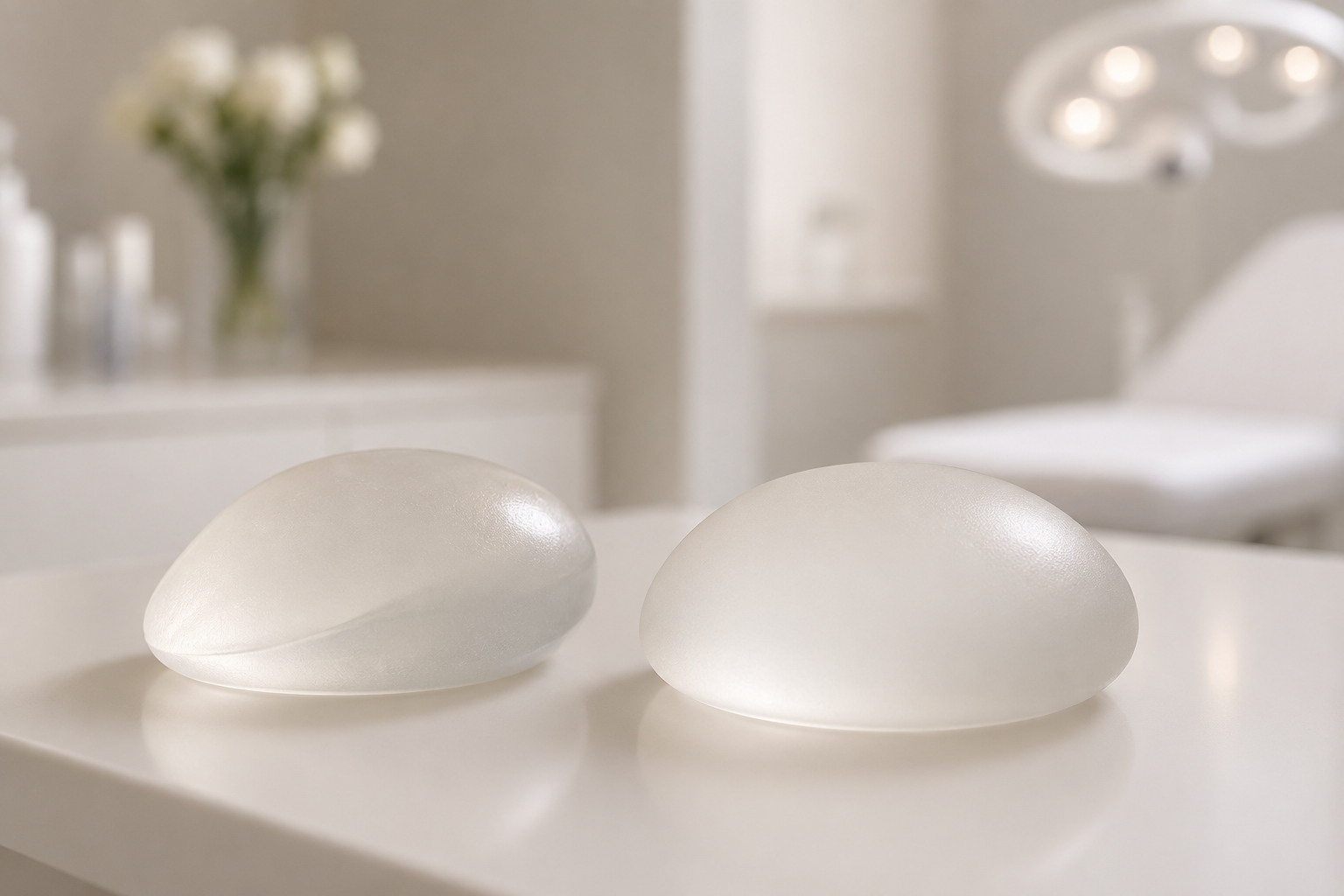
Imagine two implants with the same volume. One may be wider and flatter, while the other may be narrower with greater forward projection.
This difference can significantly affect the final appearance.
Your surgeon may discuss different profile options based on:
- Chest width
- Breast dimensions
- Desired projection
- Existing tissue
- Implant volume
- Overall body proportions
This is one reason implant selection should be treated as a combination of volume + width + projection, rather than volume alone.
What About Round vs Teardrop Implants?
Another consideration is implant shape.
Round Implants
Round implants can provide fullness, particularly in the upper portion of the breast, depending on their profile and placement.
They are commonly considered when a patient wants a fuller appearance.
Teardrop or Anatomical Implants
Anatomical implants are designed with a more tapered shape, with greater volume toward the lower portion.
They may be considered when a specific breast contour is desired.
The choice between round and anatomical implants depends on your anatomy and aesthetic goals. One shape is not automatically better for everyone.
What If Your Breasts Are Asymmetrical?
Mild breast asymmetry is extremely common.
One breast may be slightly larger, positioned differently, or shaped differently from the other.
In these situations, your surgeon may recommend different implant sizes or other adjustments to improve symmetry.
Perfect symmetry is not always possible, but careful planning can help create a more balanced appearance.
This is another reason why selecting implants based solely on a predetermined number is not ideal.
How Your Surgeon Helps You Choose
During a consultation for Breast Implant Surgery in Mumbai, your surgeon may assess several measurements and factors before making a recommendation.
These can include:
- Breast width
- Breast height
- Existing breast volume
- Skin quality
- Nipple position
- Chest dimensions
- Tissue thickness
- Degree of asymmetry
- Desired projection
- Lifestyle and activity level
Your surgeon may also discuss different implant options and explain how each could affect the final appearance.
Can You Try Different Implant Sizes Before Surgery?
Many practices use sizing methods during consultation to help patients visualize different volumes.
Depending on the surgeon and facility, you may be able to try external sizers or use imaging and simulation tools.
These methods can be useful for understanding the general difference between smaller and larger implants.
However, simulations and external sizers cannot guarantee the exact surgical result.
Your final appearance depends on your anatomy, implant characteristics, surgical technique, healing, and how your tissues respond.
Should You Choose Your Implant Based on Celebrity Photos?
Celebrity or social-media images can provide inspiration, but they should not be used as a direct template.
People have different:
- Chest widths
- Breast tissue
- Body proportions
- Skin elasticity
- Implant dimensions
- Surgical techniques
A particular look may not be achievable—or appropriate—for your anatomy.
Instead, bring reference images to your consultation and explain what you like about them. Your surgeon can then discuss which aspects of the look may be realistic for your body.
What Happens If You Choose an Implant That Is Too Large?
Choosing an implant that is too large for your anatomy can create several concerns.
It may:
- Look disproportionate
- Stretch the surrounding tissues
- Increase the weight placed on the breasts
- Make the implant more visible or palpable
- Contribute to changes in breast shape over time
This does not mean larger implants are inherently unsafe or unsuitable. It means the implant needs to be appropriately selected for your individual anatomy.
What Happens If You Choose an Implant That Is Too Small?
A smaller implant may produce a subtle result when you were expecting a more noticeable change.
Some patients may later feel that they would have preferred greater volume.
This is why discussing your expectations beforehand is so important.
Rather than deciding purely based on a number, consider what you want your breasts to look like in clothing, swimwear, and without clothing.
Does Implant Placement Affect the Final Size?
Yes.
Implants can generally be placed either above or partially beneath the chest muscle, depending on the patient's anatomy, implant type, and surgical plan.
The placement can influence:
- Breast contour
- Upper-pole fullness
- Implant visibility
- Recovery
- How the implant interacts with existing tissue
Your surgeon will recommend the placement that best suits your anatomy and desired outcome.
What About Future Pregnancy and Weight Changes?
If you are planning pregnancy or significant weight loss, discuss this with your surgeon before choosing an implant.
Pregnancy and major weight changes can alter breast volume, skin elasticity, and breast position.
Although implants themselves do not gain or lose weight, the surrounding breast tissue can change.
In some cases, a future breast lift or revision procedure may be considered after significant changes.
How Long Do Breast Implants Last?
Breast implants are not considered lifetime devices.
That does not mean they automatically need to be replaced after a fixed number of years.
Many implants can remain in place for many years without problems, while others may require removal or replacement because of complications, changes in breast tissue, implant rupture, capsular contracture, or personal preference.
Regular follow-up and awareness of changes in your breasts can help with long-term management.
Questions to Ask Before Choosing an Implant
Before undergoing surgery, consider asking your plastic surgeon:
- What implant size is appropriate for my chest width?
- What implant profile would suit my body?
- Should I choose a round or anatomical implant?
- What result can I realistically expect?
- How will the implant look with my existing breast tissue?
- What happens if I choose a larger implant?
- Will I need a breast lift as well?
- How will pregnancy or weight changes affect the result?
- What type of implant placement do you recommend?
- What are the possible risks and complications?
Having an open discussion can make the decision-making process much easier.
Frequently Asked Questions
- How do I know what breast implant size is right for me?
The appropriate size depends on your anatomy, breast dimensions, existing tissue, skin elasticity, implant profile, and aesthetic goals. A plastic surgeon can assess these factors and recommend suitable options. - Is a bigger implant always better?
No. The largest implant that fits your body is not necessarily the best choice. Implant selection should balance your desired appearance with your anatomy and long-term considerations. - Can I choose my implant size myself?
You can absolutely express your preferences, but the final choice should be made in consultation with your plastic surgeon. Your surgeon can explain which sizes and dimensions are appropriate for your body. - Does implant size affect how natural breasts look?
It can. However, natural appearance also depends on implant shape, profile, placement, existing breast tissue, skin quality, and surgical technique. - Can implants make my breasts look wider?
Implant width and profile can influence the overall appearance. Your surgeon will consider your natural breast base width when selecting an implant to avoid an implant that extends beyond the appropriate breast boundaries. - What if I want larger breasts but have very little breast tissue?
Your surgeon may discuss different implant profiles, placement options, or staged approaches depending on your anatomy. In some cases, a larger implant may not be advisable simply because the available tissue cannot adequately cover it. - Will my breast size change after surgery?
The breasts can appear different as swelling decreases and the implants settle into position during recovery. The final appearance may take time to develop. - Can breast implants correct sagging?
Implants can restore volume, but they do not always correct significant sagging. If the breasts have substantial drooping, a breast lift may be recommended with or instead of augmentation.
Final Thoughts
Choosing the right breast implant size is not simply about selecting a number of cc or aiming for a particular cup size. It is about finding the right balance between your anatomy, proportions, desired appearance, and long-term goals.
If you are considering Breast Implant Surgery in Mumbai, take the time to discuss your expectations and concerns during a detailed consultation. A personalized assessment can help you understand which implant size, shape, profile, and placement may be appropriate for your body.
Considering Breast Implant Surgery in Mumbai?
If you are planning breast augmentation and are unsure about the right implant size, Dr. Vinay Jacob can assess your breast anatomy, body proportions, existing tissue, and aesthetic goals to help you make an informed decision.
Book a consultation in Mumbai to discuss your implant options and create a personalized surgical plan focused on balanced, proportionate, and natural-looking results.