

Rhinoplasty can create significant improvements in the shape, proportions, and structure of the nose. However, one part of the recovery process can be frustrating for many patients: swelling.
It is common for the nose to look swollen or different from the expected result for weeks or even months after surgery. While most visible swelling improves relatively quickly, subtle swelling especially around the nasal tip—can take considerably longer to disappear.
This does not necessarily mean something is wrong. Rhinoplasty involves delicate bone, cartilage, skin, and soft-tissue structures, and these tissues need time to heal and settle into their new shape.
If you are planning Rhinoplasty Surgery in Mumbai, understanding why swelling lasts so long and what you can expect during recovery can help you approach the healing process with realistic expectations.
Swelling is the body's natural response to surgery.
During rhinoplasty, the surgeon may reshape:
- Nasal bones
- Cartilage
- Nasal tip structures
- Septum
- Soft tissues
Surgical manipulation causes temporary inflammation as the body begins the healing process.
Fluid can accumulate in the tissues around the nose, resulting in swelling and changes in nasal appearance.
Some patients may also experience bruising around the eyes during the first week.
The nose is a relatively small and structurally complex part of the face. Even a small amount of swelling can significantly affect its appearance.
Several factors can influence how long swelling lasts.
Because the nose contains tightly connected skin, cartilage, bone, and soft tissue, even small changes in tissue fluid can alter its shape.
This can make post-operative swelling particularly noticeable.
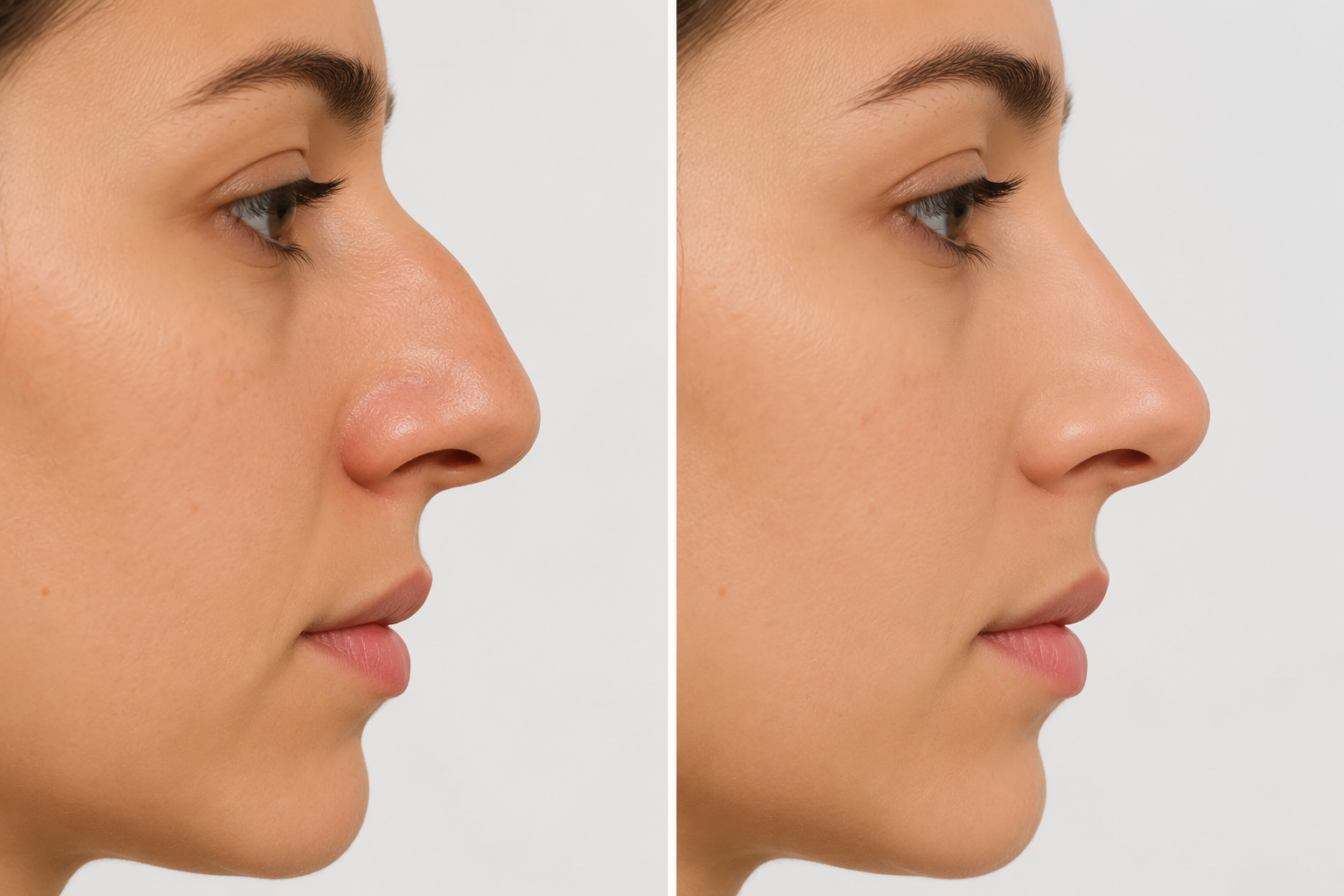
The nasal tip is commonly the last part of the nose to lose its swelling.
This is especially true after procedures involving significant tip reshaping or cartilage grafting.
You may notice that the bridge looks relatively defined while the tip remains:
- Puffy
- Firm
- Less defined
- Slightly wider than expected
This can gradually improve as healing progresses.
Patients with thicker nasal skin generally retain swelling for longer than those with thinner skin.
Thicker skin contains more soft tissue, which can take additional time to settle around the reshaped nasal framework.
This is one reason two patients who undergo similar rhinoplasty procedures may have very different recovery timelines.
A relatively minor rhinoplasty may produce less swelling than a complex procedure involving extensive structural changes.
Swelling may be more prolonged after:
- Significant nasal reshaping
- Extensive tip refinement
- Septorhinoplasty
- Revision rhinoplasty
- Cartilage grafting
- Nasal reconstruction
The more extensive the surgical correction, the longer the tissues may need to heal.
Every patient heals differently, but understanding the general progression can make recovery easier.
The first week usually involves the most noticeable swelling and bruising.
You may experience:
- Swelling around the nose
- Bruising around the eyes
- Nasal congestion
- Mild discomfort
- A feeling of tightness
A splint may remain on the nose during this period.
Your nose may look significantly different from its expected final appearance at this stage.
By the second week, much of the visible bruising usually begins to improve.
Swelling also starts decreasing, although the nose may still look:
- Puffy
- Wider than expected
- Slightly uneven
- Less defined
This is generally too early to judge the final result.
During this period, the nose generally begins to look more natural.
Many patients notice:
- Improved definition
- Less facial swelling
- Reduced nasal puffiness
- Gradual improvement in symmetry
However, subtle swelling can remain, particularly around the tip.
At this stage, the overall shape is usually much clearer.
The bridge may appear relatively defined, while the tip can continue to look slightly swollen.
Small changes may continue from week to week.
Most patients see substantial improvement by this stage.
However, subtle swelling particularly in the nasal tip—can continue to resolve gradually.
For some patients, especially those with thicker skin or complex surgery, final refinement may take longer.
The nasal tip is particularly prone to prolonged swelling because of its anatomy and the amount of surgical manipulation often required during tip refinement.
Healing tissues can retain fluid and develop temporary thickening as part of the normal recovery process.
This means that a swollen or less-defined tip does not necessarily indicate a poor surgical result.
In many cases, patience is one of the most important parts of rhinoplasty recovery.
Not necessarily.
During the early stages of healing, swelling can make the nose appear:
- Too large
- Uneven
- Asymmetrical
- Upturned
- Wide
- Less defined
These temporary changes can be concerning, but they often improve as swelling decreases.
Your surgeon will monitor your healing during follow-up appointments and can determine whether the changes are consistent with normal recovery.
Both open and closed rhinoplasty can involve swelling.
Open rhinoplasty includes a small external incision on the columella and provides the surgeon with greater access to the nasal structures. Closed rhinoplasty uses incisions inside the nostrils.
The duration of swelling depends on many factors, including:
- Surgical complexity
- Amount of tissue manipulation
- Skin thickness
- Individual healing
- Whether the procedure is primary or revision surgery
Therefore, the surgical approach alone does not determine how long swelling will last.
Revision rhinoplasty can involve more complex healing because the tissues have already undergone surgery.
Scar tissue and altered nasal structures may require additional reconstruction or grafting.
As a result, some patients may experience a longer or more unpredictable swelling period after revision surgery.
Your surgeon can provide a more individualized recovery estimate based on your previous surgery and planned correction.
Your surgeon will provide personalized post-operative instructions. Generally, patients may be advised to:
- Keeping your head elevated, particularly while sleeping during the early recovery period, may help reduce swelling.
- Strenuous exercise can temporarily increase blood flow and swelling.
- Follow your surgeon's instructions regarding when you can return to exercise.
- Avoid activities that could accidentally bump or injure the nose.
- Take prescribed medications exactly as directed.
- Smoking can interfere with circulation and healing.
- Regular follow-ups allow your surgeon to monitor healing and address any concerns.
- Do not attempt home treatments or massage techniques unless your surgeon specifically recommends them.
Maintaining a balanced diet and staying adequately hydrated can support general recovery.
Your surgeon may recommend limiting certain foods or substances during the initial recovery period.
Avoid making major dietary changes or taking supplements without discussing them with your medical team.
Some swelling is expected after rhinoplasty.
However, you should contact your surgical team if you experience symptoms such as:
- Rapidly increasing swelling
- Severe or worsening pain
- Significant bleeding
- Fever
- Increasing redness
- Unusual discharge
- Difficulty breathing that is worsening rather than improving
- Any sudden change that concerns you
Your surgeon can determine whether the symptoms are part of normal healing or require further evaluation.
Rhinoplasty results develop gradually.
You may notice a significant improvement within the first few weeks, but the nose continues to change as swelling resolves.
In many patients, the final result becomes clearer over several months, while subtle tip swelling may take a year or longer to completely settle.
It is important to avoid judging your final result too early.
Dr. Vinay Jacob is an experienced plastic, aesthetic, and reconstructive surgeon with expertise in facial and nasal surgery.
His approach focuses on:
- Detailed nasal assessment
- Personalized surgical planning
- Natural-looking results
- Careful tissue handling
- Attention to nasal function
- Comprehensive post-operative follow-up
Every rhinoplasty procedure is tailored to the patient's anatomy, skin characteristics, functional concerns, and aesthetic goals.
Frequently Asked Questions
- How long does rhinoplasty swelling last?
Most significant swelling improves during the first few weeks, but residual swelling can continue for several months. Subtle swelling around the nasal tip may take a year or longer to fully resolve in some patients. - Is three months after surgery still too early to judge the result?
Three months is still relatively early in rhinoplasty recovery. Internal and external tissues may continue to heal, particularly around the tip. - Do thicker skin patients have more swelling?
Yes. Patients with thicker nasal skin may experience more prolonged swelling because there is more soft tissue that needs to settle around the reshaped framework. - Should I massage my nose to reduce swelling?
Do not massage or manipulate your nose unless your surgeon specifically recommends it. Incorrect pressure could interfere with healing. - How do I know if my swelling is normal?
Healing varies considerably. Your surgeon can assess your nose during follow-up visits and determine whether the swelling is progressing normally. - Can revision rhinoplasty cause longer swelling?
Yes. Revision procedures can involve more complex tissue changes and scar tissue, which may result in a longer or less predictable swelling period.
Final Thoughts
Rhinoplasty swelling can last much longer than many patients initially expect, particularly around the nasal tip. While most noticeable swelling improves during the first several weeks, subtle swelling can continue for many months as the skin and underlying tissues gradually adapt to the new nasal framework. The speed of healing depends on factors such as skin thickness, surgical complexity, individual healing, and whether the procedure is primary or revision rhinoplasty.
If you are considering Rhinoplasty Surgery in Mumbai, discussing the expected recovery timeline with an experienced plastic surgeon can help you set realistic expectations. Dr. Vinay Jacob can evaluate your nasal anatomy, explain the factors that may influence swelling, and guide you through each stage of recovery for a safe and well-planned rhinoplasty journey.