


Diabetic Foot Ulcers: Causes, Symptoms and Treatment Options
A small blister, cut, or pressure spot on the foot may not seem serious at first. But for a person with diabetes, a minor injury can sometimes develop into a diabetic foot ulcer that takes weeks or months to heal.
Diabetes can affect nerves, blood circulation, immunity, and the body's natural wound-healing process. When these problems occur together, even a small wound can become difficult to manage.
The good news is that early recognition and appropriate treatment can help prevent many diabetic foot ulcers from becoming more serious.
If you notice a persistent wound, skin breakdown, swelling, redness, discharge, or another unusual change in your foot, it is important to have it evaluated rather than waiting for it to heal on its own.
For people seeking Diabetic Foot Treatment in Mumbai, understanding how these ulcers develop and how they are treated can help you recognize when professional care is necessary.
What Is a Diabetic Foot Ulcer?
A diabetic foot ulcer is an open sore or wound that develops on the foot of a person with diabetes.
These ulcers commonly occur in areas exposed to repeated pressure or friction, such as:
- The bottom of the foot
- Ball of the foot
- Heel
- Toes
- Sides of the foot
- Areas affected by footwear pressure
A diabetic foot ulcer can begin as a small break in the skin but may gradually become deeper if the underlying cause is not addressed.
In more advanced cases, the ulcer can extend into deeper tissues and potentially involve tendons, joints, or bone.
Why Do Diabetic Foot Ulcers Develop?
There is usually more than one contributing factor.
Three major factors are particularly important:
1. Nerve Damage
Diabetes can damage peripheral nerves over time. This condition is known as diabetic peripheral neuropathy.
When sensation is reduced, you may not notice:
- A blister
- Small cut
- Burn
- Pressure from footwear
- Foreign object inside your shoe
- Developing callus
Because the injury may not hurt, you may continue walking on it and unknowingly make the wound worse.
2. Poor Blood Circulation
Adequate blood flow is essential for wound healing.
Blood delivers oxygen and nutrients needed for tissue repair and supports the body's ability to fight infection.
Diabetes can be associated with blood-vessel disease that reduces circulation to the feet.
Poor circulation can contribute to:
- Slow wound healing
- Tissue damage
- Increased infection risk
- Persistent ulcers
- Tissue death in severe cases
3. Repeated Pressure
Walking places pressure on the feet with every step.
If an area already has reduced sensation, a person may repeatedly put pressure on the same injured area without realizing it.
Poorly fitting footwear, foot deformities, calluses, and abnormal walking patterns can further increase pressure.
This repeated stress can prevent an ulcer from healing.
Other Risk Factors for Diabetic Foot Ulcers
Several factors can increase the likelihood of developing an ulcer.
These include:
- Long-standing diabetes
- Poorly controlled blood glucose
- Peripheral neuropathy
- Reduced circulation
- Previous foot ulcer
- Previous amputation
- Foot deformities
- Poorly fitting footwear
- Kidney disease
- Smoking
- Reduced mobility
- Difficulty inspecting the feet
- Previous foot infections
Having one or more risk factors does not mean an ulcer will definitely develop, but it makes preventive foot care especially important.
Common Symptoms of a Diabetic Foot Ulcer
A diabetic foot ulcer can look different depending on its stage and underlying cause.
Possible signs include:
- An open sore
- A wound that does not heal
- Redness around the wound
- Swelling
- Warmth
- Skin breakdown
- Discharge
- Pus
- Unpleasant odour
- Thickened skin or callus around the wound
- Changes in skin colour
- Increasing wound size
Pain may or may not be present.
This is particularly important because diabetic neuropathy can reduce sensation in the feet.
A wound can therefore be significant even when it causes little discomfort.
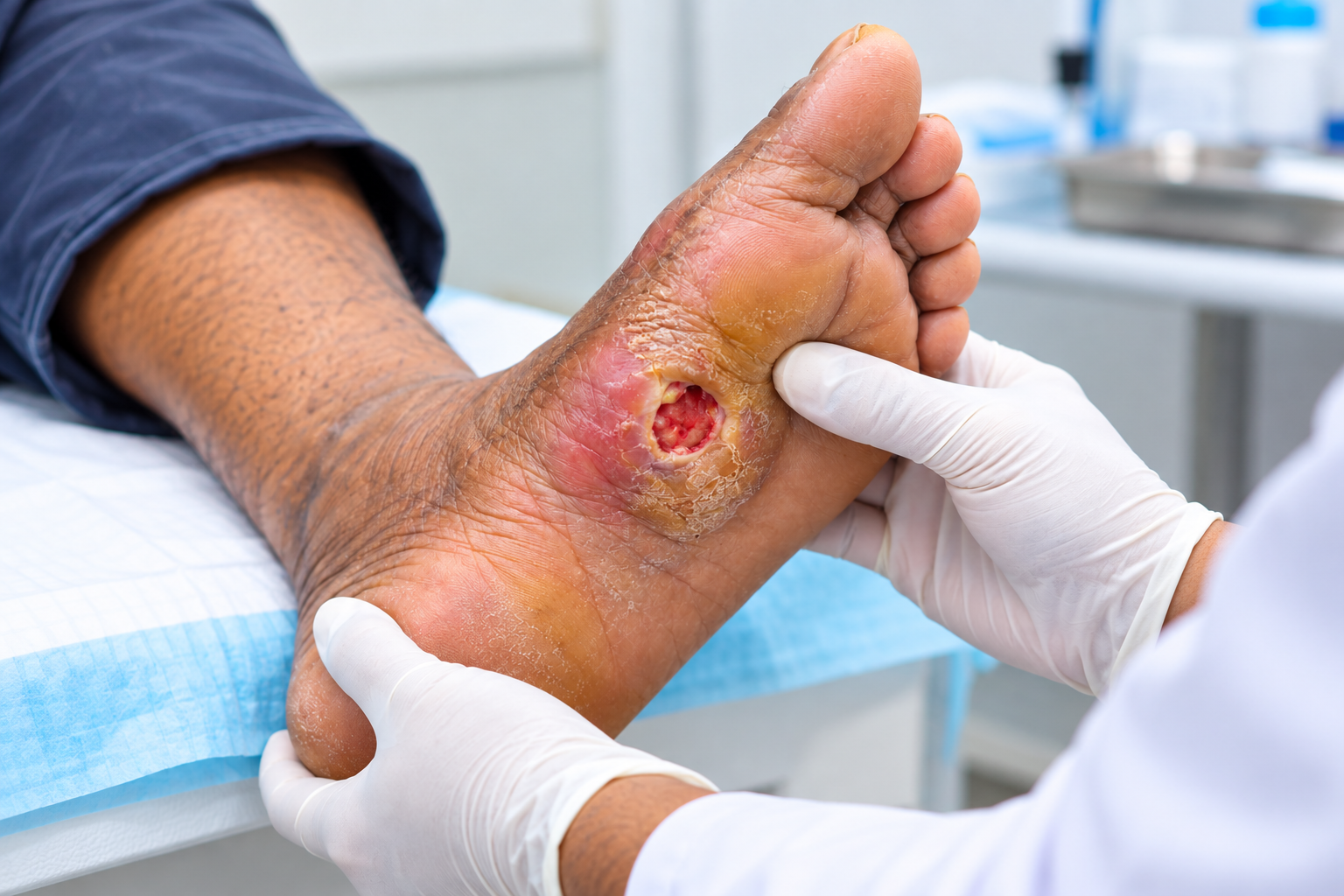
What Does an Early Diabetic Foot Ulcer Look Like?
An early ulcer may appear as:
- A small open area
- A red or irritated patch
- A blister that has broken
- A wound beneath a callus
- A pressure spot
- A crack in the skin
It may not look alarming initially.
However, if you have diabetes, any persistent break in the skin should be monitored carefully and assessed when it does not heal promptly.
Signs That a Diabetic Foot Ulcer May Be Infected
Infection can make a diabetic foot ulcer more serious.
Warning signs include:
- Increasing redness
- Warmth around the wound
- Swelling
- Pus
- Foul-smelling discharge
- Increasing wound size
- Skin discolouration
- Fever
- Chills
- Feeling unusually weak or unwell
Sometimes infection can progress without severe pain because of nerve damage.
Do not wait for severe pain before seeking medical attention.
How Are Diabetic Foot Ulcers Diagnosed?
A healthcare professional may examine the ulcer and assess the overall condition of the foot.
The evaluation may include:
Wound Examination
The doctor may assess:
- Size
- Depth
- Location
- Appearance
- Tissue condition
- Presence of infection
Nerve Assessment
Sensation may be tested to determine whether neuropathy is present.
Circulation Assessment
The blood supply to the foot may be evaluated using clinical examination and, when necessary, vascular investigations.
Imaging
If there is concern about deeper infection, bone involvement, or structural problems, imaging may be recommended.
The exact tests depend on the individual case.
Diabetic Foot Ulcer Treatment Options
There is no single treatment that works for every ulcer.
The treatment plan depends on the wound's depth, infection status, circulation, pressure, tissue health, and overall medical condition.
1. Wound Cleaning and Dressings
Proper wound care is an important part of treatment.
Depending on the wound, care may involve cleaning, removal of unhealthy tissue, and appropriate dressings to protect the area and support healing.
The type of dressing should be selected according to the wound rather than using the same dressing for every ulcer.
2. Offloading Pressure
Removing pressure from the ulcer is often essential.
If the patient continues to walk directly on the wound, healing may be delayed.
Offloading may involve:
- Specialized footwear
- Orthotic devices
- Customized insoles
- Protective padding
- Total contact casting in selected cases
- Other pressure-relieving methods
The appropriate approach depends on the location and severity of the ulcer.
3. Treating Infection
If an infection is present, appropriate treatment is required.
Depending on the severity, treatment may involve antibiotics or other medical interventions.
Severe infections may require hospitalization and surgical management.
It is important not to self-medicate with leftover antibiotics.
The appropriate treatment depends on the type and extent of infection.
4. Debridement
Debridement involves removing dead, damaged, or unhealthy tissue from a wound.
This can help expose healthier tissue and support wound management.
The method used depends on the wound and the patient's overall condition.
5. Improving Blood Flow
If poor circulation is contributing to delayed healing, vascular assessment may be necessary.
Some patients may require treatment to improve blood supply to the affected limb.
Improving circulation can be an important part of managing a difficult-to-heal diabetic foot ulcer.
6. Managing Blood Glucose
Good diabetes management is an important component of wound care.
Persistently elevated blood glucose can affect immunity, circulation, nerve function, and tissue healing.
Your diabetes care team can advise you about your individual glucose targets and treatment plan.
7. Surgical Treatment
Some diabetic foot ulcers require surgery, particularly when there is:
- Deep infection
- Abscess
- Extensive dead tissue
- Bone infection
- Severe deformity
- Significant tissue damage
- A wound that has not responded to appropriate conservative treatment
The objective is to control the underlying problem while preserving as much healthy tissue and limb function as possible.
Can Diabetic Foot Ulcers Be Treated Without Amputation?
Yes, many diabetic foot ulcers can be managed without amputation.
However, this depends on the severity of the ulcer, infection, circulation, tissue viability, and overall health.
Early assessment and appropriate treatment can help prevent progression.
Treatment may include:
- Wound care
- Offloading
- Infection control
- Debridement
- Blood-flow management
- Pressure management
- Reconstruction when appropriate
Amputation is generally considered when tissue is no longer viable, infection cannot be controlled, or the limb cannot be safely preserved.
What Is Limb Salvage?
Limb salvage refers to treatment aimed at preserving a limb that is at risk of amputation.
Depending on the situation, it may involve a combination of:
- Wound care
- Infection treatment
- Debridement
- Vascular treatment
- Pressure relief
- Reconstructive procedures
- Management of bone and joint problems
- Diabetes management
The goal is to control the disease while preserving as much healthy tissue and useful limb function as possible.
How Long Does a Diabetic Foot Ulcer Take to Heal?
There is no standard healing time.
A small, superficial ulcer with good blood flow and no infection may heal more quickly.
A deeper ulcer complicated by infection, poor circulation, neuropathy, or repeated pressure can take much longer.
Some chronic wounds can remain open for weeks or months.
Instead of focusing only on how many days the wound has been present, it is more important to determine whether the wound is showing consistent signs of improvement.
If a wound is not healing as expected, specialist assessment is recommended.
Why Do Some Diabetic Foot Ulcers Keep Coming Back?
Recurrence is possible when the underlying cause has not been corrected.
For example, an ulcer may heal but return if:
- The same pressure point remains
- Footwear continues to cause friction
- A foot deformity is not addressed
- Neuropathy persists
- Blood circulation remains poor
- The patient continues walking on vulnerable areas
- Blood glucose remains poorly controlled
Preventing recurrence therefore requires more than simply closing the wound.
The underlying risk factors also need to be addressed.
How Can You Prevent Diabetic Foot Ulcers?
Daily foot care can reduce the risk of serious complications.
Check Your Feet Every Day
Look for:
- Cuts
- Blisters
- Redness
- Swelling
- Cracks
- Calluses
- Colour changes
- Wounds
- Discharge
Use a mirror or ask someone to help if you cannot see the soles of your feet.
Wear Proper Footwear
Choose shoes that fit comfortably and do not create excessive pressure.
Avoid shoes that are too tight or cause repeated rubbing.
If you have neuropathy or previous ulcers, ask your healthcare provider whether specialized footwear is appropriate.
Avoid Walking Barefoot
Walking barefoot increases the risk of cuts, burns, and other injuries, particularly when sensation is reduced.
Take Care of Dry Skin
Use an appropriate moisturizer on dry areas to reduce cracking.
Avoid applying moisturizer between the toes.
Do Not Cut Calluses Yourself
People with diabetes should be cautious about using sharp instruments or aggressive treatments on corns and calluses.
Professional assessment is safer, particularly if sensation or circulation is reduced.
Manage Diabetes
Following your prescribed diabetes treatment plan and maintaining blood glucose within your healthcare team's recommended range can help reduce the risk of complications.
When Should You See a Doctor?
Seek medical attention if you notice:
- A wound that does not heal
- A new ulcer
- Increasing redness
- Swelling
- Warmth
- Pus or discharge
- Foul odour
- Black or dead-looking tissue
- Fever or chills
- Sudden foot deformity
- Increasing wound size
- New numbness or loss of sensation
Blackened tissue, rapidly spreading redness or swelling, severe infection symptoms, or feeling seriously unwell require urgent medical assessment.
Do not wait for a diabetic foot ulcer to become painful before seeking help.
When Should You Consider Specialist Diabetic Foot Care?
Specialist assessment may be particularly important if you have:
- A recurrent ulcer
- A deep wound
- Suspected infection
- Poor circulation
- Significant neuropathy
- Foot deformity
- Bone involvement
- Previous amputation
- Tissue death
- A wound that has failed to heal despite treatment
A specialist can determine whether you need wound care, offloading, vascular evaluation, infection management, surgery, reconstruction, or a combination of treatments.
Frequently Asked Questions
What causes diabetic foot ulcers?
Diabetic foot ulcers commonly develop due to a combination of nerve damage, repeated pressure, reduced circulation, and impaired wound healing. A small injury can become an ulcer when it is not noticed or continues to experience pressure.
Can a diabetic foot ulcer heal completely?
Yes, many ulcers can heal with appropriate treatment. However, healing depends on factors such as wound depth, infection, circulation, pressure, blood glucose control, and overall health.
Are diabetic foot ulcers painful?
They can be, but they do not always cause pain. Nerve damage can significantly reduce sensation, allowing a wound or infection to develop without much discomfort.
Can a diabetic foot ulcer be treated without surgery?
Yes. Depending on the condition, treatment may include wound care, offloading, infection management, blood glucose control, and circulation assessment. Surgery may be needed when there is deep infection, dead tissue, bone involvement, or another complication.
How can I prevent diabetic foot ulcers?
Daily foot inspection, properly fitting footwear, avoiding barefoot walking, managing blood glucose, treating minor injuries early, and regular medical check-ups can help reduce the risk.
Why do diabetic foot ulcers keep coming back?
Ulcers may recur when the underlying pressure point, foot deformity, neuropathy, circulation problem, or footwear issue remains unresolved.
Can diabetic foot ulcers lead to amputation?
Severe infection, tissue death, or extensive damage can sometimes make amputation necessary. However, early diagnosis and appropriate treatment may help preserve the limb in many cases.
What is the best treatment for a diabetic foot ulcer?
There is no single best treatment for every ulcer. Treatment should be based on the wound's depth, infection, circulation, pressure, tissue condition, and the patient's overall health.
Considering Diabetic Foot Treatment in Mumbai?
A diabetic foot ulcer should never be dismissed as just a small wound. Early evaluation can help identify infection, circulation problems, neuropathy, pressure-related damage, or deeper tissue involvement before the condition becomes more serious.
If you have a non-healing wound, recurrent ulcer, infection, tissue damage, or another concerning change in your foot, Dr. Vinay Jacob can evaluate your condition and discuss appropriate treatment options based on your individual needs.
Book a consultation for Diabetic Foot Treatment in Mumbai to understand the cause of the ulcer and explore appropriate wound care, infection management, surgical treatment, reconstruction, or limb-preserving options when suitable.